
Lieferung heute & morgen

Qualitätsgarantie

Willkommens-Angebote freischalten: KOSTENLOSE Lieferung | Bis zu 80 % RABATT | Kostenlose 30-Tage-JoyPlus-Testphase
App herunterladen
A shelving unit should create storage space without making the room feel unnecessarily cramped. In practice, however, choosing the right model often fails not because of the design, but because key details such as dimensions, load capacity or assembly requirements are missing. Particularly in small flats, shared homes and family households, unsuitable models can quickly become impractical.
A slim freestanding shelving unit may look space-saving in product photos. However, the actual external dimensions are what matter, including doors, plinths and side supports. Before buying, check:
A shelving unit for the living room, bedroom or office should not only fit into the available space, but also remain easy to access.
“Sturdy” is not a measurable product specification. Look for specific information about the maximum load per compartment and the total load capacity. Books, ring binders and jars of provisions are considerably heavier than lightweight decorative items.
If a shelving unit is heavily loaded with storage boxes, the weight will not automatically be distributed evenly. The manufacturer’s specifications generally apply only when the unit has been assembled correctly and placed on a level surface.
A self-assembly shelving unit often requires tools, sufficient space and sometimes a second person. Tall or deep models may also need to be secured to the wall. This safety requirement should not be skipped or replaced with unsuitable fixings.
A classic open shelving unit with sufficiently tall compartments is ideal for books. A cube shelving unit or a unit with boxes makes sense if you want to store clothing, toys or smaller items out of sight wherever possible. In a hallway, a shallow design is important, while a kitchen shelving unit is often used on a worktop or inside a cupboard.
A multi-purpose shelving unit offers flexible uses, but is not automatically suitable for damp rooms. With bamboo or coated wood-based materials, pay attention to guidance on moisture, cleaning and ventilation.
Also check whether the shelves, back panels and doors are made from different materials. This affects the weight, stability and cleaning requirements.
Before buying, check how many people are needed for assembly and whether wall fixings are included. Heavy items should preferably be placed in the lower compartments. Small assembly parts should be kept out of children’s reach while the unit is being assembled.
The following models are organised according to different usage situations. The information is based on the relevant product data.
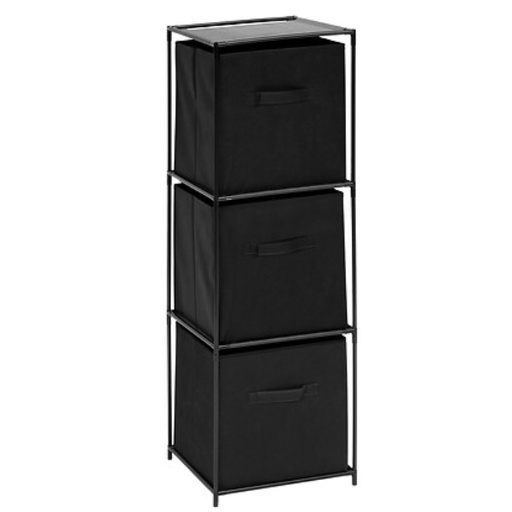
Why this product suits this profile: This compact black shelving unit measures 34 × 34 × 99 cm and provides three open compartments and three matching boxes. It is suitable for small living spaces, hallways, bedrooms or a student home office.
The external dimensions and number of compartments are clearly specified. The boxes make it easier to sort smaller items instead of offering only open storage space.
Polypropylene and steel; three compartments and three boxes; self-assembly with usage guidance.
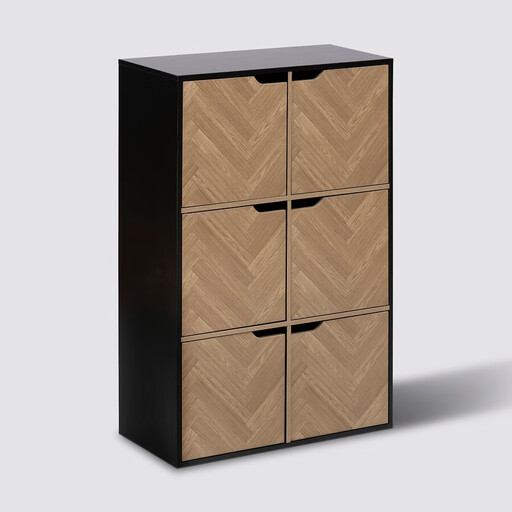
Why this product suits this profile: Measuring 67.5 × 32 × 100.5 cm, this piece of furniture has six separate sections with doors. It is suitable for living rooms, hallways, bedrooms or home offices when you want the contents to be less visible.
The product data specifies a maximum load of 5 kg per compartment. The required anti-tip protection with wall fixing is expressly stipulated.
Six compartments with doors; steel, bamboo, MDF and chipboard elements; FSC information and at least two years of statutory warranty rights according to the product information.
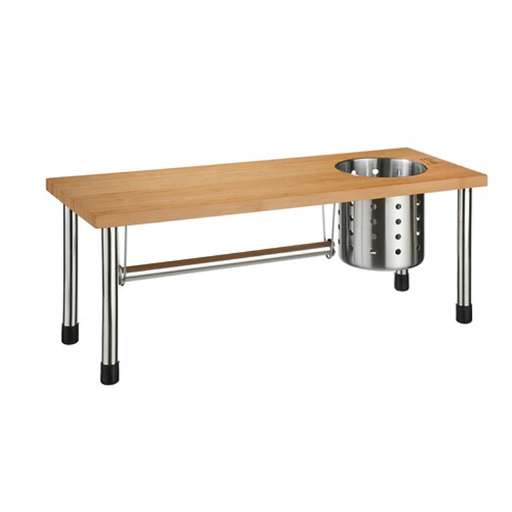
Why this product suits this profile: This compact kitchen shelving unit with four shelves and a utensil holder measures 55.5 × 20 × 21 cm. It is suitable for worktops, bathroom surfaces or small household areas.
The usage limitations for bamboo and stainless steel are described: direct exposure to water, heat sources and overloading should be avoided. This makes it easier to plan the location realistically.
Four shelves; separate utensil holder; self-assembly with components and instructions included.
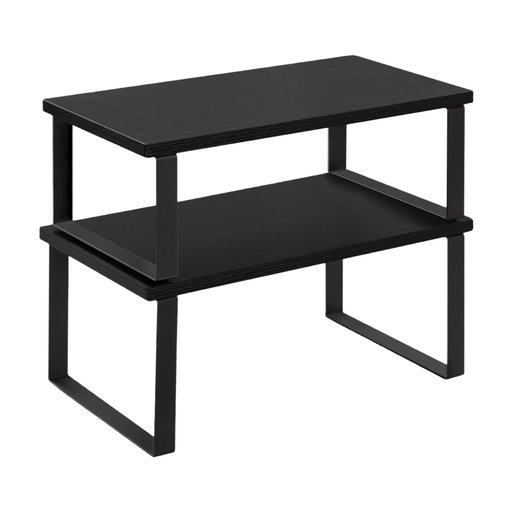
Why this product suits this profile: Two differently sized elements can be stacked, used separately or arranged in an L-shape. This makes them suitable for kitchens, bathrooms, desks and dressing tables with changing storage needs.
The dimensions of both tiers and the maximum load of 10 kg per tier are specified. The arrangement can be adapted to the available space.
Two-part concept; several placement options; MDF construction; designed for kitchens, living rooms, studies and bathrooms.
We have put together a complete, regularly updated list of products that fully meet these strict selection criteria and the safety regulations applicable in the EU.
The service life depends greatly on the load, location and assembly. Remove dust regularly with a dry or slightly damp cloth. With wood-based materials, avoid leaving moisture standing on the surface. Dry bamboo immediately after cleaning; metal parts can be cared for with a mild cleaning product.
After assembly and then at regular intervals, check:
A shelving unit should never be used as a seat or step. The load must be distributed evenly and remain below the stated load capacity.
For hallways, bedrooms or small offices, shallow depths are often more practical, provided the items you want to store will fit. Measure the available space and also allow for doors, skirting boards and the clearance needed to walk through.
This depends on the design and the manufacturer’s specifications. Tall or narrow models can tip over and may need to be secured to the wall using the supplied anti-tip protection. This fixing should not be omitted, particularly in households with children.
A kitchen shelving unit should be suitable for the available space, the level of moisture and the intended load. Compact MDF models are suitable for spices and small utensils. For larger provisions, check the load capacity per tier and the stability particularly carefully.