
Lieferung heute & morgen

Qualitätsgarantie

Willkommens-Angebote freischalten: KOSTENLOSE Lieferung | Bis zu 80 % RABATT | Kostenlose 30-Tage-JoyPlus-Testphase
App herunterladen
A shelving unit creates extra storage space, but the wrong choice can quickly prove impractical. Insufficient load capacity, unsuitable dimensions or an unstable construction can make it difficult to store shoes, household items, tools and supplies safely. Three common pitfalls are behind many unsuitable purchases:
The right option depends on where you plan to use it and what you need to store. A shoe rack for the hallway needs different features from a heavy-duty shelving unit for the garage or a storage rack for tools.
Measure the available space in several places before you buy. As well as the area the unit will occupy, take doorways, radiators, skirting boards and room to move around into account. Depth is also important in a cellar or garage: a unit that is too deep can block walkways, while one that is too shallow may not accommodate larger boxes or tool cases.
A shelving unit with adjustable shelves lets you change the spacing to suit different items, helping to avoid wasted space. A modular shelving unit can be a good option if your storage needs may change or you want to combine several units.
Check the static load capacity per shelf as well as the maximum total load. A static load means that items are resting still on the shelf. Moving heavy boxes or loading a shelf unevenly can create additional forces.
A storage unit with plastic or engineered-wood shelves is often sufficient for lightweight household items, decorations or shoes. For tins of paint, machinery, drinks crates or workshop materials, a heavy-duty shelving unit with a steel frame is a better choice. Distribute the load as evenly as possible. Place heavier items on the lower shelves and lighter ones above.
A metal shelving unit, if well designed, provides a sturdy base for cellars, sheds and garages. MDF or chipboard shelves can offer a practical, flat surface, but should be protected from high levels of moisture. In damp cellars or unheated areas, check the manufacturer’s guidance on suitable conditions.
Also check:
A boltless shelving unit or self-assembly shelving unit can usually be put together quickly. However, “tool-free” does not mean you can skip safety precautions. Read the instructions, wear work gloves when handling metal parts and place the unit on a level surface.
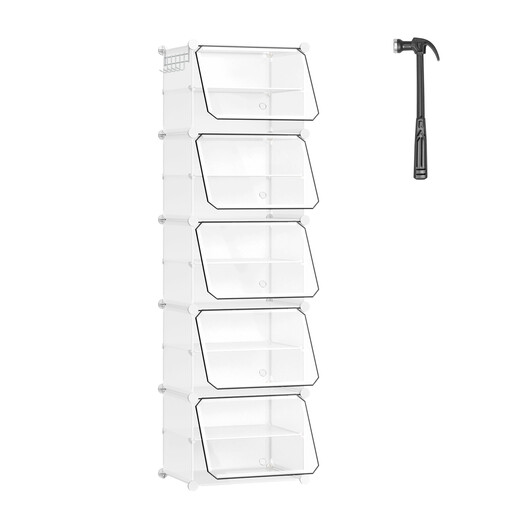
Why it’s a good match: This modular shoe rack has ten compartments and holds up to ten pairs of shoes. It’s suitable for hallways, wardrobes or smaller homes.
The individual compartments help keep things tidy. The doors partly conceal your shoes, and clips and a rubber mallet are supplied for assembly. Check all the connections once it’s assembled.
The PP plastic panels are easy to wipe clean. Side hooks provide space for keys, bags or accessories.
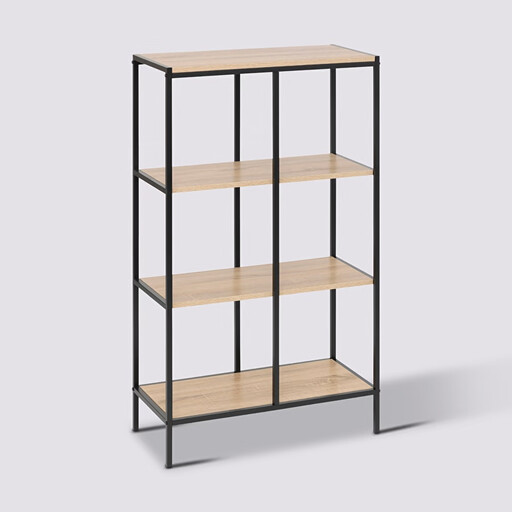
Why it’s a good match: Combining a steel frame with six boxes, this unit is designed for living spaces, storage areas and everyday household storage needs.
The product details specify dimensions of 68.8 × 32 × 116 cm, a maximum load of 40 kg and an assembly time of around 30 minutes for two people. This makes it easier to check whether it’s right for your space and needs before you buy.
Steel and zinc components form the vertical frame. The top and bottom shelves are made of chipboard, and an FSC certification is specified.
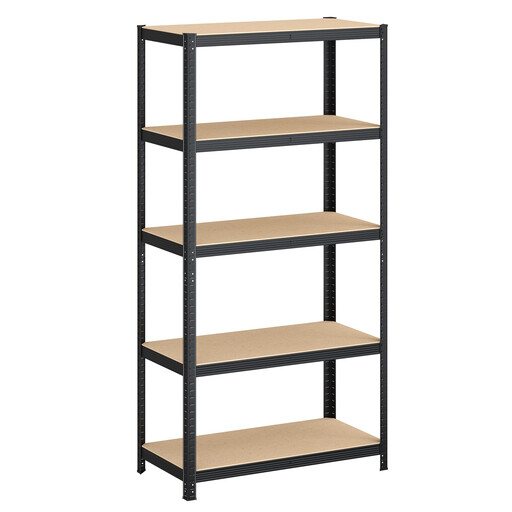
Why it’s a good match: Measuring 50 × 100 × 200 cm with five tiers, this storage rack is suited to garages, sheds, cellars, workshops and work areas.
The stated capacities distinguish between a static load of 120 kg per shelf and a total load of 600 kg. The shelves adjust in 5 cm increments, and the anti-tip kit must be secured before use.
The galvanised steel frame, tool-free assembly and option to split the unit into two provide flexible ways to use it.
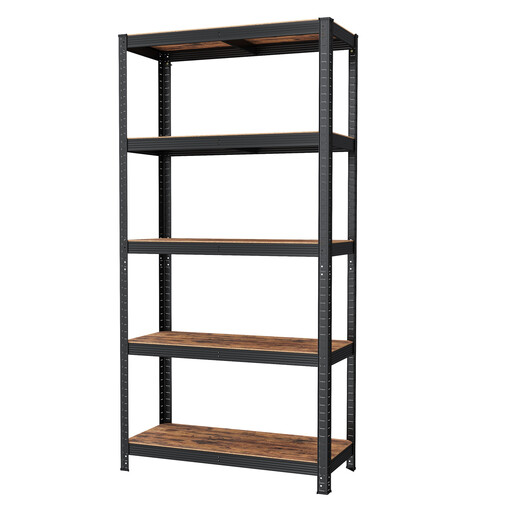
Why it’s a good match: Its higher per-shelf capacity makes it suitable for tools, seasonal equipment and other heavy items in the garage, cellar or workshop.
The product details specify a static load of 175 kg per tier and 875 kg in total. Check the dimensions of 40 × 90 × 180 cm against the space available before buying.
The powder-coated steel frame, adjustable shelves and option to split the unit into two make it adaptable to different spaces.
We’ve put together a complete, regularly updated list of products that meet these strict selection criteria and fully comply with the safety regulations in force in the EU.
Keep small parts and the supplied rubber mallet for a plastic shoe rack out of reach of young children. Children must not climb on, hang from or stand on shelving units.
It depends on the model. The key figure is the maximum static load per shelf, not just the total load. For example, the JOYFURNOS model mentioned above is rated for 120 kg per tier and 600 kg in total. The manufacturer’s specifications apply only when the unit is assembled correctly, loaded evenly and used as intended.
For tools, supplies and machinery, a metal or heavy-duty shelving unit with adjustable shelves is a good choice. Check the material guidance if the space is unheated or damp. For shoes, decorations and lightweight household items, a storage unit or modular shoe rack may be all you need.
Its lifespan depends on the materials, load, assembly, moisture and care. Overloading, an uneven surface or failing to fit an anti-tip kit can affect stability. Stick to the per-shelf load limit, keep the unit dry and check the connections regularly to reduce the risk of common wear and tear.