
Lieferung heute & morgen

Qualitätsgarantie

Willkommens-Angebote freischalten: KOSTENLOSE Lieferung | Bis zu 80 % RABATT | Kostenlose 30-Tage-JoyPlus-Testphase
App herunterladen
A shelving unit should provide storage, make good use of the space available and suit the way you plan to use it. In practice, unclear dimensions, overstated load capacity or an unsuitable installation method can often lead to the wrong purchase. So whether you’re looking for shelving for the kitchen, living room, home office, garage or cellar, don’t focus on design alone.
A tall freestanding shelving unit may look spacious in photos, but it might not fit under a sloping ceiling, between two pieces of furniture or through a narrow doorway. Before buying, check the following measurements:
With a corner shelving unit, you should also check how far it extends into the room in both directions. A space-saving design won’t necessarily suit every corner.
The stated load capacity may refer to one shelf, the entire unit or only a static load. A heavy-duty shelving unit with a total capacity of 600 kg shouldn’t automatically be loaded with 600 kg on a single shelf.
Check the following:
Always place heavy items at the bottom. Tall shelving units may need an anti-tip device, especially in homes with children or pets.
A clip-together system or tool-free design can make assembly easier. Even so, connectors must be properly engaged and the shelving unit must stand securely. If you’re buying a metal shelving unit for the garage or cellar, also check whether the area is dry enough and whether the floor is uneven.
A no-drill shelving unit can be a good choice if you want to avoid damaging walls or tiles. Tension-pole models are often fitted between the floor and ceiling. Make sure the room height, tension range and surfaces all meet the manufacturer’s specifications.
A kitchen shelving unit made from coated wood-based panels is easy to clean and suitable for dry indoor spaces. Metal frames with MDF or chipboard shelves are often used for freestanding shelving in cellars, storage rooms or garages. Check whether the shelves are suitable for damp conditions. The word “steel” alone doesn’t tell you how sturdy a product is; profile thickness, shelf construction and the type of connectors also matter.
A shelving unit with several shelves makes better use of vertical space. Adjustable shelves are useful if you need to store items of different sizes. Small increments are handy for tools, boxes and household appliances. For books or decorative items, a fixed shelf spacing may be all you need.
Tall furniture should stand on a level floor. If an anti-tip kit is included, fit it according to the instructions. An open shelving unit keeps everything visible and easy to reach. This makes items easier to access, but you’ll need to keep things organised and may need to add extra safety measures.
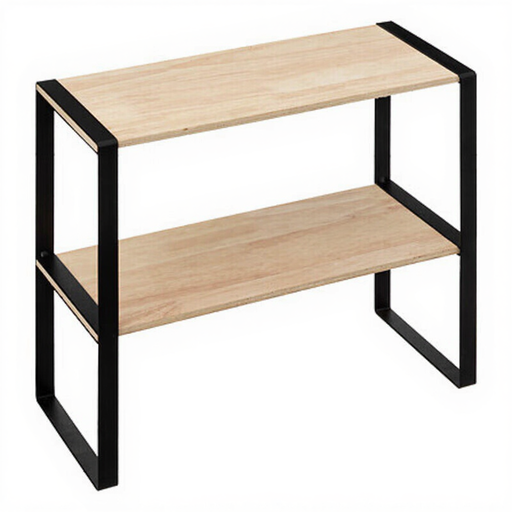
Why it suits this use: This compact two-tier shelving unit is ideal for small kitchens, bedside tables, side tables or a modest home office. According to the product details, it measures 40 cm deep, 30 cm wide and 35 cm high.
Its small footprint makes it easier to check the measurements before buying. The stated total load capacity of 10 kg, with 5 kg per shelf, gives you a clear limit to help prevent overloading.
Two storage shelves, freestanding use and a wood-based surface for dry indoor spaces.
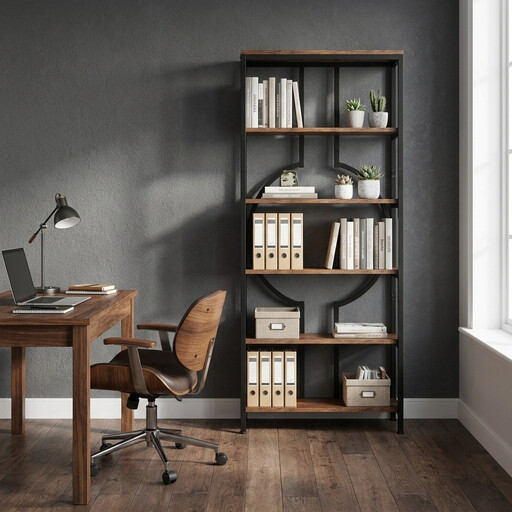
Why it suits this use: This six-tier bookcase combines open storage with a metal frame, making it suitable for the living room, bedroom or home office. The product measures 30 × 70 × 180 cm.
The product information states a load capacity of up to 60 lb per shelf. Adjustable feet can help compensate for uneven floors, but you should still check that the unit is stable before use.
Six open shelves, a metal frame, MDF shelves and adjustable feet for indoor use.
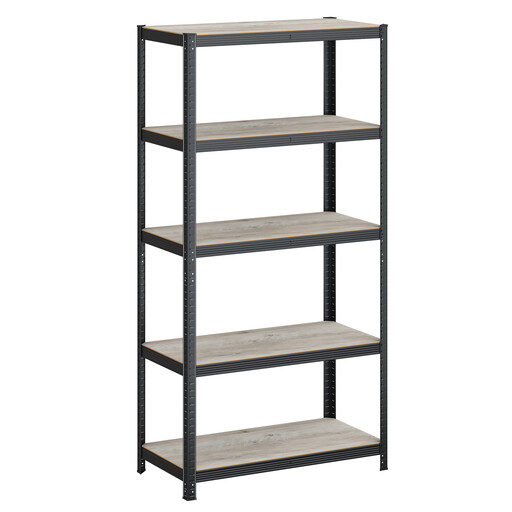
Why it suits this use: This heavy-duty shelving unit is designed for storing lots of tools, supplies or equipment in the garage, cellar, shed or utility room. It measures 50 × 100 × 200 cm.
The product information distinguishes between a static load of 120 kg per shelf and a total load of 600 kg. The shelves can be adjusted in 5 cm increments, and the anti-tip kit should be fitted before use.
Galvanised steel frame, five adjustable shelves and the option to split the unit into two sections, according to the product description.
We’ve put together a complete, regularly updated list of products that meet these strict selection criteria and the safety requirements in force across the EU.
For no-drill shelving, make sure the clamping or tension mechanism suits the height of the room. The ceiling and floor should also be sturdy enough and resistant to pressure marks. If you live in a rented property, check that the installation method is suitable for the surfaces in your home.
This depends on the model and how the load is distributed. Check the stated static load capacity per shelf and the total load capacity. These figures usually apply only when the weight is evenly distributed and the unit is assembled correctly.
Its lifespan depends on the material, load, moisture, assembly and how it is used. A metal shelving unit in a dry garage or cellar can last for years when used correctly. Wood-based shelves should be protected from water and prolonged exposure to high humidity.
If space is limited, consider a narrow kitchen shelving unit, a corner unit or a two-tier shelf. Before buying, compare the depth, shelf height and load capacity for the crockery, supplies or kitchen appliances you plan to store.