
Lieferung heute & morgen

Qualitätsgarantie

Willkommens-Angebote freischalten: KOSTENLOSE Lieferung | Bis zu 80 % RABATT | Kostenlose 30-Tage-JoyPlus-Testphase
App herunterladen
A shelving unit should create storage space without overwhelming the room. However, unclear product information, incorrect measurements or an unsuitable installation location can quickly lead to disappointing purchases. This applies just as much to a bookcase in the living room as to a wall shelf in the hallway, a kitchen shelf or a space-saving shelving unit in the home office.
A shelving unit with several tiers may look spacious in the product photo, while the actual shelf height or depth is not sufficient for folders, large books or storage containers. So, don’t just check the width and height. Also consider:
In smaller homes, a slim freestanding shelving unit may be more practical than a wide model. A corner shelf, on the other hand, makes use of a niche but requires suitable clearances from the wall or floor.
‘Wood effect’ does not automatically mean solid wood. Shelves are often made from MDF, chipboard or coated wood-based materials. This is not necessarily a disadvantage, but the material should suit how you intend to use the product. A solid wood shelving unit differs from one with MDF or chipboard shelves in terms of weight, surface finish and care requirements.
Look for specific information about:
An MDF bathroom shelf should not automatically be exposed to direct steam or splashing water over a prolonged period if the supplier does not specify that it is suitable for this purpose.
Depending on the product, the maximum load may refer to an individual shelf or the shelving unit as a whole. In practice, the weight is not always distributed evenly, either. Heavy books, files or jars of provisions should ideally be placed on the lower shelves.
A tip-over restraint is particularly important for tall or narrow furniture. In households with children or pets, a freestanding shelving unit should be secured to the wall in accordance with the manufacturer’s instructions. For a hanging shelf or wall shelf, the wall plugs and screws must be suitable for the type of wall. Plasterboard requires different fixing solutions from a brick or concrete wall.
Measure the available area in several places. Walls and floors are not always completely straight. Also allow a few centimetres of clearance for assembly, skirting boards and opening cupboard or room doors.
Different rooms have different priorities:
More tiers increase the usable surface area, but only if the shelves remain practical to access. A 200 cm-high shelving unit provides plenty of vertical storage, but requires secure positioning and, where necessary, attachment to the wall. Lower shelves are more convenient for items that are used frequently.
For furniture that needs to be assembled at home, check the contents, instructions and tools required. Some products already include assembly materials, but with wall-mounted models you often need to check whether the supplied wall plugs are suitable for your wall. Coated surfaces can usually be cleaned with a dry or slightly damp cloth. Abrasive cleaning products can damage paintwork and coatings.
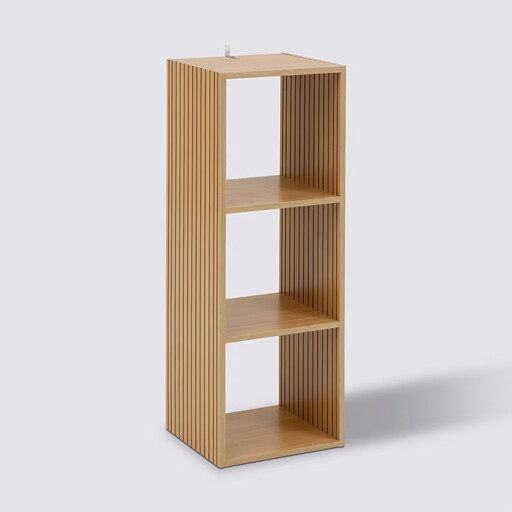
Why this product suits this profile: Its compact dimensions make it suitable for smaller kitchens, bathrooms, hallways or niches. The model requires self-assembly and only one person is needed.
The stated external dimensions of 35 × 32 × 102 cm and maximum load capacity of 35 kg make it easier to plan the available space and weight distribution accurately.
Bamboo, MDF and chipboard elements; FSC information and the statutory warranty of at least two years, according to the product information.
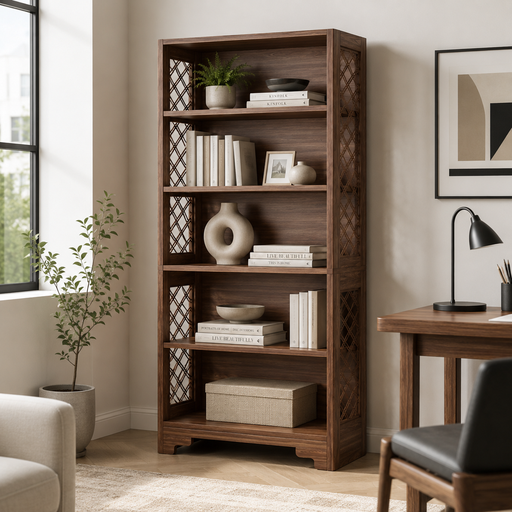
Why this product suits this profile: Six open tiers and a height of 180 cm provide plenty of room for books, folders and decorations in the living room or home office.
The product specifications state dimensions of 30 × 80 × 180 cm and a load capacity of up to 34 kg per shelf. This supports realistic weight distribution.
Six tiers, shelves measuring 1.5 cm thick according to the supplier, and a rear panel to support the structure.
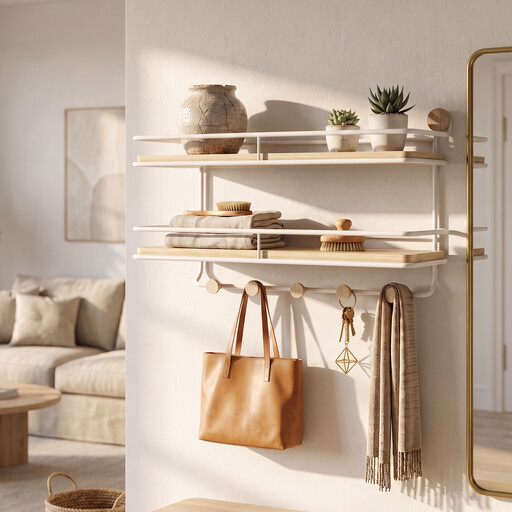
Why this product suits this profile: This wall-mounted model combines two storage surfaces with five hooks, making it suitable for hallways, bedrooms, bathrooms or entrance areas.
The instructions require secure wall mounting and suitable wall plugs. The stated maximum load of 44 lb must not be exceeded.
FSC-certified rubberwood according to the product information, a powder-coated metal construction, plus two tiers and five hooks.
We have put together a complete, regularly updated list of products that fully meet these strict selection criteria and the safety regulations applicable in the EU.
Use fixings that are suitable for the type of wall and the intended load. Carefully mark the drilling points, check that the unit is level and inspect all screw connections after assembly. For a tall freestanding shelving unit, you should also use the tip-over restraint specified by the manufacturer.
Its lifespan depends on the material, load, moisture, assembly and care. A shelving unit will generally remain functional for longer if you observe the permitted load capacity, distribute the weight evenly and regularly check the structure for loose connections. The specific material and care instructions are particularly important for bathrooms and kitchens.
The price depends, among other things, on the size, material, number of tiers, mounting method and load capacity. A small desk shelf or kitchen shelf requires less material than a tall bookcase. So, don’t just compare the purchase price. Also consider the contents, assembly effort, wall fixings required and intended location.