
Lieferung heute & morgen

Qualitätsgarantie

Willkommens-Angebote freischalten: KOSTENLOSE Lieferung | Bis zu 80 % RABATT | Kostenlose 30-Tage-JoyPlus-Testphase
App herunterladen
A shelving unit should create order without making a room feel unnecessarily cramped. That is why colour and price are not the only factors to consider. Unclear dimensions, exaggerated load-bearing claims or underestimated assembly requirements can often mean that a shelving unit is not suitable for its intended everyday use.
This buying guide from the Joybuy Product Recommendation Officer explains which details are relevant before purchasing a shelving unit. It covers freestanding shelving units, wall shelves, bookcases, shoe racks and kitchen shelving, as well as models for living rooms, hallways, cellars and garages.
A narrow shelving unit can look spacious in product images, even though the individual compartments have limited depth or height. You should therefore check:
A narrow shoe rack with a depth of 28 cm may be suitable for a hallway. For ring binders, larger books or tools, however, this depth may not be sufficient.
The description “robust” is difficult to assess without technical specifications. Look at the maximum load per shelf, the total load capacity and the conditions under which these figures apply. A static load rating does not automatically mean that the shelving unit is designed for dynamic loads, such as those caused by frequent repositioning.
The anti-tip protection is also important for tall or narrow furniture. If wall mounting is provided for or required, check whether the wall plugs and screws are suitable for the type of wall in question.
A shelving unit for self-assembly requires a level surface and careful alignment. Push-fit systems may not require tools, while screw-fastened constructions take more time. Wood-based materials, laminate and coated metal parts should generally only be cleaned with a dry or slightly damp cloth. Moisture can cause wood-based materials to warp.
A shelving unit for the living room can have a decorative look, but should offer enough depth for books, speakers or storage boxes. In the bedroom or home office, enclosed shelving units with compartments are useful when you want to keep items less visible.
Vertical solutions are ideal for hallways because they require little floor space. A space-saving shelving unit makes use of the room’s height without narrowing passageways. Beforehand, measure not only the available floor space, but also the route through doors, stairwells and lifts.
Heavy items should ideally be placed in the lower sections. Do not exceed the stated load capacity. For a heavy-duty shelving unit or storage shelving unit for a garage, cellar or utility room, the following points are also relevant:
For example, the JOYFURNOS shelving unit with five levels is stated to support up to 120 kg per level and 600 kg in total. According to the product description, these figures refer to a static load. For use in a garage or cellar, also note that the model is not intended for very damp environments.
Depending on the design, metal frames provide a sturdy base. MDF, chipboard and other wood-based materials differ in terms of surface finish, moisture resistance and weight. A kitchen shelving unit should not be placed directly in an area that is constantly wet. With open compartments, check the edges and surfaces regularly for damage.
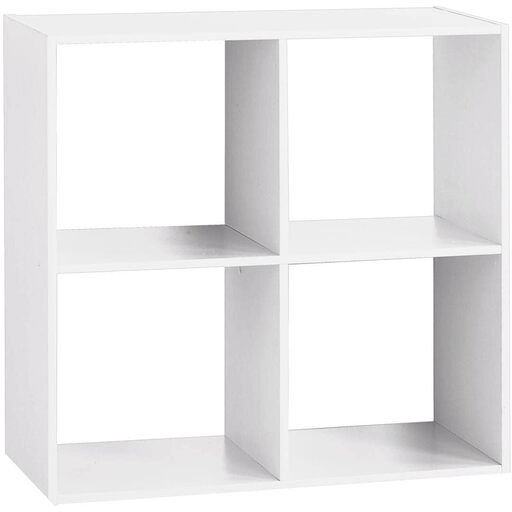
Why this product suits this profile: This compact freestanding shelving unit provides four levels with a depth of 32 cm, making it suitable for decorations, smaller books or everyday items in living and working areas.
The dimensions, four levels and weight of 10.7 kg are clearly stated. Follow the assembly and wall-mounting instructions before use.
Four storage surfaces, a painted finish and a square format measuring 67.6 x 67.6 cm.
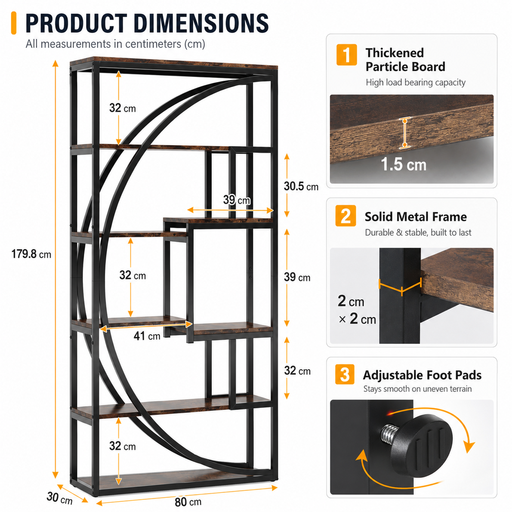
Why this product suits this profile: This tall bookcase combines five levels with eight open compartments and makes good use of vertical space in the living room, bedroom or home office.
The chipboard construction, black metal frame and dimensions of 80 x 30 x 179.8 cm are clearly specified. Complete the required assembly exactly as described in the instructions.
Eight open storage compartments, a height of 180 cm and a combination of wood-based material and metal.
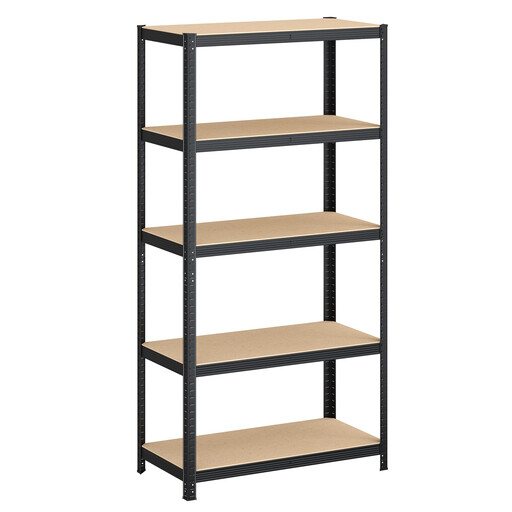
Why this product suits this profile: This storage shelving unit is designed for garages, cellars, sheds or utility rooms and offers adjustable levels for items of different sizes.
The product description states a capacity of 120 kg per level, 600 kg in total and static use. Secure the shelving unit to the wall using the supplied anti-tip protection.
Five levels, 5 cm adjustment increments and a divisible design; stated overall dimensions of 50 x 100 x 200 cm.
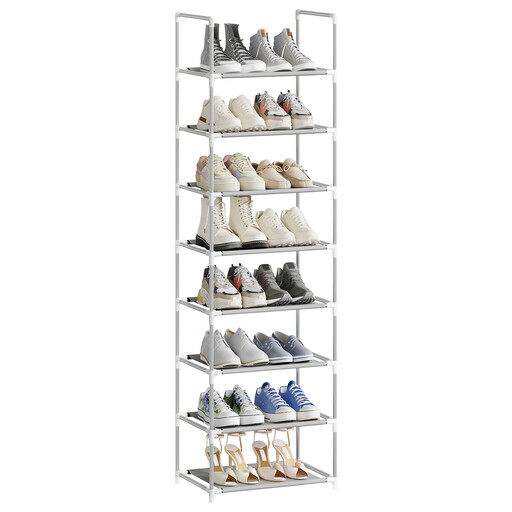
Why this product suits this profile: This narrow shoe rack makes use of vertical space and requires just 41 x 28 cm of floor space. It is designed for hallways, entrance halls or other areas with limited floor space.
The load capacity is stated as up to 5 kg per level. Removable shelves, the option to split it into two units and anti-tip protection are all explicitly specified.
Eight levels, space for up to 16 pairs of shoes according to the product description, and tool-free push-fit assembly.
We have put together a complete, regularly updated list of products that fully meet these strict selection criteria and the safety regulations applicable in the EU.
A depth of around 25 to 30 cm is often practical for books, while shoes may require less depth depending on the model. For boxes, tools or supplies, compare the actual dimensions of the items with the usable shelf depth.
This depends on the design, height and the manufacturer’s instructions. For tall, narrow or heavily loaded shelving units, anti-tip protection is an important safety measure. Always follow the assembly instructions and choose suitable wall fixings.
Its service life depends on the material, load, moisture, assembly and care. Even weight distribution, observing the load capacity and protecting the unit from constant damp can help maintain its usability. It is not possible to give an absolute lifespan without knowing the specific conditions of use.