
Lieferung heute & morgen

Qualitätsgarantie

Willkommens-Angebote freischalten: KOSTENLOSE Lieferung | Bis zu 80 % RABATT | Kostenlose 30-Tage-JoyPlus-Testphase
App herunterladen
A shelving unit should create storage space without making the room feel unnecessarily cluttered. In practice, however, unclear dimensions, overestimated load capacities and complicated assembly often lead to unsuitable purchases. This applies just as much to a freestanding living room shelf as to a kitchen shelf, bookcase or space-saving shelving unit in a student flat.
A shelving unit with a width of 68 cm does not automatically provide enough space for ring binders or larger storage boxes. The crucial factors are the internal dimensions of the compartments, their height and depth. Plinths, side panels and intermediate shelves reduce the amount of space that is actually usable.
You should therefore measure the following before buying:
A maximum total load of, for example, 35 or 70 kg does not always indicate how much weight can be placed on an individual shelf. Books, ring binders and crockery create a high point or surface load. With a shelving unit with compartments, you should therefore check whether the stated figures apply to the entire structure or to individual shelves.
Heavy items should be placed as low down as possible. The assembly instructions and the manufacturer’s stated permissible load are binding.
Many models are designed for self-assembly. This can be convenient, but it requires a level surface, correctly tightened connections and, for taller furniture, an anti-tip device. A wall shelf must be secured using plugs and screws suitable for the wall. With a freestanding shelving unit, check whether wall anchoring is provided or required.
Children should not climb on shelving. Permanent attachment is particularly important for a room-divider shelf or tall freestanding shelving unit.
A narrow, tall shelving unit makes efficient use of wall space, while a low model can be placed beneath a window or used as a sideboard. Books often require more clearance than small decorative items. A modular shelving unit is a practical choice if you expect your furnishings to change later.
Pay attention to the combination of:
A metal shelving unit is often suitable for areas where a robust, easy-care surface is required. A bamboo shelving unit combines a small footprint with a natural appearance, but should not be left standing in water. With a wooden shelving unit or a model made from chipboard or MDF, edge sealing, surface coating and cleaning instructions are important.
For the kitchen, the material should be suitable for moisture, grease and regular cleaning. Unless the manufacturer states otherwise, wooden and bamboo components should only be wiped with a slightly damp cloth and then kept dry.
Check whether the storage shelving unit is supplied with wall fixings, an anti-tip device or non-slip feet. The product weight may provide an indication of the construction, but it does not replace a stated load capacity. For self-assembly, a second person, a suitable protective surface and a tape measure can be helpful.
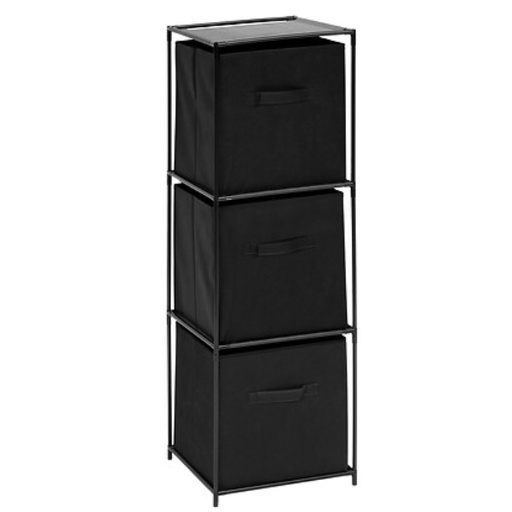
Why this product suits this profile: This compact shelving unit measures 34 x 34 x 99 cm and comes with three matching storage boxes. This makes it suitable for a hallway, bedroom, office or smaller home where open and closed storage need to be combined.
The dimensions and number of compartments are clearly stated. The boxes help keep small items out of sight rather than permanently on display. However, the maximum load per compartment must still not be exceeded.
Three compartments, three boxes and a combination of polypropylene and steel; designed for self-assembly.
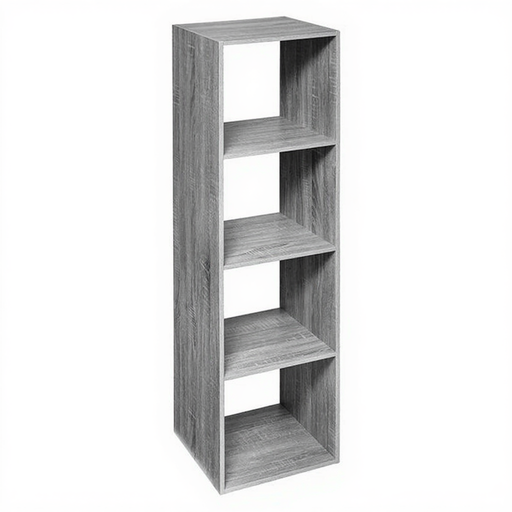
Why this product suits this profile: This grey freestanding shelving unit offers four open compartments and measures 34.5 x 32 x 134 cm. It can be combined with other furniture and boxes from the Mix'n-Modul range, making it suitable for a planned storage concept.
The stated maximum total load is 35 kg. A wall-fixing kit is included, addressing the risk of tipping posed by the relatively tall design.
FSC-certified according to the product details; four compartments, a maximum total load of 35 kg and an assembly time of around 30 minutes with two people.
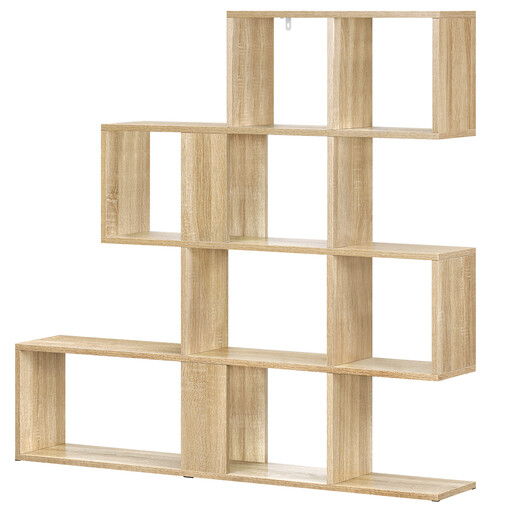
Why this product suits this profile: Measuring 115 x 109.5 x 19.5 cm and offering eleven open compartments, this shelving unit is suitable as a bookcase, office storage unit or room divider. Its shallow depth makes it ideal for narrow spaces.
The product details specify a maximum total load of 70 kg and an anti-tip device. This must be permanently secured to the wall; the compartments are not designed for climbing or hanging from.
Eleven open compartments, coated wood-based material, non-slip feet and the option to use it as a room divider or storage shelving unit.
We have put together a complete, regularly updated list of products that fully meet these strict selection criteria and the safety regulations applicable in the EU.
First place the shelving unit on a level surface and check whether it wobbles after assembly. For tall or wide models, attach the wall fixing as instructed. For a kitchen shelf, leave sufficient distance from splashing water and heat sources. A metal shelving unit can usually be cleaned with a damp cloth; standing moisture should be avoided with bamboo or wooden shelving.
Boxes can make open compartments more organised. When choosing them, pay attention to their external dimensions and make sure they do not obstruct ventilation, doors or wall anchoring. Heavy books and files should be distributed evenly so that no individual shelf is placed under unnecessary strain.
This depends on the construction, material, fixings and distribution of the load. The relevant information is provided by the respective manufacturer. Distinguish between the maximum total load and the load capacity per compartment. Heavy items should be placed at the bottom and distributed as evenly as possible.
Use the supplied anti-tip device, if available, and choose plugs and screws that are suitable for the wall material. Drywall requires different fixing solutions from concrete or masonry. Assembly should be carried out according to the instructions; a shelving unit must not be used as a climbing aid.
There is no single lifespan that applies in every case. It is affected by the material, moisture, load, assembly and care. Staying within the permitted load capacity, protecting the furniture from prolonged exposure to moisture and checking screw connections occasionally will help reduce common causes of wear.