
Lieferung heute & morgen

Qualitätsgarantie

Willkommens-Angebote freischalten: KOSTENLOSE Lieferung | Bis zu 80 % RABATT | Kostenlose 30-Tage-JoyPlus-Testphase
App herunterladen
A shelving unit should help you stay organised without becoming a space problem itself. Yet product images and general marketing claims don’t always help you make the right choice. Dimensions, load capacity and fixing method are often checked too late. That can mean a kitchen shelf won’t fit beneath the wall cupboard, a bathroom shelf won’t stay secure on a damp wall or a freestanding unit takes up more floor space than necessary in your home office.
“Compact” doesn’t automatically mean a shelving unit will fit into every alcove. Width, depth and height are what matter – and with a corner unit, you’ll also need to check the length of both sides. Remember to allow for skirting boards, taps, door openings and overhanging worktops, too.
A two-tier shelf on the worktop can be a good choice for a small kitchen. In a living room or home office, a taller freestanding unit that makes use of vertical space is often a better fit.
There’s a clear difference between decorative shelves and sturdy storage solutions. If the maximum load isn’t specified, don’t plan to store heavy food supplies, stacks of books or glass bottles on the unit. This is especially important with a wall shelf attached using adhesive strips or suction cups.
Heavy items should always go on the lower shelves. If you have children or pets, check whether the unit has an anti-tip kit or is designed to be fixed to the wall.
A shelving unit made from wood and metal can be a good choice for a living room, bedroom or home office. In a bathroom, you also need to consider moisture, ventilation and the quality of the finish. Avoid leaving water standing on wood-based materials. A material described as water-resistant isn’t automatically suitable for every wet area.
Measure the available space at three points or more. Walls and floors aren’t always perfectly straight. When choosing a space-saving storage unit, also consider how much usable storage it offers: a narrow frame may take up little floor space, but it might not be deep enough for ring binders or food containers.
The stated load capacity is an important factor when choosing a shelving unit. If it has several shelves, check whether the figure applies to each shelf or to the unit as a whole. A freestanding model should be placed on a level floor. Tall, narrow units may need additional securing.
If a product doesn’t state its maximum load, it’s best to use it carefully and store only light items on it. Decorations, towels and sponges put less strain on a shelf than heavy books or tins.
Steel frames can create a clean, industrial look. Wood, acacia, MDF and chipboard vary in their finishes, sensitivity to moisture and care requirements. Also check whether the shelving unit is supplied flat-packed for self-assembly, and whether it comes with tools, screws and clear instructions.
For adhesive and suction-cup fittings, the surface needs to be clean, dry, smooth and strong enough to support them. Fitting them to rough plaster, a dusty surface or delicate wallpaper can affect how well they hold.
The models below suit a range of homes and uses. Our selection is based on the stated dimensions, materials, fitting methods and usage advice.
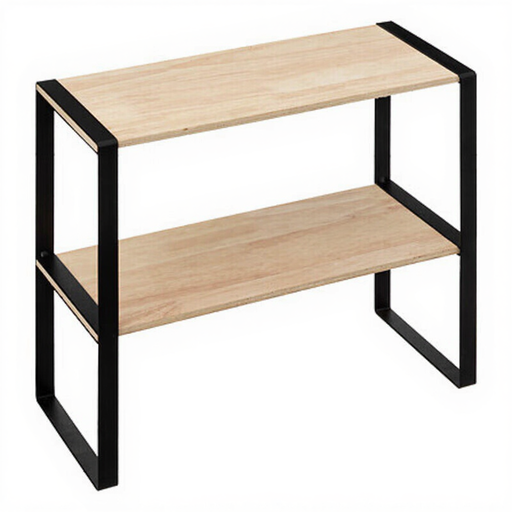
Why it suits this need: Its compact, two-tier design is ideal for smaller surfaces, such as beside the bed, on a sideboard or in a small kitchen.
The stated dimensions make it easier to plan where it will go. The product also has a stated maximum total load of 10 kg, with 5 kg per shelf.
Two shelves, freestanding design and wipe-clean surface, according to the product details.
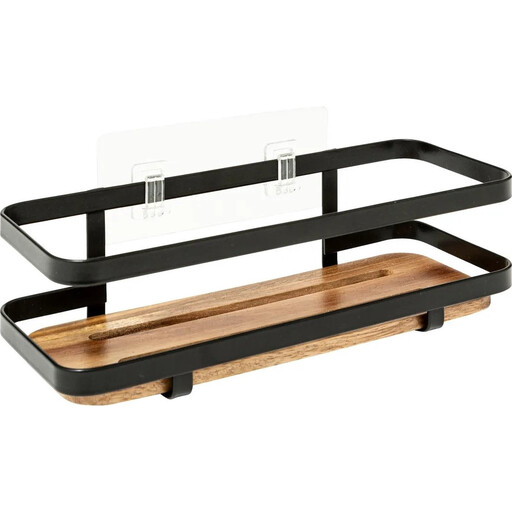
Why it suits this need: This slim bathroom shelf pairs a steel frame with an acacia shelf. It’s a useful option for rented homes if you want to avoid drilling holes.
According to the product description, it can be fixed in place with adhesive strips or suction cups. As no maximum load is stated, it’s best suited to lightweight bathroom essentials.
Compact dimensions, steel and acacia wood, plus an FSC statement in the product information.
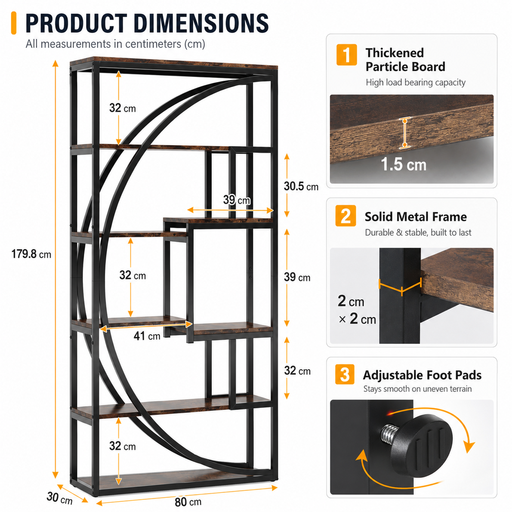
Why it suits this need: At 179.8 cm high, with eight open compartments, this bookcase is designed for living rooms, studies or home offices where you need plenty of vertical storage.
The dimensions and number of compartments are clearly stated. Before assembly, check that there’s enough clearance above the unit and consider fitting an anti-tip restraint because of its height.
Five tiers, eight open storage compartments and a combination of chipboard and a black metal frame.
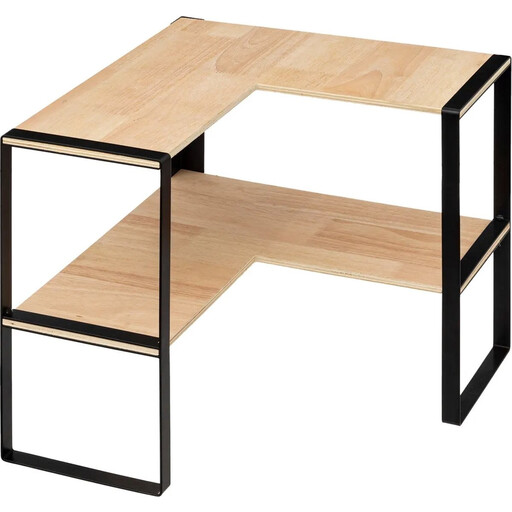
Why it suits this need: Its corner design makes use of worktop or cupboard space that often goes unused, with two tiers for spices, containers or kitchen utensils.
At 40 × 40 × 35 cm, its external dimensions are clearly specified. That reduces the risk of ordering a corner unit that’s the wrong depth.
Two shelves, steel and plywood components, and self-assembly, according to the product details.
We’ve put together a complete, regularly updated list of products that meet these strict selection criteria and fully comply with the safety regulations in force in the EU.
First, check the wall material and where you plan to fix the unit. Solid walls need different wall plugs from plasterboard. Follow the assembly instructions when securing the shelving unit, and add an anti-tip restraint if it’s tall. Adhesive or suction-cup fittings need a smooth, dry, grease-free surface.
Its lifespan depends on the material, load, assembly and care. A shelving unit that’s regularly overloaded or exposed to moisture may wear out more quickly. Stay within the stated load capacity, check screw fittings regularly and wipe surfaces with a suitable, slightly damp cloth.
The price depends on factors such as size, material, number of shelves, fitting method and included fixtures. A small kitchen or bathroom shelf uses less material, while a tall bookcase with several tiers takes up more space and requires more assembly. So don’t compare the purchase price alone: also consider the space you’ll need, the load capacity and what’s included.