
Lieferung heute & morgen

Qualitätsgarantie

Willkommens-Angebote freischalten: KOSTENLOSE Lieferung | Bis zu 80 % RABATT | Kostenlose 30-Tage-JoyPlus-Testphase
App herunterladen
A shelving unit creates extra storage space, can make small rooms easier to organise and keeps frequently used items within reach. However, product images and general advertising claims do not always lead to the right purchasing decision. The key factors are dimensions, load capacity, material and the intended location.
A shelving unit must fit not only the available width. Depth, height, door openings, skirting boards and clearance areas also need to be taken into account. For example, a 3-tier shelving unit can provide plenty of storage space, but may quickly become an obstruction in a narrow hallway if its depth has been underestimated.
Before buying, measure the space at several points. For a wall-mounted shelf, you also need to consider the position of the drill holes, the condition of the wall and the required clearance from doors or windows.
A large number of compartments does not automatically mean that heavy books, provisions or kitchen appliances can be stored safely. So look for a stated maximum load and distinguish between the load capacity per shelf and the total load capacity.
If no specific figure is provided, heavy items should not be stored there. Even distribution is particularly important for a kitchen shelving unit or a storage shelf for glasses and food containers.
MDF, chipboard, bamboo, steel and plastic differ in their resistance to moisture, cleaning requirements and stability. Wood-based materials should not be kept permanently in damp areas or immersed in water. For the bathroom, a moisture-resistant material is therefore usually more practical than an untreated wooden shelving unit.
A shelving unit with castors also requires a level surface. Castors make it easier to move, but they do not replace stable positioning when the unit is heavily loaded.
Also check the shelf height. Tall books, bottles or storage boxes require more clear space than spice jars or decorative items.
The load capacity should match the intended use. A lower capacity is often sufficient for light decorative items. Books, tins and kitchen appliances, on the other hand, create considerably higher point and overall loads.
Heavy items should always be placed on the lower shelves. This keeps the centre of gravity lower and makes the furniture more stable. For taller freestanding shelving units and households with small children or pets, wall fixing or an anti-tip device is particularly important where provided for in the product instructions.
A steel frame can provide a sturdy construction for a kitchen or office shelving unit. MDF or engineered wood often creates an even surface and keeps the weight low, but should be protected from prolonged exposure to moisture. Bamboo is both visually appealing and practical for light kitchen utensils, provided the maximum load is observed.
Look for:
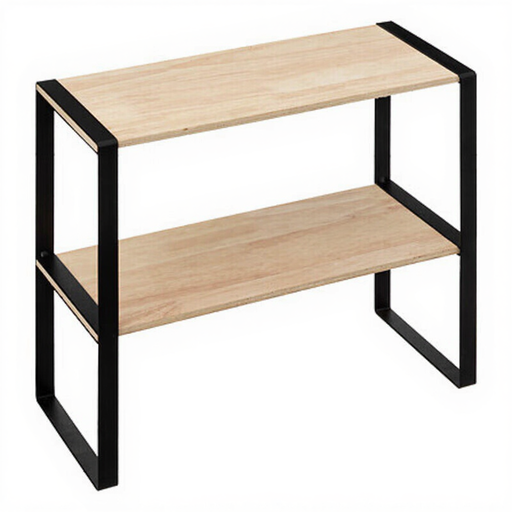
Why this product suits this profile: This freestanding 2-tier shelving unit requires a floor area of approximately 40 x 30 cm and is suitable for books, plants, decorations or smaller household items.
The compact dimensions make the space required easy to understand. The stated total load is 10 kg, with 5 kg per tier.
2 tiers, engineered wood and metal fittings; designed for floor-standing use and self-assembly.
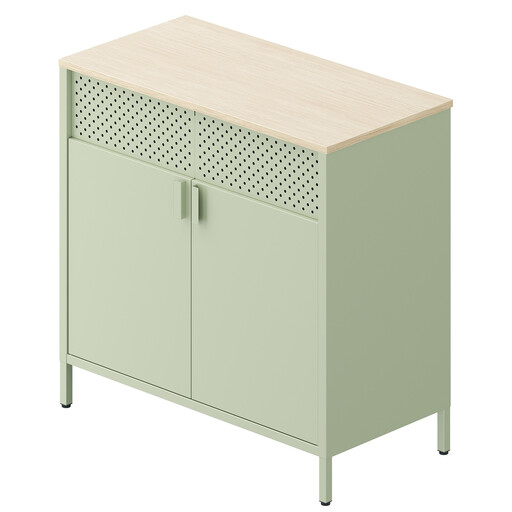
Why this product suits this profile: This piece of furniture combines enclosed storage with an adjustable shelf and can be used in the living room, dining area or office.
The product details specify dimensions of 40 x 80 x 76 cm, a steel body and a supplied anti-tip kit. Wall fixing should be installed.
Adjustable internal shelf, moisture-resistant steel body and a stated static load capacity of 50 kg for the top.
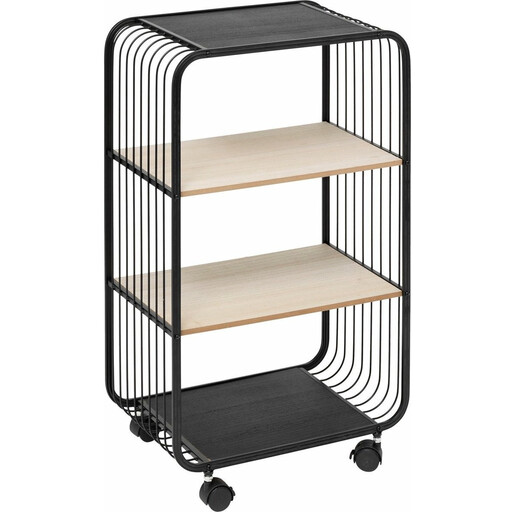
Why this product suits this profile: The castors make it easy to move the unit between the kitchen, utility room and office. Measuring 43 x 28 x 74 cm, it fits into many narrow spaces.
The maximum total load is stated as 25 kg. Even distribution is still required, particularly when moving the unit.
3 tiers, steel frame, MDF shelves and 4 swivel castors; designed for self-assembly.
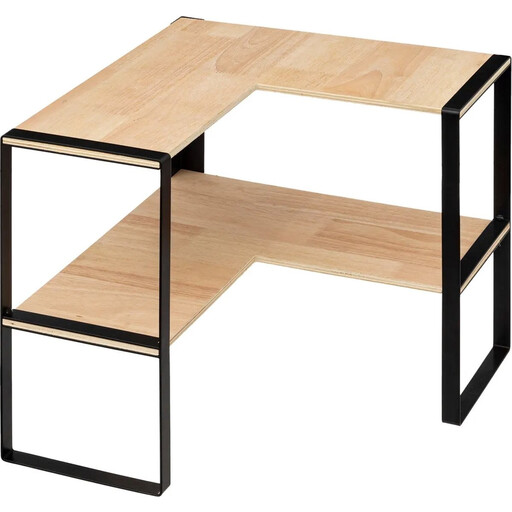
Why this product suits this profile: Measuring 40 x 40 x 35 cm, this corner shelf is designed for worktops, cupboards or the space beneath the sink.
The corner design reduces unused space. A level surface is required for assembly; check the load capacity before placing heavy items on it.
2 tiers, steel and plywood shelf, with versatile use for spices, containers or frying pans.
We have put together a complete, regularly updated list of products that fully meet these strict selection criteria and the safety regulations applicable in the EU.
Place every freestanding shelving unit on a stable, level surface. For tall or narrow models, use the anti-tip device as instructed. Children should not climb on shelves or hang from them.
For many products, cleaning with a dry or slightly damp cloth is sufficient. Abrasive cleaning products can damage surfaces. Wood, MDF and bamboo should not be left wet for prolonged periods. In the kitchen, also ensure sufficient distance from naked flames.
That depends on the model. The key factor is the stated maximum load per compartment or tier. If no such figure is provided, you should only store light items and avoid heavy products.
For tall, narrow or easily accessible shelving units, wall fixing is advisable for safety reasons. If an anti-tip device is supplied, it should be fitted in accordance with the assembly instructions.
For limited worktop space, consider a spice rack, a 2-tier kitchen shelving unit or a corner shelf. Before buying, pay particular attention to depth, shelf height, cleaning requirements and the load capacity for provisions or kitchen utensils.