
Lieferung heute & morgen

Qualitätsgarantie

Willkommens-Angebote freischalten: KOSTENLOSE Lieferung | Bis zu 80 % RABATT | Kostenlose 30-Tage-JoyPlus-Testphase
App herunterladen
A shelving unit with compartments should hold books, display decorative items and keep everyday essentials tidy. In a small flat, home office or student accommodation, it also needs to take up as little floor space as possible. Choosing a model may seem straightforward at first, but some details are worth checking carefully.
A shelving unit’s external dimensions don’t automatically tell you how much storage space it offers. The back panel, sides and shelves all reduce the usable area. If you’re storing ring binders, storage boxes or larger books, compare not only the overall width and height but also the compartment depth, height and width.
A space-saving shelving unit may work well for decorative items and smaller belongings, while a bookcase for large coffee-table books or files needs more internal height.
“Wood effect” doesn’t automatically mean solid wood. A wooden shelving unit may be made from solid wood, engineered wood, chipboard or a coated board. Each material may suit different uses, but they vary in weight, finish and care requirements.
Look for a specific material description. For example, the 5Five Modular Storage Rack is listed as being made from chipboard. This is useful, specific information and makes it easier to assess than a vague term such as “wood design”.
A tall freestanding shelving unit can become top-heavy, especially if you place heavy books on the upper shelves. If there’s no stated maximum load per compartment, plan cautiously and put heavier items on the lower shelves wherever possible. Also check whether wall fixing is included or would be a sensible choice for your space.
Easy assembly is no substitute for careful fastening. The supplied instructions, safety warnings and making sure the unit stands level on a firm floor should all factor into your decision.
Measure the space using a tape measure. Remember to consider:
A narrow white shelving unit can create a calm, uncluttered look. If you’re choosing a shelving unit for your living room or office, leave enough space around doors, radiators and windows too.
With a wooden or engineered-wood shelving unit, the surface finish matters. In many cases, a painted finish can be cleaned with a soft, slightly damp cloth. Abrasive cleaning products may damage the coating.
Smooth surfaces are practical for families or for shelving that’s used frequently. For a desk shelf, the edges, compartment size and stability should all stand up to everyday use.
Before buying, check whether the product needs to be assembled, what tools you’ll need and whether instructions are included. A modular shelving unit can be more flexible if your needs change, but its individual parts still need to be joined securely.
Securing tall furniture to prevent it from tipping is important. Follow the manufacturer’s instructions and use fixings that are suitable for your wall. If you rent your home, check whether you’re allowed to drill holes before fixing the unit to the wall.
The models below vary in size, material, compartment layout and intended use. Rather than choosing based on a general ranking, look for the one that best suits your available space and storage needs.
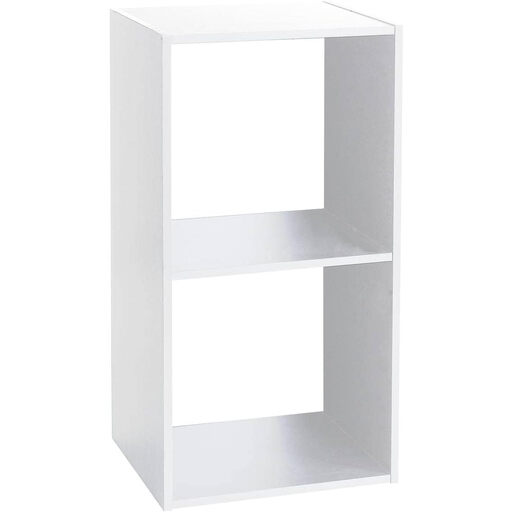
Why it suits this need: At 34.4 or 34.5 cm wide, 32 cm deep and 67.5 cm tall, this compact model is a good fit for smaller living spaces, student rooms or as extra storage in an office.
The clearly stated external dimensions and two compartments make it easier to plan where it will go. Assemble it according to the instructions provided, and read all notes and warnings before use.
Chipboard construction, white painted finish, freestanding rectangular design and two separate compartments, all in a compact footprint.
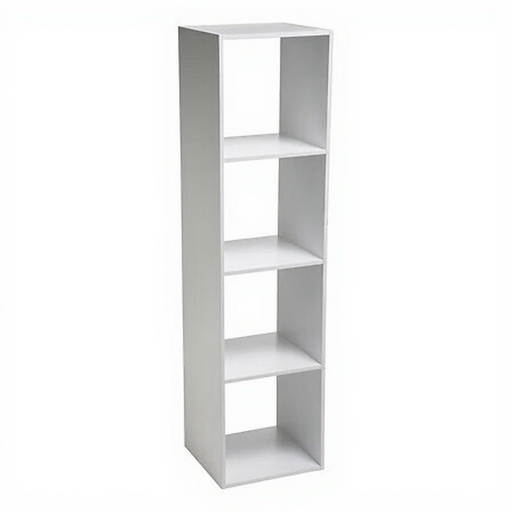
Why it suits this need: This tall freestanding shelving unit has four compartments and measures 134 cm high, 34.5 cm wide and 32 cm deep. It’s ideal if you want to organise books, boxes and decorative items vertically.
The number of compartments and external dimensions are clearly stated. This makes it easier to check whether the vertical layout will provide the storage space you need before you buy.
Four spacious compartments, a white finish and a design suited to living rooms, bedrooms or offices. The product description also notes that assembly is relatively straightforward.
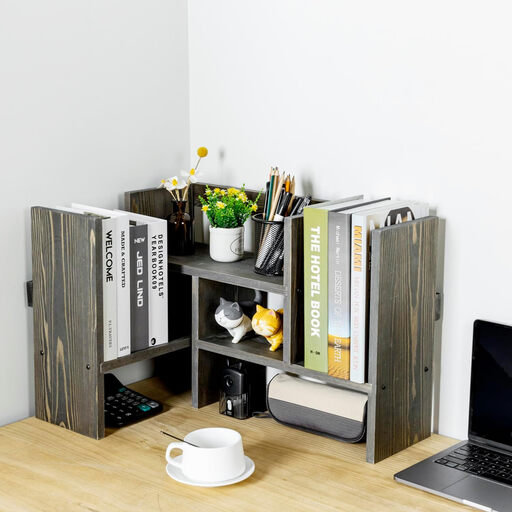
Why it suits this need: This desk shelf is designed for home offices, studios, student accommodation or desks. Its adjustable-height, stackable design can be used for books, files, plants or tech accessories.
The adjustable layout reduces the risk of a fixed desk shelf being too low for particular items. You should still follow the assembly instructions.
Solid wood according to the product description, three tiers, a depth of 6,7 Zoll and a rustic grey finish, with adjustable and extendable use.
We’ve put together a complete, regularly updated list of products that meet these strict selection criteria and fully comply with the safety regulations in force in the EU.
For an office or home office shelving unit, compartment height, easy access and cable management are often more important than extra overall width. A desk shelf shouldn’t get in the way of monitors, files or accessories. Families will appreciate easy-clean surfaces and a layout that keeps frequently used items within reach.
A white shelving unit suits many interior styles, but dust and marks may show up more easily. Dark or textured finishes are more likely to disguise minor marks, but still need the right care for their material. Also consider whether a freestanding model, modular shelving unit or desk solution would work best in your room.
It depends on what you plan to store. Several smaller compartments work well for books and decorative items. Ring binders, storage boxes and larger belongings need fewer, taller compartments. Measure your most important items before buying and leave a little extra room.
Place the unit on a level, sturdy surface and tighten all the fittings as instructed. For tall or narrow furniture, use the wall fixings provided if the manufacturer recommends them. Wherever possible, put heavier items on the lower shelves.
A soft, slightly damp cloth is usually all you need. Avoid leaving water on the surface, using harsh cleaning products or scrubbing with abrasive sponges. Always follow the manufacturer’s specific care instructions, particularly for painted or textured finishes.