
Lieferung heute & morgen

Qualitätsgarantie

Willkommens-Angebote freischalten: KOSTENLOSE Lieferung | Bis zu 80 % RABATT | Kostenlose 30-Tage-JoyPlus-Testphase
App herunterladen
A shelving unit creates extra storage space, but choosing the wrong one can quickly lead to a costly mistake. In small homes, appearance and price are not the only considerations. The key factors are dimensions, load capacity, tip resistance and the actual assembly effort involved. A narrow shelving unit for the hallway requires different features from a bookcase for a study or a kitchen shelf for storing provisions.
This buying guide from the Joybuy Product Recommendation Officer explains what households in Germany should look out for and which types of shelving are suitable for different situations.
A shelving unit may look compact in product images, yet still be too deep for an alcove or too tall for a particular area. Before buying, measure the available space in three places:
For a shelving unit in the living room or bedroom, you should also check that drawers, doors and windows remain fully accessible.
The maximum load per shelf is not automatically the same as the total load capacity. Books, crockery and shoes also distribute weight differently. Heavy items should be placed on the lower shelves. If no maximum load is stated, you should not plan to use the shelving unit for heavy provisions, files or electrical appliances.
A shelving unit for self-assembly requires a level, stable surface. Tall furniture may need to be fixed to the wall, particularly in homes with children or pets. Check whether fixing materials are included and whether they are suitable for your type of wall. Simple slot-together assembly is convenient, but does not replace safe use in accordance with the instructions.
First consider which items need to be stored. A shelving unit with compartments is suitable for books, baskets and decorations. Open, easily accessible shelves are generally more practical for shoes. A space-saving shelving unit with a vertical design makes use of the room’s height, while a low model can fit beneath wall cabinets, worktops or windows.
Pay attention to:
Wood-based materials such as MDF or chipboard are easy to care for and suitable for light to medium-weight household items. Steel frames can provide additional stability, although the joints and overall construction are also important. Bamboo has a light appearance and works well with kitchen or bathroom accessories; in damp areas, however, the care instructions must be followed.
A painted or coated surface can generally be cleaned with a dry or slightly damp cloth. Avoid using abrasive cleaners, leaving water standing on the surface or exposing sensitive materials to naked flames.
A sturdy construction alone does not guarantee tip resistance. The following factors are also important:
A tall bookcase should be fixed to the wall in accordance with the instructions. This is particularly important for a shelving unit in a bedroom or child’s room.
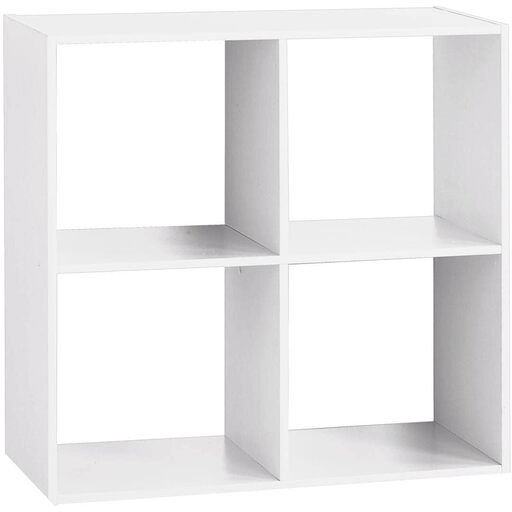
Why this product suits this profile: The four shelves provide manageable storage space for decorations, books or household items without taking up a large footprint.
The dimensions and number of shelves are clearly stated. This makes it easier to check whether the model will fit into an existing alcove.
Four shelves, painted surface, product weight of 10,7 kg and self-assembly.
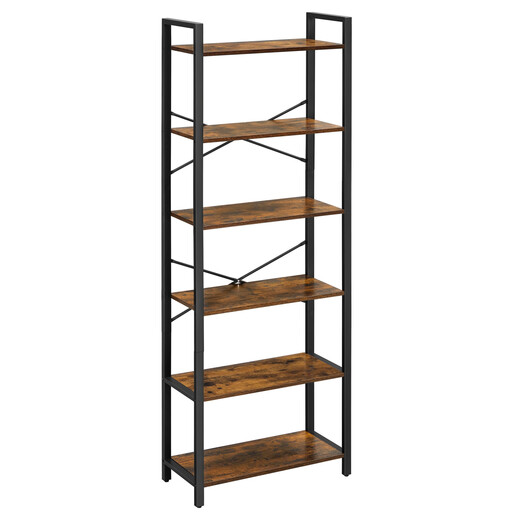
Why this product suits this profile: The tall bookcase makes use of vertical space and is designed for living rooms, offices, studies or bedrooms.
The product details specify X-bracing, adjustable feet and an anti-tip kit. The wall fixing must be carried out in accordance with the instructions.
Six shelves, steel and chipboard construction, plus a stated maximum total static load of 60 kg.
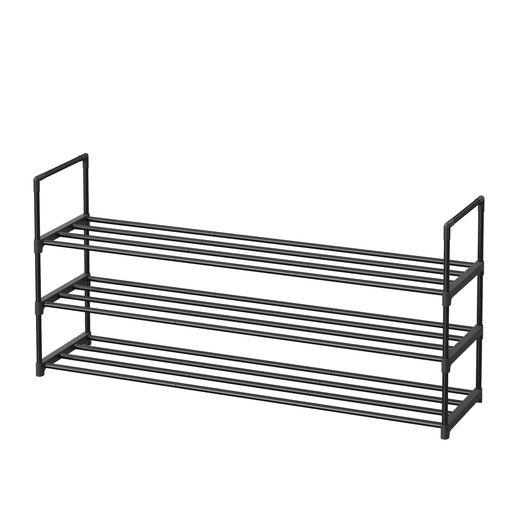
Why this product suits this profile: The shoe rack is designed for entrances, hallways, wardrobes or living rooms and provides three shelves for frequently worn footwear.
The maximum static load is stated as 10 kg per shelf and 30 kg in total. This makes it easier to plan how the rack will be used than when load capacities are unclear.
Tool-free assembly according to the product description, metal tubes and stackable or reconfigurable use.
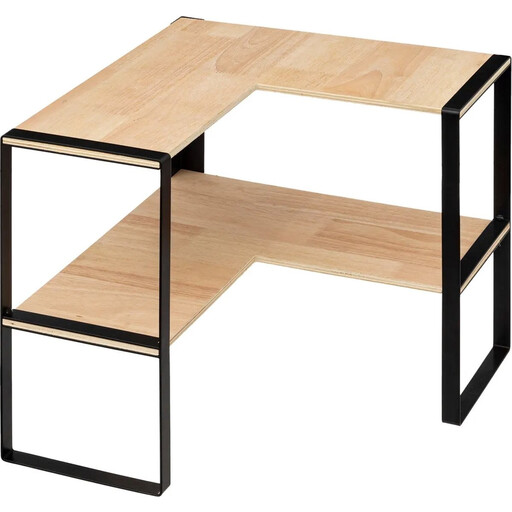
Why this product suits this profile: Two steel and plywood shelves are suitable for spice jars, containers or pans on the worktop, beneath the sink or inside a cupboard.
The compact dimensions make it easier to check the available space. For damp areas, follow the manufacturer’s guidance; the unit is not designed for continuous exposure to water.
Corner-friendly shape, two shelves, steel and plywood construction, plus self-assembly.
We have compiled a complete, regularly updated list of products that fully meet these strict selection criteria and the safety regulations applicable in the EU.
Place the furniture on a level, load-bearing floor and distribute heavy items at the bottom. For tall shelving units, use the supplied anti-tip kit in accordance with the instructions. For wall shelves, suitable wall plugs and screws are required, depending on the condition and material of the wall.
Its service life depends on the material, assembly, room conditions and load. Evenly distributed weight, dry cleaning and compliance with the stated maximum load can help support the intended use. If there is visible damage to the shelves, supports or connectors, the shelving unit should not be loaded further.
The price depends on factors including size, material, number of shelves, load capacity and assembly method. Do not compare just the purchase price; also consider the fixing materials required, the footprint and the practical storage space. A smaller, precisely fitting model may be more suitable for an alcove than a larger piece of furniture with unused space.