
Lieferung heute & morgen

Qualitätsgarantie

Willkommens-Angebote freischalten: KOSTENLOSE Lieferung | Bis zu 80 % RABATT | Kostenlose 30-Tage-JoyPlus-Testphase
App herunterladen
A shelving unit should provide storage without overwhelming the room. In practice, however, it quickly becomes clear that not every model is suitable for its intended use. A narrow niche shelving unit may be too deep for the bathroom, a decorative wall shelf requires suitable wall fixings, and a kitchen shelving unit must withstand the weight of glasses, spices or provisions.
The following buying criteria will help you assess marketing claims and choose a shelving unit based on objective requirements.
The external dimensions of a shelving unit do not always indicate how much usable surface space is actually available. The decisive factors are the width, depth and height of each shelf compartment. With a corner shelving unit, you must also check whether skirting boards, sockets or doors could obstruct installation and use.
Vertical models are often practical for small rooms. By contrast, a shelving unit with considerable depth can narrow walkways. Before buying, measure the available area with a tape measure. It is also advisable to leave a safety clearance around doors, windows and radiators.
A shelving unit for picture frames and light decorations has different requirements from a bookcase or kitchen organiser. Ideally, you should know the maximum load not only for the furniture as a whole, but also for each shelf compartment. Heavy items should generally be placed in the lower sections.
The condition of the wall is also relevant for wall shelves. Plugs and screws must be suitable for the substrate. According to the product information, the WOLTU model from the selection below, for example, is not suitable for plasterboard walls.
Wood-based materials, bamboo and metal differ in how they handle moisture, cleaning and everyday wear. A wood and metal shelving unit can be a suitable combination for living rooms or home offices. In the kitchen and bathroom, buyers should also pay attention to the care instructions.
Wooden parts should not be left standing in water for prolonged periods. For coated surfaces, check whether a damp cloth is sufficient and whether abrasive cleaning products must be avoided. A decorative finish does not replace suitable care.
Before choosing, make a note of:
A space-saving shelving unit for a desk requires different dimensions from a freestanding shelving unit for the living room. A corner shelving unit or narrow niche shelving unit could work well in unused corners. A hanging shelf saves floor space, but requires a suitable wall and secure installation.
Check the stated maximum load and distribute the weight evenly. Books, storage jars and ceramics are considerably heavier than textiles and decorative items. If no clear load capacity is specified, the shelving unit should not be planned for heavy objects.
The 7-tier industrial corner shelving unit made from wood-based material and metal is stated to support up to 45 kg per shelf. This is a specific manufacturer’s figure and not a general statement that applies to comparable models. You should also take note of the supplied anti-tip device and adjustable feet.
Look out for:
A shelving unit for small spaces is only practical in the long term if it stands securely or is professionally fixed in place. In households with children, steps should be taken to prevent furniture from being used for climbing or pulling.
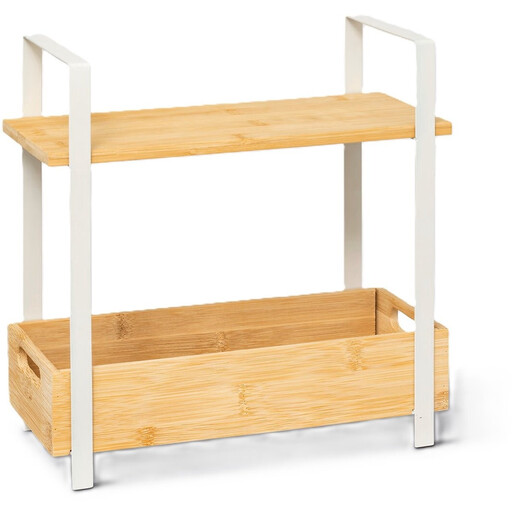
Why this product suits the profile: Measuring 30 × 14 × 30 cm, this compact kitchen shelving unit is suitable for spices, kitchen utensils or cleaning products on the worktop. The handle makes it easy to move.
The precise dimensions and stated maximum load of 2.0 kg help you plan its use realistically. It is designed as a countertop shelf, not as a freestanding shelving unit for heavy loads.
Two tiers, a steel frame, plus bamboo and MDF elements; clean with a damp cloth and mild cleaning product.
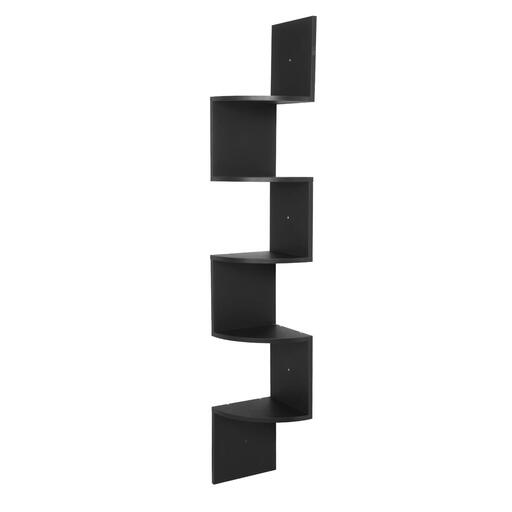
Why this product suits the profile: Measuring 25 × 25 × 156 cm, this five-tier corner wall shelf makes use of a vertical corner in the living room, bedroom or home office. It is designed for books, CDs, plants and decorations.
The product information states a maximum load of approximately 15 kg and expressly warns that it is unsuitable for installation on plasterboard. Check the condition of the wall before buying.
Five tiers, integrated hanging system and MDF boards with a PVC finish; according to the product information, it is delivered fully assembled.
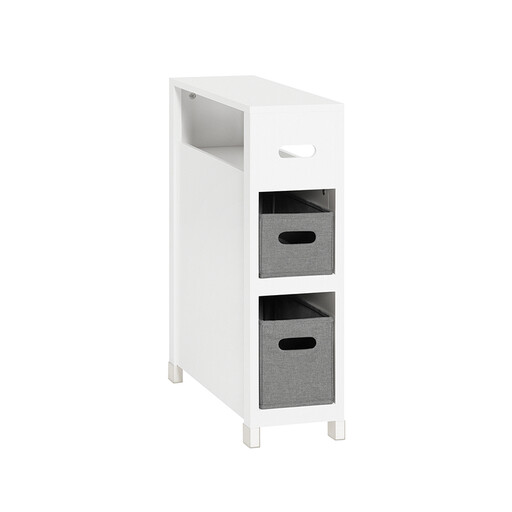
Why this product suits the profile: Measuring 20 × 70 × 60 cm, this niche shelving unit combines two removable baskets with an open compartment. It is designed for toilet rolls, toiletries, spices or small bathroom essentials.
Its narrow width is designed for niches, while the raised feet are intended to reduce contact with moisture, according to the product description. The stated total load is up to 15 kg.
E1-grade MDF, pinewood, two removable fabric baskets and an additional compartment for a toilet brush.
We have put together a complete, regularly updated list of products that fully meet these strict selection criteria and the safety regulations applicable in the EU.
For small rooms, narrow freestanding shelving units, corner shelving units, wall shelves and niche shelving units are all worth considering. The right design depends on whether floor space or wall space is available. Before choosing, check the depth, door openings and the load-bearing capacity of the substrate.
A freestanding shelving unit should stand on a level surface and, if it is sufficiently tall, be secured with an anti-tip device. For a hanging shelf, the wall plugs and screws must be suitable for the wall material. The assembly instructions and maximum load must be followed. Children should not pull on shelving units or climb on them.
Metal and coated surfaces can usually be cleaned with a soft, slightly damp cloth. Wood, bamboo and MDF should not be left wet for prolonged periods. Use only cleaning products stated as suitable in the care instructions, and avoid abrasive products.