
Lieferung heute & morgen

Qualitätsgarantie

Willkommens-Angebote freischalten: KOSTENLOSE Lieferung | Bis zu 80 % RABATT | Kostenlose 30-Tage-JoyPlus-Testphase
App herunterladen
A shelving unit should keep things tidy without making a room feel cluttered. In small flats, kitchens, home offices and bathrooms, looks aren’t the only thing to consider. The dimensions, load capacity, assembly and intended use all determine whether a piece of furniture will work well in everyday life.
Many products look versatile at first glance, but it’s easy to overlook a few details:
Before buying, it’s worth checking the product dimensions, materials, load capacity and assembly instructions. This can help you avoid having to replace a shelving unit that initially seemed like a bargain.
First, measure the available space: compare the width, depth and height with the space you have, leaving at least a few centimetres between the unit and any walls, doors or other furniture. A wall shelf, corner shelf or space-saving shelving unit can work well in a narrow recess. A freestanding unit, on the other hand, needs a large enough, preferably level, floor space.
Different shapes can suit different needs:
Material descriptions should be as specific as possible. Wood-based board, metal or a combination of the two all have different properties. Metal can offer an easy-care structure for kitchen and storage shelving, while wood-based board often creates a warmer look.
Pay attention to the surface finish. A lacquered surface may be easier to clean, but it doesn’t replace the manufacturer’s care instructions. In damp rooms, check specifically whether the model is designed for that environment. For example, the JOYFURNOS set comes with a warning to avoid excessively damp conditions.
The maximum load should be stated for each shelf or tier. Place heavier items towards the bottom where possible, and avoid loading one side more heavily than the other. If a shelving unit is expandable or stackable, follow the specified connection and assembly instructions.
Three practical rules for assembly:
Securing a shelving unit to the wall is especially important if it is tall, narrow or heavily loaded. Follow the manufacturer’s instructions when doing so.
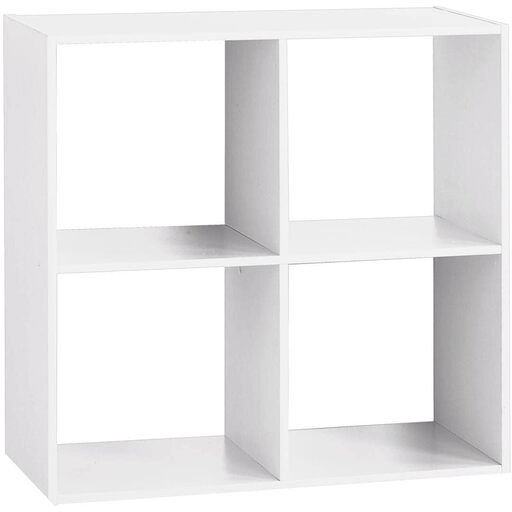
Why this product suits this profile: The clearly stated dimensions and four tiers make it easier to plan where it will go in a living room, home office or dining room. Its compact depth of 32 cm may suit spaces where floor area is limited.
The product description lists the overall dimensions, weight, four compartments and lacquered finish. This makes it easier to assess the space needed and plan assembly before you buy.
Four tiers, measuring 67.6 × 32 × 67.6 cm, with a stated weight of 10.7 kg; self-assembly with instructions.
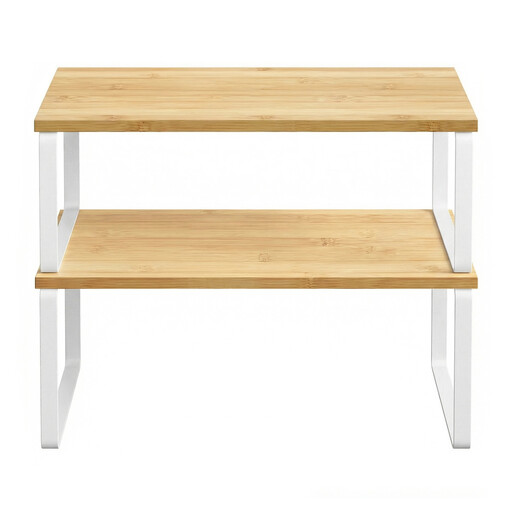
Why this product suits this profile: The two-piece set can be arranged in different ways: stacked, nested or used separately. It could work well in kitchens, dining rooms, bedrooms and bathrooms, provided the conditions are suitable.
The product details give specific dimensions and a static load capacity of 15 kg per shelf. Follow the instructions provided when stacking the units.
Metal and wood-based board, two differently sized units and several arrangement options; maximum static load according to the product details: 15 kg per shelf.
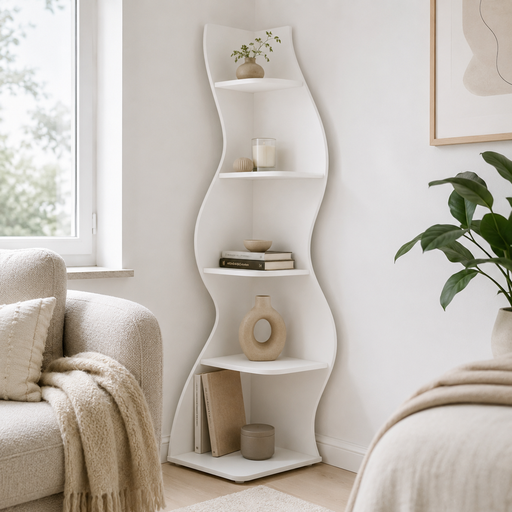
Why this product suits this profile: Its five-tier corner design can add extra storage without taking up an entire stretch of wall. According to the product name, it’s suitable for books, ornaments and plants.
The corner design makes use of an area that often goes unused with straight shelving. Before installation, check the corner dimensions, distance from the wall and the recommended fixings.
Five tiers, white wood-based board according to the product description, and a design made to fit in a corner.
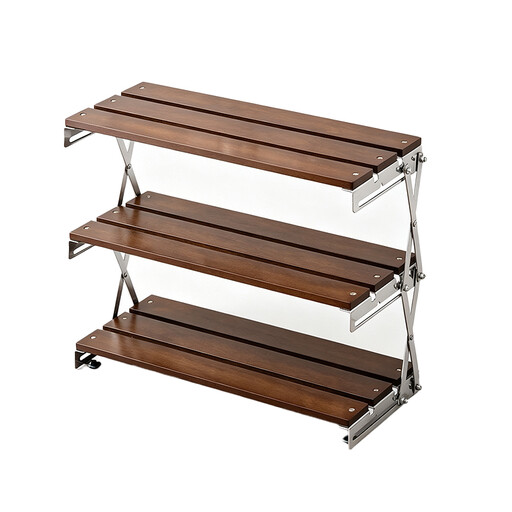
Why this product suits this profile: A foldable desk shelf could be useful on a desk, in the kitchen or on a display surface when you want small items to stay within reach on several tiers.
The folding design can save space when the desk shelf isn’t needed. If you plan to store heavier items on it, check the product’s specific load capacity first.
Three tiers and a foldable design according to the product name; suitable for compact storage and display.
We’ve put together a comprehensive, regularly updated list of products that meet these strict selection criteria and fully comply with the safety regulations in force in the EU.
Start by reading the assembly instructions and checking what the wall is made of. Wall plugs and screws must be suitable for the wall and the weight of the loaded shelving unit. For tall or narrow models, use the tip-over restraint provided. Once installed, check that the unit is level and doesn’t wobble.
Its lifespan depends on the materials, how it’s used, the room conditions and the load it carries. A shelving unit is likely to last longer if you stay within its stated load capacity, keep it away from damp conditions and clean the surface according to the care instructions. Place heavier items on the lower tiers wherever possible.
The price depends on factors such as size, material, number of tiers, assembly method and load capacity. A small desk organiser or foldable desk shelf usually requires less material than a large bookcase. So don’t just compare the purchase price: consider the dimensions, features and intended use too.