
Lieferung heute & morgen

Qualitätsgarantie

Willkommens-Angebote freischalten: KOSTENLOSE Lieferung | Bis zu 80 % RABATT | Kostenlose 30-Tage-JoyPlus-Testphase
App herunterladen
A shelving unit with doors combines open display space with partially concealed storage. This allows you to showcase books, decorations and household items, while keeping cables, supplies or personal belongings hidden behind doors. For small flats, narrow hallways and multifunctional rooms, this type of storage shelving can be especially practical.
However, product images and general marketing claims do not always lead to the right purchase decision. Before buying, you should consider three common pitfalls:
Measure the available floor space at three points: width, depth and height. You should also check whether the doors can open fully and whether skirting boards, radiators or other furniture are in the way.
A narrow shelving unit is suitable for alcoves in the hallway, beside the bed or between a desk and the wall. A taller freestanding shelving unit with doors makes use of the room’s height, but requires secure wall anchoring to prevent tipping. For a living room, a cabinet with both open and closed sections may be more practical than a fully enclosed model.
Also pay attention to the internal layout:
Material specifications should be as precise as possible. Common materials include steel, MDF, chipboard, bamboo or combinations of these. Steel is easy to clean in everyday use and, with a suitable coating, can be a good option for more humid rooms. Engineered wood products offer a wide range of design options, but should be protected from prolonged exposure to moisture.
When choosing a bathroom shelving unit or hallway shelving unit, check the following:
The Caldion model, for example, combines a bamboo frame with rattan doors. The product description states that the surface is easy to clean and that the door structure allows air circulation. This makes it potentially suitable for a living area, bedroom or hallway. For permanently wet environments, you should follow the manufacturer’s specific care instructions.
Load capacity must always be considered in relation to the size of the compartment. A stated total load does not automatically mean that the weight can be distributed evenly across all levels. Heavy books should preferably be placed in the lower compartments. Decorative items and lightweight boxes can be stored higher up.
For tall or narrow shelving cabinets, wall anchoring with tip-over protection is an important safety feature. This is particularly relevant in households with children. Choose fixing materials that are suitable for the type of wall and use them in accordance with the assembly instructions.
Pay attention to the differences between:
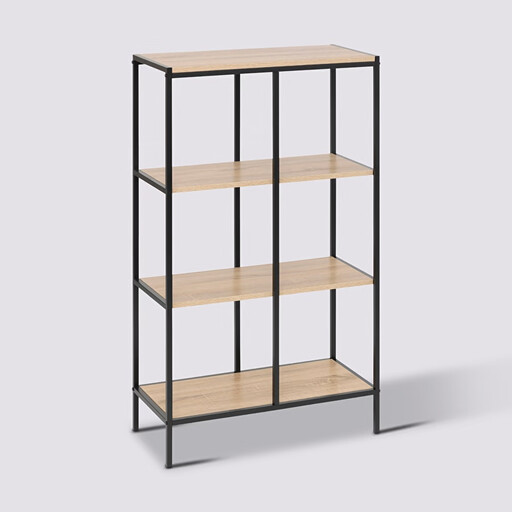
Why this product matches the profile: The six compartments make it easy to organise items in the living room, bedroom, office or hallway. With a depth of 32 cm, this piece of furniture remains relatively compact.
The product data specifies the dimensions, materials, a weight of 12.1 kg and a maximum load of 40 kg. This makes it easier to plan around the available space and intended use.
Steel construction, chipboard shelves, six storage areas and an FSC specification. The unit is designed for self-assembly.
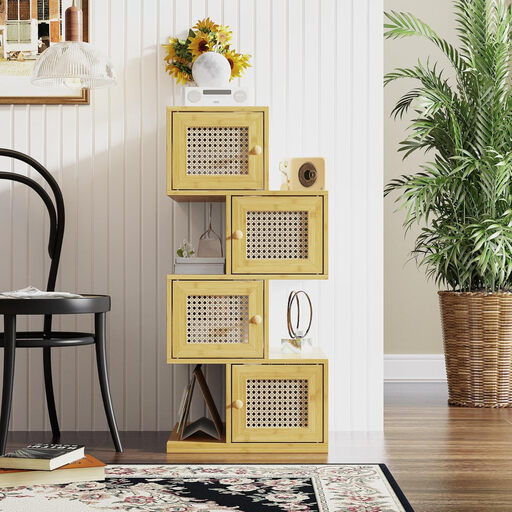
Why this product matches the profile: This narrow storage shelving unit combines open compartments with rattan doors, making it suitable for books, plants or decorations in a small alcove.
The compact dimensions are clearly specified. The rattan structure does not seal the contents completely, while still creating a partially concealed area.
Bamboo frame, four compartments, rattan doors and a depth of 25.4 cm. According to the product description, the surface is easy to care for.
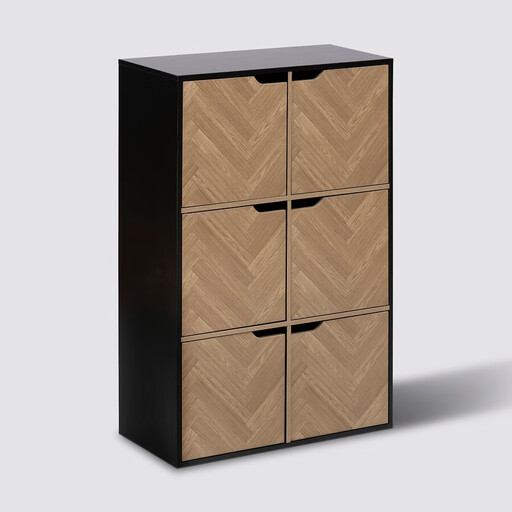
Why this product matches the profile: Six separate compartments and six doors provide clear organisation for frequently used household items, documents or decorations.
The product specifications state a maximum load of 5 kg per compartment and require wall anchoring with tip-over protection. This helps prevent use without checking the relevant safety requirements.
Six compartments, six doors, chipboard and an MDF back panel. The dimensions are 67.5 × 32 × 100.5 cm.
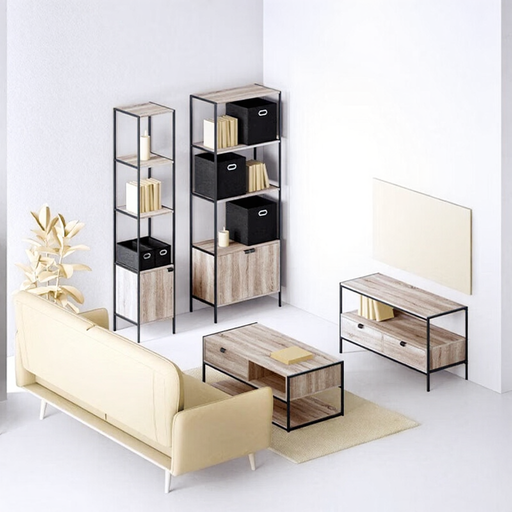
Why this product matches the profile: At 176 cm tall and with five internal shelves, this freestanding shelving unit makes good use of vertical space and is suitable for hallways, home offices or living areas.
The height and number of internal shelves are clearly specified. Before buying, you should still check that the available floor space and ceiling height are sufficient.
68 × 35 × 176 cm, five internal shelves, and a construction made from chipboard, steel and MDF.
We have put together a complete, regularly updated list of products that fully meet these strict selection criteria and the safety regulations applicable in the EU.
Before assembling a storage shelving unit, it is worth running through this quick checklist:
Depending on its construction, a self-assembly model may require two people. The 5five Mix'n Door Chevrons Shelf Unit, for example, is stated to take around 45 minutes to assemble and requires the assistance of two people. Details like these help with planning, but they do not replace checking all the fittings and connectors.
For books and decorations, around 25 to 35 cm is often sufficient, depending on the items. Before buying, you should check the depth including the doors, back panel and handles. In a narrow hallway, even a small amount of overhang can reduce the available walking space.
This depends on the material and the manufacturer’s specifications. With a suitable coating, steel can be easy to clean, while engineered wood products are not automatically designed for permanently damp rooms. When choosing a bathroom shelving unit, take splashes, high humidity and insufficient ventilation into account.
For tall, narrow or heavy furniture, wall anchoring is particularly important for safety reasons. If the manufacturer supplies tip-over protection or explicitly requires anchoring, it should be used according to the instructions. The appropriate fixing method also depends on the type of wall.