
Lieferung heute & morgen

Qualitätsgarantie

Willkommens-Angebote freischalten: KOSTENLOSE Lieferung | Bis zu 80 % RABATT | Kostenlose 30-Tage-JoyPlus-Testphase
App herunterladen
A shelving unit should create storage space without making the room feel unnecessarily crowded. In practice, however, unclear dimensions, weak construction or a lack of fixing options often lead to unsuitable purchases. This is particularly true of a bookcase, freestanding shelving unit or storage shelf, so it is worth taking a close look at the materials, dimensions and safety features.
Product images often give a generous impression of a shelving unit. The actual dimensions are what matter, however. Alongside width and height, a shelving unit also needs sufficient clearance from doors, windows and walkways. Its depth determines whether books, storage boxes or decorative items can be stored safely.
In smaller homes, a space-saving shelving unit with a vertical design may be more practical than a wide model. An corner shelf or a narrow freestanding shelving unit could be suitable for alcoves. Before buying, measure the available floor space and allow additional room for assembly.
‘Wood effect’ does not automatically mean solid wood. Many models are made from wood-effect shelving, chipboard or MDF with a coated surface. This may be suitable for books, decorations and lightweight everyday items, but it should not be taken to mean unlimited load-bearing capacity.
Look out for:
A metal frame can provide additional stability, while plastic can offer advantages in terms of weight and cleaning for a lightweight multipurpose shelving unit.
Tall, narrow shelving units have a higher centre of gravity. This is particularly important in homes with children or pets, where a wall-fixing kit should be used if recommended by the manufacturer. A shelving unit must not be used as a climbing aid. Heavy items should be placed in the bottom compartments wherever possible.
Check the measurements in the order width × depth × height and compare them with the available space. A model that is 34 cm deep may be sufficient for books and smaller boxes, while larger decorative objects require more surface area.
The number of compartments determines how flexibly you can use the storage space. A shelving unit with compartments is ideal for keeping items visibly organised. A cube shelving unit can combine books, baskets and decorations. If your needs change, a modular shelving unit allows you to add individual elements or rearrange them.
Do not exceed the maximum load. Distribute books and other heavy items evenly. The term ‘maximum load’ often refers either to the complete unit or to individual compartments, so check the product description carefully.
A tall bookcase with several tiers can provide plenty of storage while taking up little floor space. Its stability depends not only on the material, but also on the construction, feet, frame and wall fixing.
Many shelving units are supplied as flat-pack kits. Before assembly, check that all connecting parts are included. A level, dry surface makes assembly easier. Coated wood-based materials should be cleaned with a dry or slightly damp cloth. Abrasive cleaners and standing moisture can damage the surfaces.
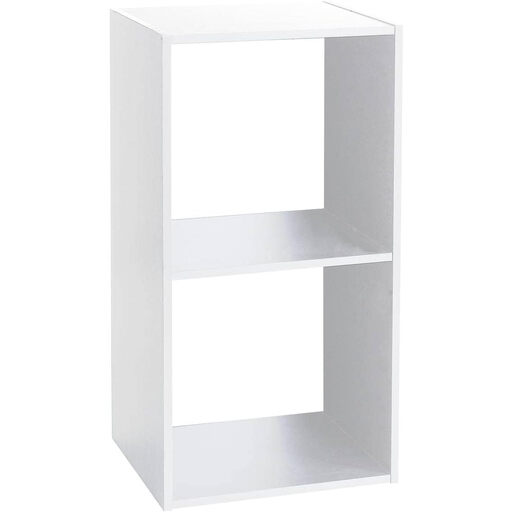
Why this product suits this profile: This compact freestanding shelving unit measures 34.4 × 32 × 67.5 cm and offers two compartments for decorations, smaller books or everyday items.
The precise external dimensions make planning easier. The surface is painted, and assembly follows the included instructions.
Two separate compartments, a product weight of 7.5 kg and a small footprint for compact rooms.
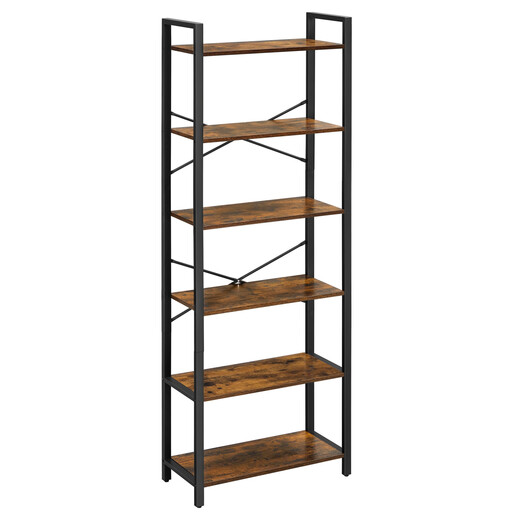
Why this product suits this profile: This tall bookcase makes use of vertical space and features six tiers, making it suitable for the living room, office, study or bedroom.
According to the product details, the model features an X-shaped reinforcing element, adjustable feet and an anti-tip kit for wall fixing.
Six tiers, dimensions of 30 × 66 × 186 cm and a stated total static load capacity of up to 60 kg.
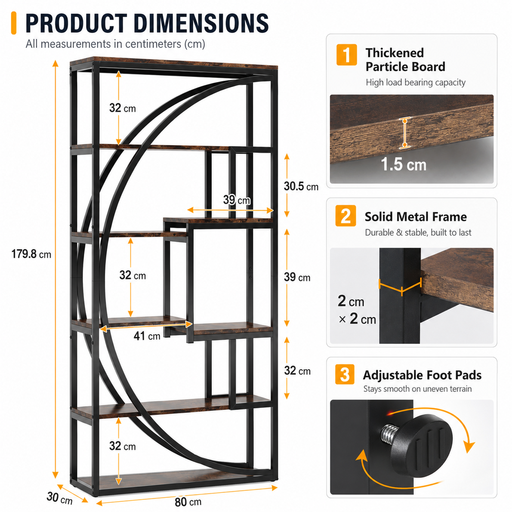
Why this product suits this profile: The combination of a black metal frame and brown wood-based material complements industrial interiors and provides open storage for books, decorations and office supplies.
The product details specify five tiers and eight open compartments. This allows items to be organised by size instead of being stacked together in a single compartment.
80 × 30 × 179.8 cm, five storage tiers and a metal frame with a Vintage Brown finish.
We have put together a complete, regularly updated list of products that fully meet these strict selection criteria and the safety regulations applicable in the EU.
First place the furniture on a level surface and assemble it according to the instructions. Use the anti-tip kit supplied, if available. The appropriate wall plugs and screws depend on the type of wall. If the wall construction is unclear, check the fixing method before assembly.
Its service life depends on the load, assembly, moisture levels and care. A shelving unit made from chipboard or MDF should be kept dry and must not be used beyond the stated load limit. Evenly distributed weight and correctly tightened screws can help support the construction during its intended use.
The price is influenced by factors including size, material, frame construction, number of compartments and accessories. A small two-compartment shelving unit will generally be priced differently from a tall bookcase with a metal frame or a modular system. For this reason, compare not only the unit price, but also the storage capacity, assembly requirements and any additional parts needed.