
Lieferung heute & morgen

Qualitätsgarantie

Willkommens-Angebote freischalten: KOSTENLOSE Lieferung | Bis zu 80 % RABATT | Kostenlose 30-Tage-JoyPlus-Testphase
App herunterladen
When buying a shelving unit, most people compare the colour and price first. In everyday use, however, other factors determine whether a freestanding shelving unit, bookcase or wall shelf remains practical over time. Unclear dimensions, missing information about wall fixing or an unsuitable shelf layout can mean that the furniture does not fit in its intended location or can only be used to a limited extent.
This guide explains which details matter before you buy, which shelving types suit different living situations and which models from our selection meet specific requirements.
A tall shelving unit makes efficient use of wall space, but requires sufficient clearance from the ceiling, doors, windows and radiators. The shelf depth is also important: a deep storage shelf can be obstructive in a narrow hallway, while a bookcase that is too shallow may not accommodate larger ring binders or storage boxes.
Before buying, measure:
An open shelving unit with a metal frame may look sturdy. For actual use, however, material thickness, construction, even weight distribution and a suitable floor surface all matter. With tall or narrow furniture, wall fixing is also important.
For a shelving unit with compartments, check whether a maximum load per shelf is specified. If this information is missing, heavy items such as ring binders, large piles of books or ceramics should not simply be placed in the upper sections.
Many shelving units are supplied for self-assembly. This is convenient, but requires a level surface and correctly secured connecting elements. Certain models are specifically designed to be permanently fixed to the wall. This applies particularly to tall freestanding shelving units and modular systems.
Read the instructions before assembly and use only the fittings provided. Plugs and screws must be suitable for the type of wall in question. In rented accommodation, it may be sensible to agree the fixing method with the property management company beforehand.
A space-saving shelving unit often makes use of vertical height rather than taking up additional floor space. A narrow, tall model can be a practical choice for a living room or home office. A lower shelving unit, on the other hand, can fit beneath windows, sloping ceilings or serve as a room divider.
Do not just consider the number of tiers, but also how they are arranged. For example, eight open compartments offer different uses from four large, symmetrical compartments. A bookcase should provide sufficient shelf height for the books you already own. For ring binders in a home office, generous internal height and sufficient depth are essential.
The products featured use materials including chipboard or wood-based material, melamine coating, polypropylene and metal. Wood-based material can provide an even surface and relatively low weight, but is more sensitive to prolonged moisture than solid materials. Spilt liquids should therefore be removed promptly.
A painted or coated surface makes cleaning easier. Use a soft, slightly damp cloth and avoid abrasive cleaning products unless the product instructions state otherwise.
A shelving unit for the living room, bedroom or study should be suitable for its intended load and use. Decorative items and lightweight books create different demands from files, kitchen supplies or vinyl records. Distribute the weight as evenly as possible and follow the manufacturer's specifications.
A corner shelf can make use of otherwise unused areas. For a wall shelf, you need to consider the wall material, fixing points and the position of cables or pipes. A decorative shelf is not automatically suitable for heavy items.
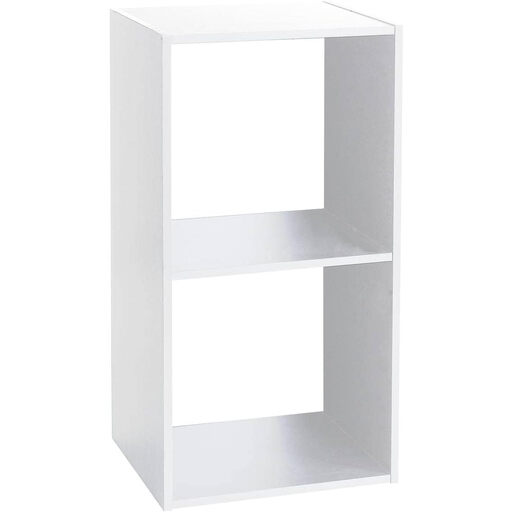
Why this product suits this profile: Measuring 34.4 x 32 x 67.5 cm, this compact unit is ideal for small spaces, such as beside a desk, sofa or bed.
The clearly stated dimensions and two compartments make it easier to assess the space required before buying.
Coated wood-based material, two tiers and a freestanding rectangular design.
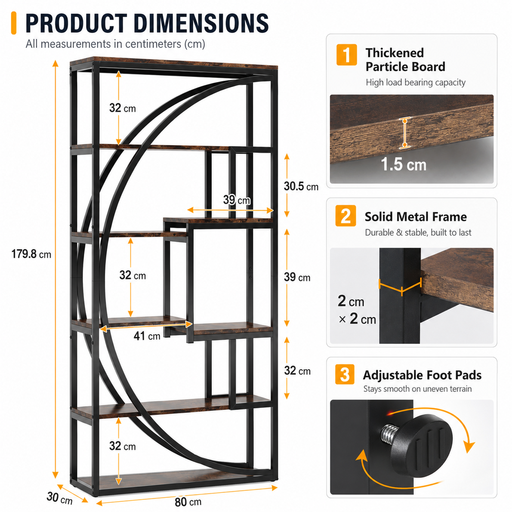
Why this product suits this profile: Standing 179.8 cm tall, this shelving unit combines five tiers with eight open compartments, making it suitable for living rooms, studies or home offices where vertical storage is needed.
The external dimensions of 80 x 179.8 x 30 cm and the number of compartments are clearly stated, making it easier to plan the space.
Chipboard with a black metal frame, a vintage brown finish and an open storage concept.
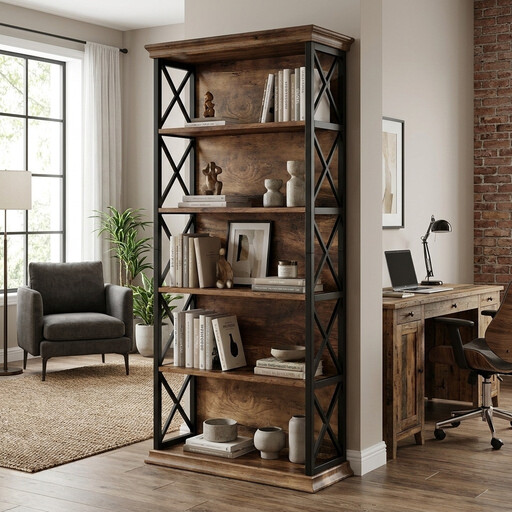
Why this product suits this profile: The tall design with five shelves is aimed at users who want to store books, files and decorative items in an industrial-style setting.
The product information states a maximum load of up to 75 pounds per shelf. This should be checked against the German product documentation before use.
X-shaped side elements, a black metal frame and, according to the product description, 1.5 cm-thick shelves.
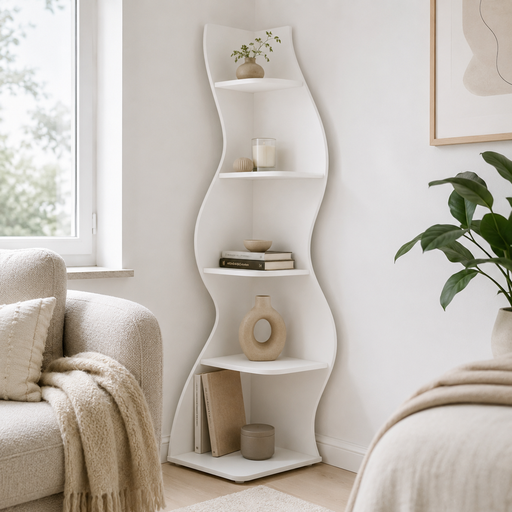
Why this product suits this profile: This five-tier corner shelf is designed for living areas or home office corners where floor space is limited and vertical storage is needed.
Making use of a corner reduces the need for additional floor space. Check the dimensions and wall condition before installation.
White design, five tiers and a shape designed for corners.
We have put together a complete, regularly updated list of products that fully meet these strict selection criteria and the safety regulations applicable in the EU.
Allow plenty of space for assembly and sort the screws and connecting elements beforehand. A second person can make it easier to align tall shelving units. Once assembled, check all connections and tighten them if necessary.
Three points are essential for ensuring the longest possible service life:
A depth of around 25 to 30 cm is sufficient for many standard books. Large coffee-table books, ring binders or storage boxes require more space. What matters is considering the internal dimensions, not just the external measurements.
This depends on the model and its design. Tall or narrow shelving units can tip over if the load is unevenly distributed. If the manufacturer specifies wall fixing, it should be installed in accordance with the instructions. Tip-over protection is particularly important in households with children or pets.
Check the shelf height, depth and load capacity for ring binders, books and technical accessories. A shelving unit with closed boxes can organise loose small items, while an open shelf keeps documents and devices readily accessible. For limited spaces, narrow freestanding shelving units or modular shelving systems are a good choice.