
Lieferung heute & morgen

Qualitätsgarantie

Willkommens-Angebote freischalten: KOSTENLOSE Lieferung | Bis zu 80 % RABATT | Kostenlose 30-Tage-JoyPlus-Testphase
App herunterladen
A shelving unit should create storage space without unnecessarily taking over the room. In practice, however, unclear dimensions, overestimated load capacities and unsuitable materials often lead to disappointing purchases. Before buying, it is therefore worth checking the intended location carefully and assessing the product specifications rather than judging the shelving unit on its design alone.
A shelving unit with several tiers may look compact in product images, but it needs sufficient depth and room to move around once it is in your home. Every centimetre matters, particularly with a kitchen shelf, side shelf or desk shelf. Measure:
With a corner shelf, you should also check whether the corners actually form a right angle. Small deviations can prevent the furniture from standing flush against the walls.
Several shelves do not automatically mean that each tier can hold heavy books, provisions or ceramics. The key figures are the maximum load per tier and the total load capacity. Heavy items should always be placed at the bottom, as this lowers the centre of gravity.
A shelving unit is not designed to be used as a climbing aid. In homes with children or pets, check whether an anti-tip device or wall fixing is provided for. A freestanding shelving unit needs a level surface and should also be secured if it will be used in this way.
“Wood effect” does not necessarily mean solid wood. It often refers to MDF, chipboard or other wood-based materials. This is not inherently a disadvantage, but the material should be suitable for how you intend to use the shelving unit. In kitchens and bathrooms, the surface, care instructions and distance from constant moisture are particularly important. A bamboo shelf can offer a natural look, but it should not be exposed to damp or strong heat sources for prolonged periods either.
A space-saving shelving unit with limited depth is suitable for small hallways, workspaces or as storage beside the bed. A tall freestanding shelving unit makes use of the room’s height, but needs to stand securely and may require an anti-tip device. A wall shelf saves floor space, but requires a suitable wall and appropriate fixings.
For low spaces beneath windows or at the foot of the bed, a low wooden shelving unit may be a sensible choice. You can find a suitable selection of these models in the low wooden shelving unit category.
Additional shelves help keep things organised when the spacing suits the items being stored. Folders or tall bottles require a different arrangement from spices, books or decorative items. A folding shelving unit can be useful if it needs to be stored away regularly. Check that it stands securely when unfolded and that its maximum load capacity meets your requirements.
Statements such as “easy to assemble” are no substitute for specific information. Check whether assembly instructions and fixing materials are included, and whether tools are required. For wall shelves, the fixing materials must be suitable for the type of wall; plugs for solid masonry are not automatically suitable for plasterboard.
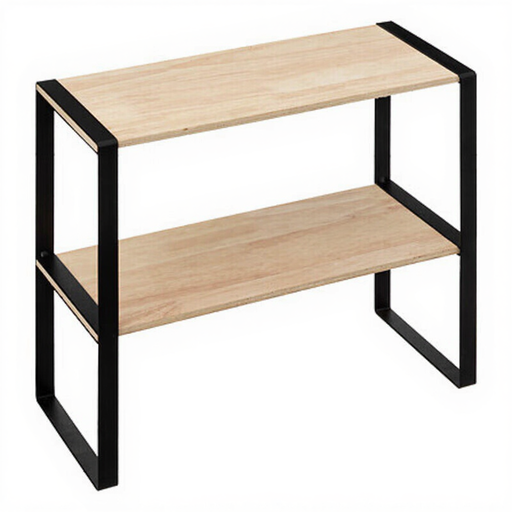
Why this product suits this profile: This compact, freestanding shelving unit is suitable for small storage areas, a bedside table or a limited home office. Before buying, compare the dimensions with the space available.
The product description specifies a total load capacity of 10 kg, or 5 kg per tier. This makes it easier to plan how it will be used than when load information is unclear.
Two tiers, freestanding floor assembly, a product weight of 1,81 kg and a surface that, according to the description, can be cleaned with a dry cloth.
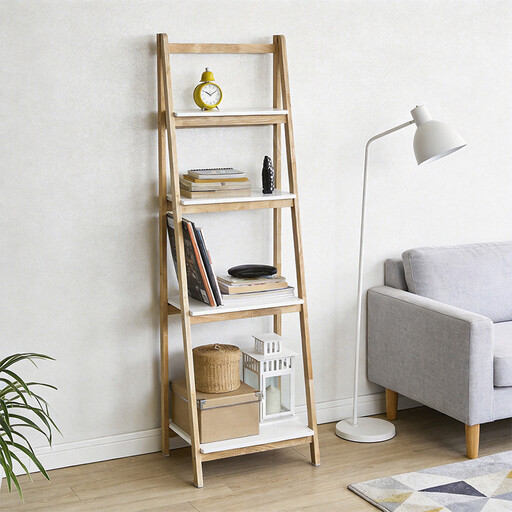
Why this product suits this profile: This four-tier freestanding shelving unit combines a rubberwood frame with white-painted MDF shelves. It is suitable for books, folders and towels, or for use as a kitchen or plant shelf.
The unit can be folded away when not in use. This reduces the storage space required and is practical for changing room layouts.
Four tiers, dimensions of approximately 42 x 140 x 34 cm, a weight of around 7,6 kg and a stated load capacity of up to 15 kg per shelf.
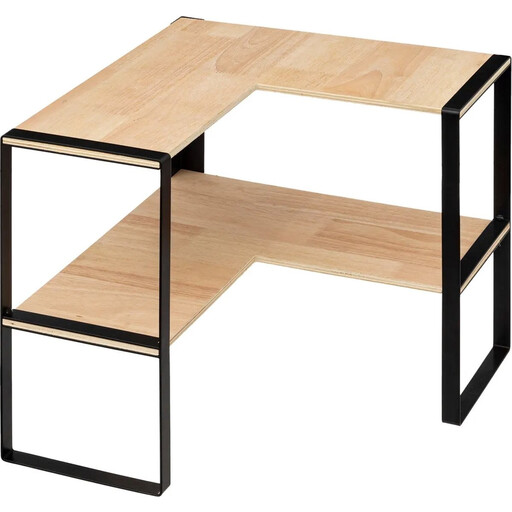
Why this product suits this profile: This corner shelving unit is designed for worktops, kitchen cupboards or the space beneath the sink. Two tiers create additional room for spices, storage containers or frying pans.
The square base and specific height make it easier to plan for corners and cupboards. Nevertheless, measure the usable internal width before buying.
Steel and plywood components, two shelves, dimensions of 40 x 40 x 35 cm and designed for self-assembly.
We have put together a complete, regularly updated list of products that fully meet these strict selection criteria and the safety regulations applicable in the EU.
Place the shelving unit on a level, load-bearing surface and distribute heavy items across the lower tiers. Tall furniture, as well as shelving units in homes with children or pets, should be fitted with a suitable anti-tip device. The assembly instructions and manufacturer’s guidance are the most important reference points.
Its lifespan depends on the material, load, moisture, assembly and care. A shelving unit that is used permanently above its stated load limit may become misshapen or unstable. With wood-based materials, avoid standing water and significant fluctuations in temperature.
A shelving unit normally has no regular running costs. However, you may need to account for potential expenses such as wall fixings, additional anti-tip devices, replacement parts or suitable care products. With a folding shelving unit, storage requirements can also be a deciding factor if it is only used seasonally.
No. A kitchen shelf should be easy to clean, a bathroom shelf must cope with the available moisture, and a bookcase needs tiers with sufficient load capacity. In a home office, suitable spacing for folders and equipment is important. Your choice should therefore always be based on where the shelving unit will be used, rather than on your interior style alone.