
Lieferung heute & morgen

Qualitätsgarantie

Willkommens-Angebote freischalten: KOSTENLOSE Lieferung | Bis zu 80 % RABATT | Kostenlose 30-Tage-JoyPlus-Testphase
App herunterladen
A shelving unit should create storage space, display items neatly and complement your existing furnishings. However, unclear product details, unsuitable dimensions or the wrong mounting method can quickly lead to disappointing purchases. Before choosing, it is therefore worth taking an objective look at dimensions, material, load capacity and fixing method.
Width alone does not determine whether a shelving unit will fit. For alcoves, hallways and small bathrooms, depth and height are particularly important. A freestanding shelving unit with a large depth can narrow walkways, while a wall shelf that is too low wastes valuable storage space.
Measure the available space at several points. For a wall shelf, you should also check that doors, windows, sockets and light switches remain unobstructed. The height of the items is important too: books, storage jars and personal care products require different amounts of space between the shelves.
A stated maximum load does not automatically apply to each individual shelf. It is important to check whether the figure refers to the entire shelving unit or to a single shelf. For a shelving unit with several levels, the load should be distributed evenly. Heavy items should preferably be placed at the bottom.
For wall-mounted models, the actual load capacity also depends on wall material, wall plugs, screws and mounting method. A load capacity of 10 kg per shelf, as stated for the vidaXL wall shelves, does not replace suitable fixings for the specific wall.
“Wood effect” does not necessarily mean solid wood. MDF, chipboard, coated boards and veneered materials are often used instead. This can be suitable for decorations, books or kitchen utensils, but it should be assessed in relation to the intended weight and the room environment.
Easy-care surfaces are a sensible choice for kitchens and bathrooms. In damp rooms, you should check whether the product is explicitly designed for this environment. A wooden shelving unit or wooden wall shelf should also be cleaned without leaving it permanently wet.
For a bookcase, the usable shelf height is key. For decorations and plants, different shelf sizes and open levels are advantageous. In the kitchen or bathroom, a space-saving shelving unit with a shallow depth can preserve room to move around.
Pay attention to the complete product dimensions, including the frame, brackets and any parts that protrude. For wall shelves, the mounting surface should be able to securely accommodate at least the full width of the bracket.
Check the following before buying:
A freestanding metal shelving unit with coated boards can be suitable for books and office supplies. For tall furniture, additional anti-tip protection is recommended, particularly in households with children or pets.
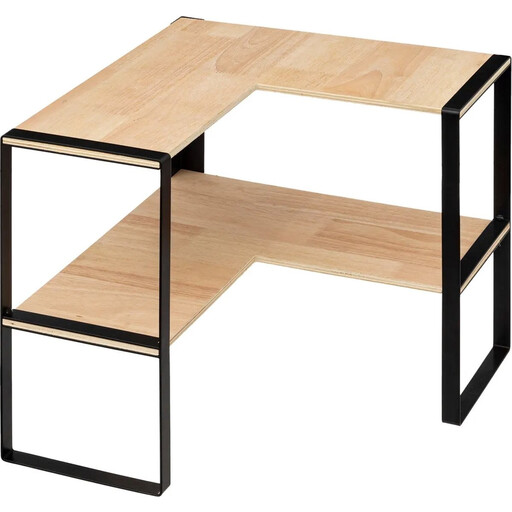
Why this product suits the profile: Measuring 40 × 40 × 35 cm, this compact corner shelf is designed for worktops, kitchen cupboards or the space beneath the sink. Two levels provide additional storage without taking up much floor space.
The clearly stated external dimensions make it easier to plan for corners. The steel and plywood construction is designed for modest kitchen or household storage needs.
Two shelves, a corner design and self-assembly. Suitable for spice jars, containers or pans.
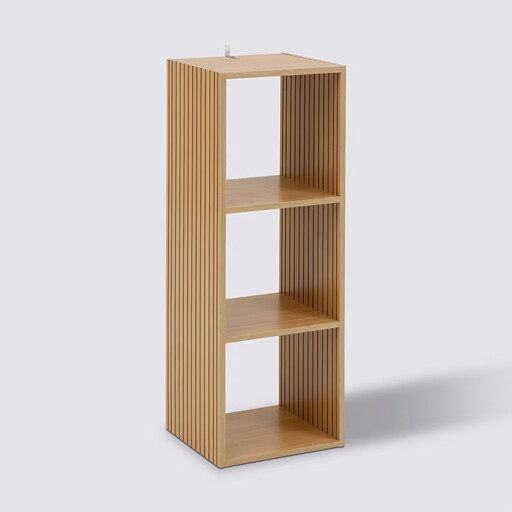
Why this product suits the profile: Measuring 35 × 32 × 102 cm, this freestanding shelving unit is suitable for the bathroom, kitchen, hallway or living space. The stated maximum load is 35 kg, and the product is designed for self-assembly.
The product details specify the dimensions, a weight of 10.7 kg and a total load of 35 kg. This makes it easier to plan how it will be used than when load claims are unclear.
FSC information, five levels according to the product description and a height of 102 cm. The listed materials include bamboo, zinc, MDF and chipboard.
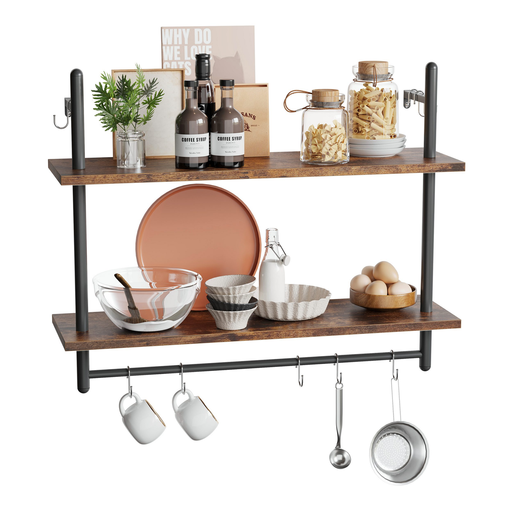
Why this product suits the profile: Measuring 80 × 24 × 64 cm, this wall shelf combines two shelves with eight S-hooks. It can be used in the kitchen, bathroom, utility room, garage or living area.
The product description states a load capacity of 9 kg per shelf and highlights the need for secure wall mounting. This makes it easier to match the shelf to light and medium-weight items.
Two levels, eight S-hooks, metal tubes and coated chipboard panels. According to the product details, the surfaces can be cleaned with a soft cloth.
For a wall shelf, first identify the type of wall and use suitable wall plugs. Mark the drilling points with a spirit level. After installation, check that all screws are tight and that the shelf is level. Heavy items should not be placed right at the outer edge.
A wooden shelving unit, MDF shelving unit or shelving unit with coated boards will stay looking good for longer if dust is removed with a dry or slightly damp cloth. Standing water, harsh cleaning products and persistently high humidity can damage surfaces. For a tall freestanding shelving unit, anti-tip protection is an important part of safe use.
We have put together a complete, regularly updated list of products that fully meet these strict selection criteria and the safety regulations applicable in the EU.
That depends on how it will be used. A lower load capacity is often sufficient for picture frames, small plants or personal care products. Books, crockery and food supplies require greater reserves. The deciding factor is always the lower limit between the shelf’s load capacity and the load-bearing capacity of the wall fixings.
Its service life depends on the material, moisture, installation, load and care. Evenly distributed weight, stable positioning and following the manufacturer’s instructions can help extend its usable life. For wall shelves, screws and brackets should be checked regularly.
A wall shelf makes use of vertical space and leaves the floor clear. A freestanding shelving unit usually offers more levels and can also accommodate larger items. For narrow hallways, small bathrooms and areas above a desk, a shallow wall shelf is often more space-efficient; for books and extensive storage, a slim freestanding shelving unit may be more suitable.