
Lieferung heute & morgen

Qualitätsgarantie

Willkommens-Angebote freischalten: KOSTENLOSE Lieferung | Bis zu 80 % RABATT | Kostenlose 30-Tage-JoyPlus-Testphase
App herunterladen
A shelving unit can organise books, display decorations or turn unused niches into valuable storage space. However, unclear product details and unsuitable dimensions often lead to disappointing purchases. Before buying, it is therefore worth looking beyond colour and style and paying attention to dimensions, weight capacity, material and mounting.
A narrow shelving unit may fit into a niche, but it might not be deep enough for ring binders or large books. Conversely, a deep piece of furniture can obstruct walkways. You should therefore check:
For a desk shelf, it is also important to check whether there is still enough comfortable space for a monitor, keyboard or work documents.
Marketing terms such as “robust” or “extra stable” are no substitute for technical specifications. Look for a stated maximum weight capacity per compartment or overall. Weight distribution is also important: heavy books should preferably go at the bottom, with lighter decorations higher up.
Tall freestanding shelving units should, where appropriate for their design, be secured to the wall with an anti-tip device. This is particularly important in households with children or pets. A storage shelf without sufficient safety measures can tip over despite being made from sturdy materials.
Shelving made from wood, MDF, chipboard, metal or bamboo reacts differently to moisture and weight. For the living room or home office, a dry, easy-to-clean surface is usually sufficient. In the kitchen, the kitchen shelf should be protected from splashes and kept dry regularly.
With open compartments, items remain visible and easy to reach. A shelving unit with doors or rattan fronts, on the other hand, keeps some of the contents out of sight and protects them from dust. These features should suit the way you intend to use the shelf.
The number of tiers alone does not fully describe the available storage space. Compartment height, compartment width and depth are also crucial. A multi-tier shelving unit makes efficient use of the room’s height, while a low wall shelf or corner shelf leaves more floor space available.
The following guidelines apply to typical uses:
Solid wood offers a natural surface and, depending on the design, may have a greater material thickness. MDF and chipboard are often lighter or more affordable, but should be protected from prolonged exposure to moisture. Metal frames can complement the construction and create an industrial look.
Always follow the specific manufacturer’s information. A surface described as water-repellent is not automatically suitable for permanently damp rooms. For many models, a dry or slightly damp cloth is sufficient for cleaning; aggressive cleaning products can damage the surface.
Freestanding furniture requires a level surface. With tall shelving units, it is particularly important to install the supplied anti-tip device according to the instructions. Before drilling, check that the wall material, wall plugs and screws are compatible. With a wall shelf, the fixings must support the combined weight of the shelf and its contents.
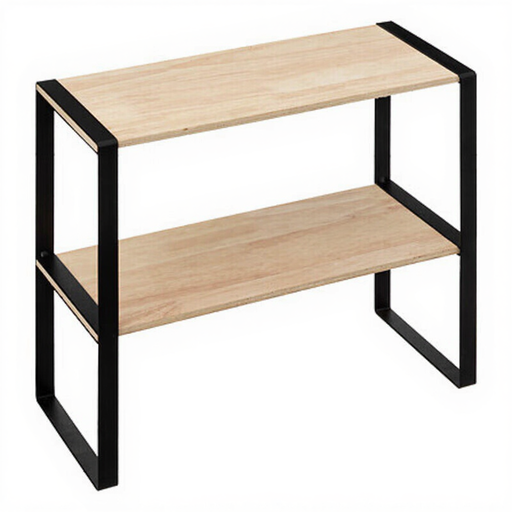
Why this product suits this profile: The compact design is suitable for small spaces, for example as a side table, bedside shelf or desk shelf. The stated dimensions are 40 × 30 × 35 cm.
The overall weight capacity is stated as 10 kg, with 5 kg per compartment. This makes it easier to plan how it can realistically be used than a purely promotional claim about stability.
Two tiers, freestanding placement and an easy-care surface made from composite wood.
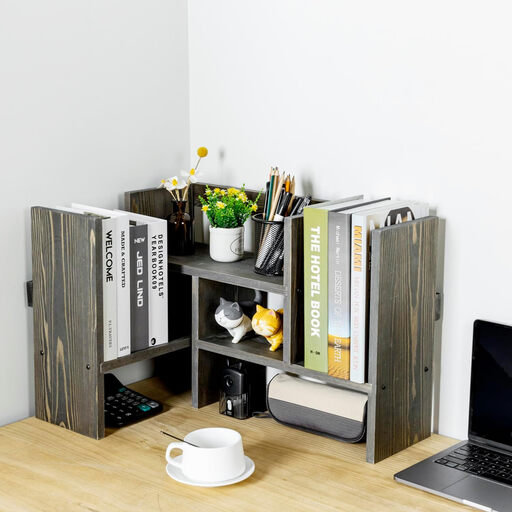
Why this product suits this profile: This solid wood desk shelf has three tiers and adjustable shelves. It fits neatly into a home office, studio or small living area.
The adjustable height helps accommodate different book, ring-binder or decorative item sizes, rather than limiting you to a fixed compartment layout.
Solid wood, three 6.7-inch-deep shelves and freestanding use without permanent wall mounting.
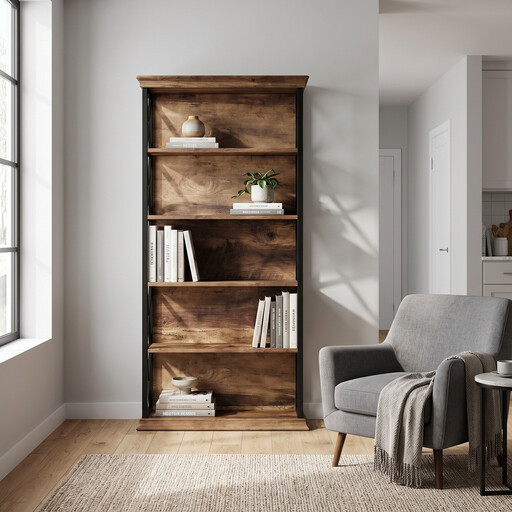
Why this product suits this profile: This tall freestanding shelf makes efficient use of vertical space and is suitable for living rooms, studies or kitchens. The metal frame complements an industrial interior style.
The product details state a maximum capacity of 34 kg per compartment and include an anti-tip kit. The load must be distributed evenly and the shelf secured to the wall.
180 cm height, five tiers, E0 MDF and a metal frame; assembly instructions and fixing materials are included according to the product details.
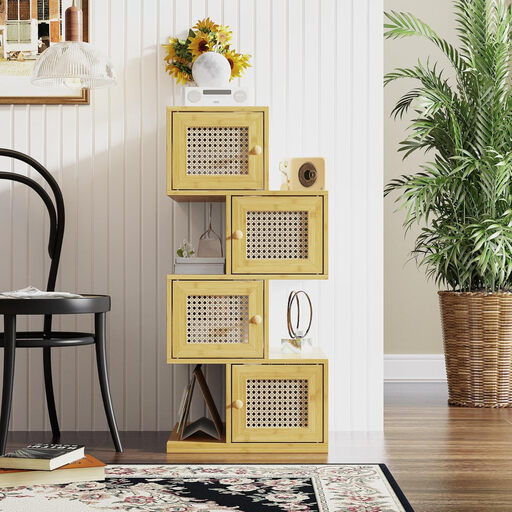
Why this product suits this profile: This narrow unit with a bamboo frame and rattan doors is designed for hallways, bedrooms or small living areas. Open and closed compartments combine display space with concealed storage.
The compact dimensions of 85 × 40 × 25.4 cm make it easier to plan for tight niches. Before buying, check the actual compartment dimensions to ensure they are suitable for books or towels.
Bamboo frame, four compartments and rattan doors for partially protected storage.
We have put together a complete, regularly updated list of products that fully meet these strict selection criteria and the safety regulations applicable in the EU.
For many standard books, less depth is needed than for ring binders or large-format art books. The important thing is that the books do not protrude and that the shelving unit does not extend unnecessarily far into the room. Measure your existing books and compare them with the usable compartment depth, not just the external depth.
First place the unit on a level surface and install the anti-tip device provided, following the instructions. The wall plugs and screws must be suitable for the wall material. If you are unsure, the fixings should be checked by a suitably qualified person. Heavy items should be placed in the lower compartments.
The lifespan depends on material thickness, construction, load, assembly and care. Solid wood, MDF, chipboard and metal all have different properties. A general answer is therefore not possible. Check the specific details regarding the material, weight capacity, surface care and warranty or statutory guarantee.