Precision at the collar
For a defined edge, lay the collar flat on a stable ironing surface and guide the soleplate carefully. Vileda recommends starting at the edges of the collar and ironing towards the centre.


For a crisp collar edge, a standard steam iron on a stable ironing surface is the obvious place to start: lay the collar flat and guide the soleplate carefully. A travel iron is worth considering if you also want to touch up your shirt at your destination; a garment steamer is better suited to freshening hanging clothes than pressing a sharp crease. Check the care label before ironing, and choose an appliance and features to suit the fabric, how you’ll use it and the space available.
For a defined edge, lay the collar flat on a stable ironing surface and guide the soleplate carefully. Vileda recommends starting at the edges of the collar and ironing towards the centre.
If you’re preparing one or a few shirts before packing, ease of use matters. Consider whether you really need a travel-sized appliance, or whether you’ll only use it at home on a suitable ironing surface.
If you want to smooth the collar again after it’s been packed, a travel iron may be a good option. Rowenta and Severin list switchable voltage for their respective models; even so, check the instructions and the power supply at your destination before use.
Best for: ironing the collar flat at home before you leave, with targeted attention to the edges.
Consider: You’ll need a suitable, stable ironing surface; the water tank and steam system may also require maintenance.
Best for: using a soleplate to touch up your shirt after you arrive.
Consider: The appliance takes up space in your luggage, and its voltage and plug must be suitable for use at your destination.
Best for: freshening hanging clothes, when you don’t need a sharply pressed collar edge.
Consider: Tefal describes garment steamers as using moist steam rather than the pressure and heat of an iron. That doesn’t mean they’ll create the same crisp, pressed edge.
These proportions group consumers by what matters most to them when ironing a shirt collar before a trip.
| Priority | What to check when buying | Who values it most |
|---|---|---|
| Pressing the collar precisely | Tip of the soleplate and ease of manoeuvring it; a stable ironing surface. | If I want a crisp collar edge, I need to be able to lay the shirt flat and guide the soleplate easily. Around 36% of consumers put precision at the collar first. |
| Ironing quickly before departure | Heat-up time and operating instructions for the exact model; space for an ironing surface and a safe place to set the iron down. | If I’m only preparing one or a few shirts, I want to iron them without having to set up complicated equipment. Around 29% of consumers prioritise a quick iron before departure. |
| Following care instructions | The shirt’s care symbols, as well as temperature control and the option to switch steam off. | If my shirt needs a specific temperature or must be ironed without steam, I follow the care label rather than choosing a high steam output. Around 21% of consumers prioritise treating the fabric appropriately. |
| Touching up at your destination | Size and weight, access to an ironing surface, voltage, plug type and safety instructions. | If the collar needs smoothing again after the journey, I want to be able to use the iron at my destination too. Around 14% of consumers prioritise ironing again after arrival. |
A garment steamer uses steam to treat hanging clothes, while an iron also uses pressure and heat. For a crisp, pressed edge, you’ll need a suitable ironing surface and a soleplate.
Choose a garment steamer if freshening your clothes is enough and you don’t expect a defined collar edge.
If you do want to press the collar, you may also need an iron and an ironing surface.
If you only iron at home before packing, you won’t use the folding handle or switchable voltage at your destination.
Before you buy, consider whether you’ll actually want to iron again after you arrive.
A travel iron takes up extra space in your luggage; you may also need a suitable ironing surface at your destination.
Appliance specifications describe different features, and the result also depends on the care symbols, ironing surface and how you guide the iron. For the Tefal Ultimate Pure FV9844 it tested, CHIP Testcenter lists weight and heat-up time as drawbacks.
Consider how easy the iron is to handle and how its tip performs, alongside the temperature and steam settings your shirt allows.
For the Braun TexStyle 3 SI 3055 BK, the tank specifications differ between the Joybuy product information and the Braun Household Deutschland range information.
Before buying, compare the specifications for the exact model variant and check which details apply to the specific listing. Also check the labelling and what’s included.
The Ultimate Pure FV9844 is a standard steam iron for home use; Tefal also offers garment steamers, which work differently.
The TexStyle 3 range includes standard steam irons for targeted ironing before you pack.
The First Class DA1610 is a travel steam iron for anyone who wants to touch up their clothes at their destination using a soleplate.
The BA 3234 is a travel steam iron with steam and dry ironing settings.
The One Temperature 25090-56 is a standard steam iron with a fixed temperature setting.
The Azur 8000 DST8020/20 is a standard steam iron with automatic temperature technology.
This selection includes steam irons for pressing a shirt collar on an ironing surface.
 No image available
This steam iron has a coated soleplate and is suitable for ironing flat on an appropriate ironing surface.
The description lists five temperature settings, dry ironing and a self-cleaning function.
 No image available
This steam iron is designed for ironing on a stable ironing surface.
Specifications include continuous steam output of 40 g/min, a steam shot of 160 g/min, a 250-ml tank and a 2-m cable. The description also lists a stainless steel soleplate and anti-drip protection.
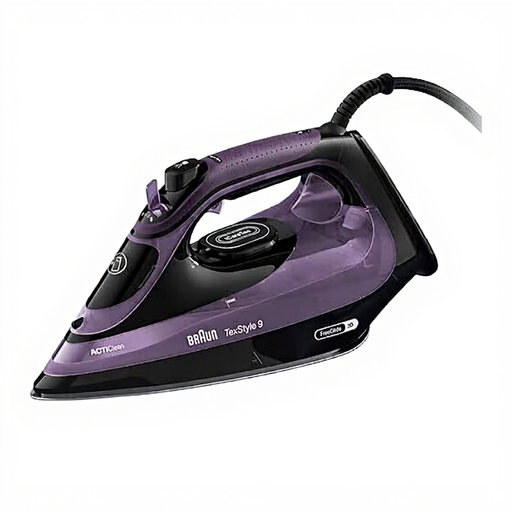 No image available
The precision tip described may be useful when manoeuvring around narrow parts of a collar.
The product description lists automatic iCare temperature control, anti-drip protection, automatic shut-off and a 330-ml tank.
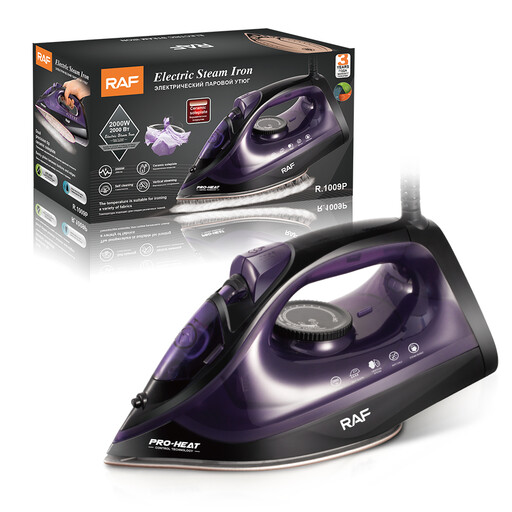 No image available
The ceramic soleplate is listed as a feature of this steam iron; you’ll still need a suitable ironing surface to press a collar.
The description lists a 210-ml tank, self-cleaning, a spray function, vertical steam and a steam shot. It also states that the iron is compatible with dual voltage from 110–220 V.
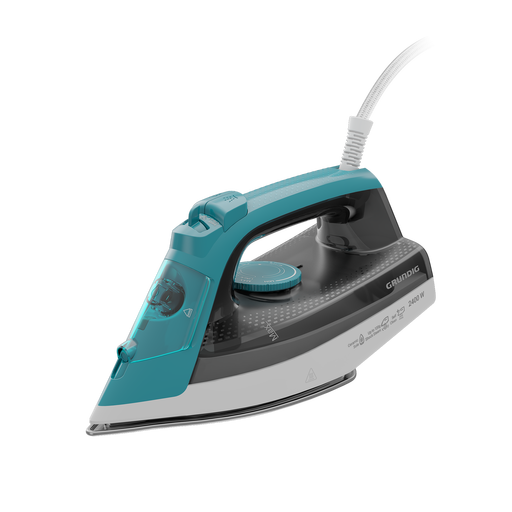 No image available
The ceramic soleplate described is designed for ironing on a suitable ironing surface.
The product description lists a 220-ml tank, anti-drip protection, anti-scale and self-cleaning functions, a temperature control and switchable steam. It also lists a 1,9-m cable and vertical steam.
First, check the care symbols and lay the collar flat on a stable ironing surface. Vileda recommends starting at the edges and ironing towards the centre. Then pack the shirt so the collar isn’t squashed unnecessarily.
A travel iron is most useful if you want to touch up the collar with a soleplate after you arrive. If you only iron before packing, portability isn’t an advantage for this particular use.
No. The instructions for the Severin BA 3234 say to set the voltage switch to match the local mains voltage. Also check that the power supply and plug type are suitable at your destination.
Appliances covered by the relevant EU product rules must carry the CE marking. This is the manufacturer’s declaration of conformity, not an independent quality mark. Subject to legal exemptions, relevant electrical appliances must also carry the WEEE marking, showing a crossed-out wheeled bin, as explained by the European Union’s Your Europe website.
According to Your Europe, when you buy from a trader, you’re entitled to a legal guarantee of at least two years from the date you receive the goods. This is separate from any additional manufacturer’s guarantee; the same rules don’t apply in the same way to purchases from private individuals.