
Lieferung heute & morgen

Qualitätsgarantie

Willkommens-Angebote freischalten: KOSTENLOSE Lieferung | Bis zu 80 % RABATT | Kostenlose 30-Tage-JoyPlus-Testphase
App herunterladen
A new smartphone is a significant investment. Yet, a single careless moment—a slip from the edge of a table or a bump on a crowded subway—can lead to costly damage to the display or body. A shockproof phone case is therefore not an option, but a necessity. However, the market is confusing and filled with marketing promises that often obscure more than they clarify.
As your Joybuy Product Recommendation Officer, I'll help you identify the crucial features and avoid common pitfalls, so you can find a case that reliably protects your device without compromising on functionality.
Before we dive into the important features, let's look at the most common misconceptions and design flaws that often lead to a bad buy.
To make an informed decision, focus on the following three objective criteria.
The most effective shock absorption is often achieved through a hybrid construction. This combines two materials with different properties:
Look for additional design features like reinforced corners. Technologies like Spigen's well-known Air Cushion Technology use small air pockets in the corners to specifically dissipate impact energy—a small detail with a big impact. A case with a carbon fiber look can also improve grip and reduce fingerprints.
The most expensive and delicate components of a smartphone are the display and the camera unit. A good iPhone case or Samsung Galaxy case must specifically secure these areas. The key feature is raised edges (bezels) that run around the display and the camera module. When the smartphone is placed on a flat surface, these edges prevent direct contact, thus protecting against scratches.
For even more comprehensive protection, some models offer an integrated case with a camera cover, often in the form of a manual slider. This not only protects the lenses from scratches but also from dust and dirt, while providing an added layer of privacy.
A modern protective case should do more than just protect. It should enhance the use of the device.
Here are some recommendations tailored to specific user profiles that meet the criteria mentioned above.
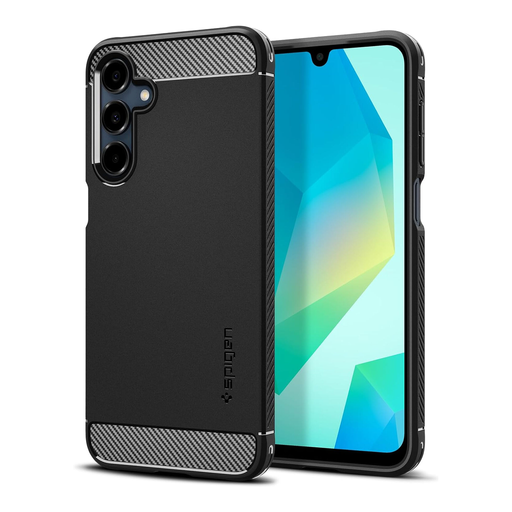
Why This Fits Their Persona: Ideal for users seeking reliable yet unobtrusive protection for daily use. The slim profile and matte finish with carbon fiber accents provide excellent grip without adding bulk.
Avoids the "impractical armor case" trap. It offers certified protection via Air Cushion Technology while remaining flexible, lightweight, and not hindering usability.
Excellent balance of a slim design and proven protection technology. Supports wireless charging and features raised edges for the display and camera.
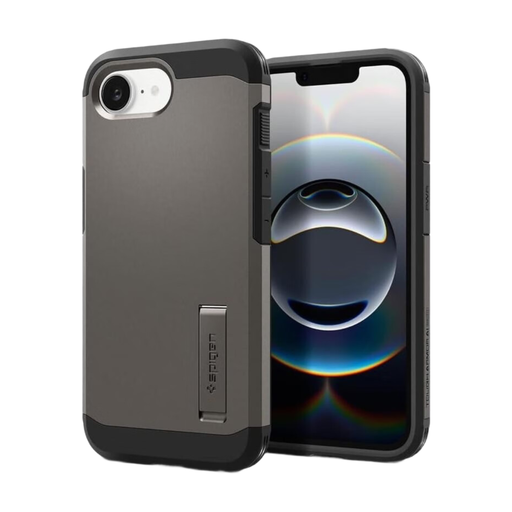
Why This Fits Their Persona: For owners of premium devices who refuse to compromise. This case combines maximum protection with full functionality, including MagSafe and an integrated kickstand for media consumption.
Debunks the vague "Military Grade" promise with a transparent dual-layer construction and additional shock-absorbing foam padding. Functionality (MagSafe) is not sacrificed.
Multifunctionality: Delivers robust drop protection, full MagSafe compatibility, and a practical, multi-angle locking kickstand in one package.
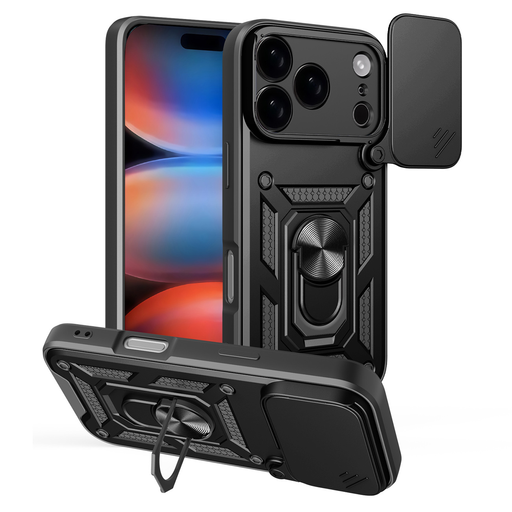
Why This Fits Their Persona: Perfect for users who appreciate clever, integrated solutions. This case not only protects the device but also offers two extremely useful additional features with its camera slider and ring stand.
Goes beyond mere shock protection to address specific vulnerabilities like the exposed camera lens. The hybrid TPU and PC construction avoids the drawbacks of cheap, single-material cases.
Two-in-one solution: The integrated camera cover protects the lenses from scratches and dirt, while the metal ring serves as a secure grip and a flexible kickstand.
We've compiled a complete, up-to-date list of products that fully meet these strict selection criteria and current regulations.
The lifespan heavily depends on the material quality and usage. A high-quality case made from a TPU and polycarbonate combination can easily last for several years. Signs that a replacement is needed include cracks in the hard plastic, significant yellowing on transparent models, a loose fit, or worn-out button covers that make operation difficult.
Yes, it's possible. Very thick cases (usually over 4-5 mm) or those with metal elements (not specifically designed for magnetic mounts) can interfere with or prevent wireless charging. With MagSafe, it's even more critical: only a case marked as "MagSafe compatible" has the necessary integrated magnets for a secure connection and efficient charging. Therefore, always check the product description for "Wireless Charging Compatible" or "MagSafe Compatible."
This claim usually refers to the U.S. military standard MIL-STD-810G. It defines test procedures for various environmental stresses, including drop tests. A case that meets this standard has been tested for its resistance to falls. However, the label alone is not a guarantee. Look for specific details on drop height and proven protection technologies like air cushions in the corners to better assess the actual protective performance.