
Lieferung heute & morgen

Qualitätsgarantie

Willkommens-Angebote freischalten: KOSTENLOSE Lieferung | Bis zu 80 % RABATT | Kostenlose 30-Tage-JoyPlus-Testphase
App herunterladen
A cluttered entryway with shoes blocking the path is a common frustration. A shoe bench is a functional solution that solves two problems at once: it creates order and provides a comfortable place to sit while putting on and taking off your shoes. As a multi-functional piece of furniture, it combines the features of a shoe rack with the comfort of a bench.
This guide is here to help. It introduces various models and explains the key criteria to help you find the right hallway bench—one that fits your available space, storage needs, and interior style.
Choosing the right model depends on your individual needs. The following three points will help you define your requirements and make an informed decision.
The material determines not only the look but also the durability and stability of the bench.
Always check the manufacturer's specified maximum load capacity for the seat. This is usually between 100 kg and 150 kg and ensures that the bench can be safely used by adults.
A shoe bench with storage can come in many different designs. Consider which type of storage is most practical for you.
Measure the available space in your hallway or entryway carefully before making a decision. A hallway bench that is too large can block the walkway, while a model that is too small may not offer enough storage.
A typical depth for a shoe rack with a seat is about 30 cm. This dimension is sufficient for most shoe sizes without the furniture protruding too far into the room. For very small nooks or narrow hallways, there are especially compact models with a width of just 60 cm. For larger households or spacious entryways, wider benches from 100 cm upwards are suitable, offering space for numerous pairs of shoes.
Here is a selection of models that stand out for their different features in terms of material, size, and storage.
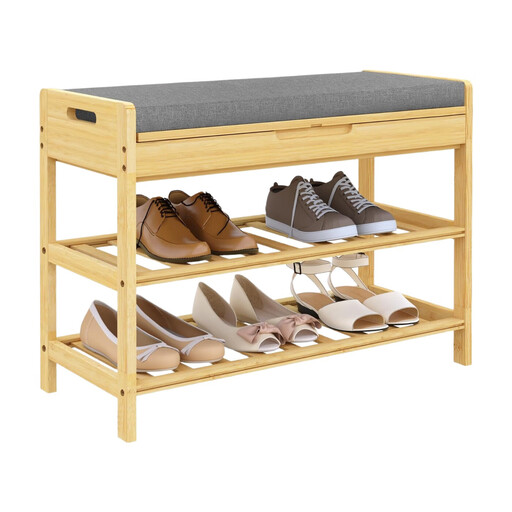
Why it stands out: This model from WOLTU combines natural bamboo with smart functionality. In addition to two open shelves for shoes, it offers a hidden storage compartment under the padded seat. With a width of 68 cm, it's a compact yet versatile solution.
Pros:
Who it's for: Ideal for those looking for a space-saving solution with a mix of open and concealed storage who prefer natural materials.
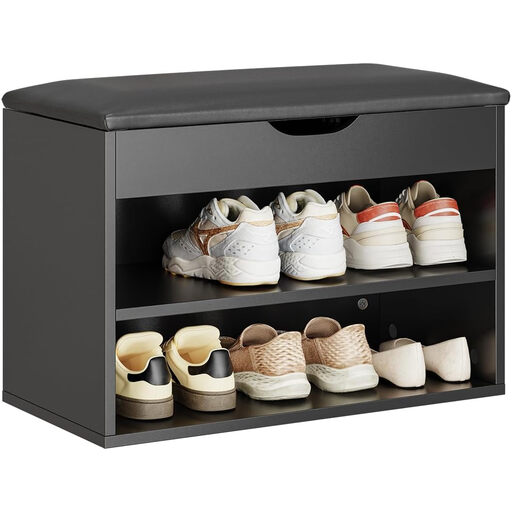
Why it stands out: At just 60 cm wide, the SoBuy shoe bench is extremely compact and specifically designed for narrow hallways and small apartments. It still offers three functions: a comfortable seat, an open shoe rack, and a hidden compartment under the lift-up seat.
Pros:
Who it's for: Perfect for renters or owners of small apartments who need a multi-functional entryway bench that takes up minimal space.
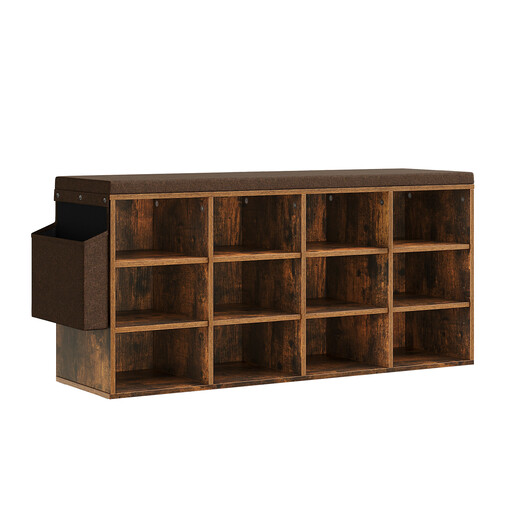
Why it stands out: With a width of 102 cm and a total of 12 compartments, this WOLTU shoe bench is a comprehensive storage solution. Its strength lies in its flexibility: the side shelves are height-adjustable or removable to make room for boots or taller shoes.
Pros:
Who it's for: An excellent choice for families or individuals with many shoes who have a spacious hallway and need a highly organised shoe rack with a bench.
The models featured here cover a range of needs, but the selection is even larger. If you're looking for different designs, materials, or sizes, you might find the perfect piece in our comprehensive collection.
? Explore Our Entire Collection of Hallway Shoe Benches with Seats
1. How much weight can a shoe bench hold? The maximum load capacity varies depending on the model, material, and construction. Common values range from 100 kg to 150 kg. It is important to always check the specific manufacturer's details in the product description to ensure safe use.
2. What is the best material for a shoe bench? The choice of material depends on your priorities. Bamboo is a great choice for areas exposed to moisture and adds a natural aesthetic. Engineered wood (like MDF or particleboard) offers a wide variety of designs and is often more cost-effective. Solid wood stands for maximum stability and longevity.
3. How deep should a shoe bench be? A standard depth of about 30 cm is sufficient for most shoe sizes and ensures the bench doesn't protrude too far into the hallway. For shoe sizes above EU 45 (US 11.5), a depth of 35 cm can be beneficial to ensure shoes don't hang over the edge. Measure your available space to determine the optimal depth.