
Lieferung heute & morgen

Qualitätsgarantie

Willkommens-Angebote freischalten: KOSTENLOSE Lieferung | Bis zu 80 % RABATT | Kostenlose 30-Tage-JoyPlus-Testphase
App herunterladen
A cluttered entryway is a daily frustration. Shoes pile up, there's nowhere to put down your bag, and putting on shoes becomes a balancing act. A shoe bench promises an elegant and functional solution, combining storage space with a comfortable place to sit. However, not every model delivers on its promise. Many buyers only discover after a few months that their new piece of furniture has defects that complicate daily life rather than simplifying it.
As your Joybuy Product Recommendation Officer, I'll help you identify the typical pitfalls. We will focus on the objective features that define a quality hallway bench, so you can make an informed decision and avoid buyer's remorse.
The three most common problems with low-quality shoe benches are:
To avoid these problems, you should check three core parameters before buying. These define the functionality and durability of your new furniture.
The material is the foundation of any solid shoe bench. Here are the most common options and their characteristics:
The specified maximum static load capacity is a critical safety factor. A reliable hallway bench should have a load capacity of at least 120 kg (265 lbs) to safely support the weight of an adult. Look for solid joints, reinforced corner elements, and a well-thought-out design that distributes weight evenly. A bench rated for only 80 kg (176 lbs) is more of a shelf than a proper seat.
Measure your available space precisely before choosing a model. A narrow shoe bench can be an ideal solution for tight corridors, while wider models offer more storage. Consider what type of shoes you plan to store:
Here are a few models that are well-suited for specific needs and living situations, based on their objective features.
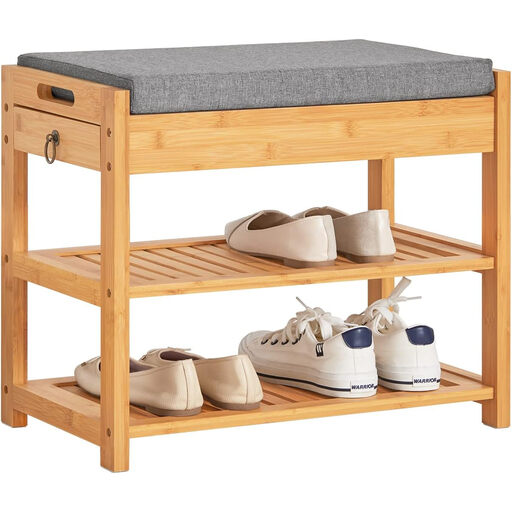
Why it's a great fit: With a width of just 55 cm, this bench is ideal for narrow hallways or niches where every centimetre counts. It still provides full seating and storage functionality.
The bamboo material with a clear lacquer finish is naturally moisture-resistant, bypassing the problem of swelling materials. The construction is rated for a load of up to 150 kg, counteracting the issue of instability.
The combination of a closed cabinet for shoes and a side drawer for small items ensures a tidy look in the smallest of spaces.
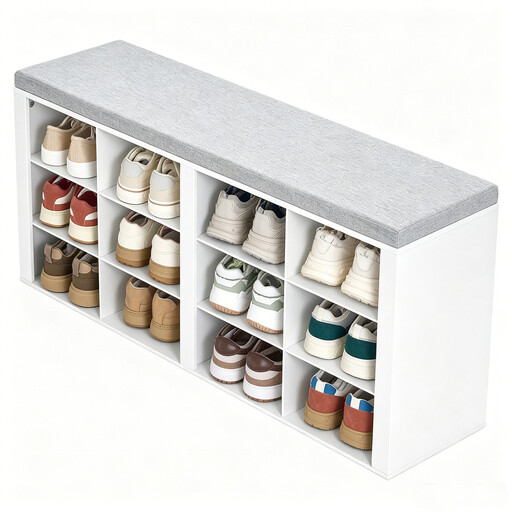
Why it's a great fit: With 12 compartments, this bench offers plenty of space for the whole family's shoes. The flexible layout allows for the neat storage of sneakers, kids' shoes, and taller footwear.
The height-adjustable shelves directly solve the problem of impractical storage, as they can be adapted to different shoe heights. The stated load capacity of 150 kg ensures the necessary stability for daily family use.
The high flexibility offered by adjustable compartments makes this model particularly future-proof, as it can adapt to changing shoe sizes and types.
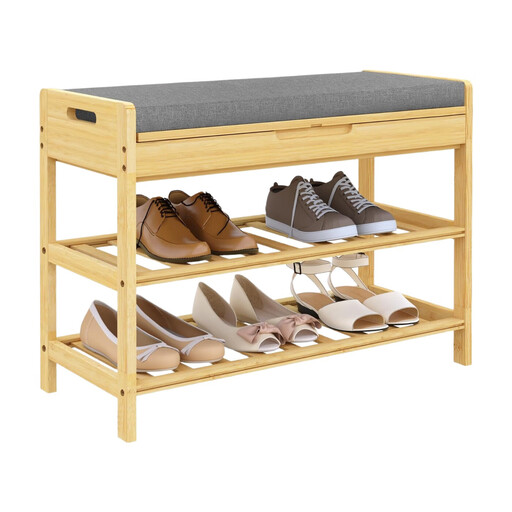
Why it's a great fit: For anyone who values natural materials and a warm, inviting atmosphere. The bamboo material combined with the grey fabric cushion blends harmoniously into many interior design styles.
The clear-lacquered surface of the bamboo is water-repellent and easy to clean, preventing material damage from moisture. With a load capacity of 150 kg, the bench provides a very stable seat, addressing the stability problem.
The hidden storage compartment under the flip-top seat is a clever solution for stowing away accessories like umbrellas or shoe care products, ensuring maximum tidiness.
We've compiled a complete, up-to-date list of products that meet these strict selection criteria and safety requirements.
The load capacity varies greatly depending on the model and construction, ranging from 80 kg (176 lbs) to over 150 kg (330 lbs). For safe use as a seat for an adult, a static load capacity of at least 120 kg (265 lbs) is recommended. Always check the manufacturer's specific details before purchasing.
This depends on the storage design. Models with open, tall compartments or with adjustable or removable shelves are well-suited for boots or ankle boots. Benches with fixed, low compartments often cannot accommodate tall footwear.
Care is generally straightforward. Wipe the surfaces regularly with a dry or slightly damp cloth. Avoid aggressive cleaning agents, as they can damage the finish or the material. It is also advisable to let heavily soaked shoes dry briefly before placing them on the bench to ensure the material's longevity.