
Lieferung heute & morgen

Qualitätsgarantie

Willkommens-Angebote freischalten: KOSTENLOSE Lieferung | Bis zu 80 % RABATT | Kostenlose 30-Tage-JoyPlus-Testphase
App herunterladen
A shoe bench is an elegant solution to an everyday problem: shoe clutter in the entryway. It combines practical shoe storage with a comfortable place to sit, creating both order and convenience. However, the market is flooded with models of widely varying quality. Before you make a decision, it's important to know the typical weak points that can quickly turn a seemingly helpful solution into a frustrating purchase.
Many buyers focus on design and overlook crucial functional flaws. These include three common problems:
A well-thought-out purchase will save you from these problems. Instead of being swayed by marketing promises, you should focus on verifiable core features.
To find a durable and functional shoe bench that perfectly fits your needs, you should examine three key aspects. These will help you objectively assess a model's quality.
The material is the primary factor determining the stability and longevity of your entryway bench.
Measure the available space in your hallway precisely before choosing a model. A narrow shoe bench with a depth of under 30 cm is perfect for tight entryways.
An even more important metric is the maximum weight capacity of the seat. This manufacturer specification indicates how much weight the bench can safely support. For daily use by an adult, the capacity should be at least 90 kg. Models rated for 120 kg or more generally offer greater stability and a more solid construction.
A good shoe rack with a seat offers a well-designed storage concept. Consider what type of shoes you plan to store primarily.
Here are some recommendations tailored to different needs and living situations. Each model was selected based on the objective criteria mentioned above.
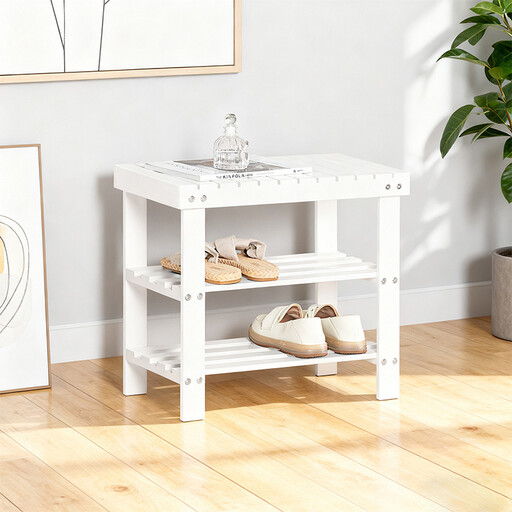
Why This Fits Their Persona: At just 50 cm wide, this model is extremely compact and fits even in the narrowest hallway or a small nook. The minimalist design focuses on the core functions: sitting and storing shoes.
The construction of lacquered bamboo is naturally stable and moisture-resistant. Unlike unsealed particle board, it withstands daily contact with damp shoe soles.
Extremely space-saving design; simple and quick assembly; weight capacity up to 90 kg according to the manufacturer.
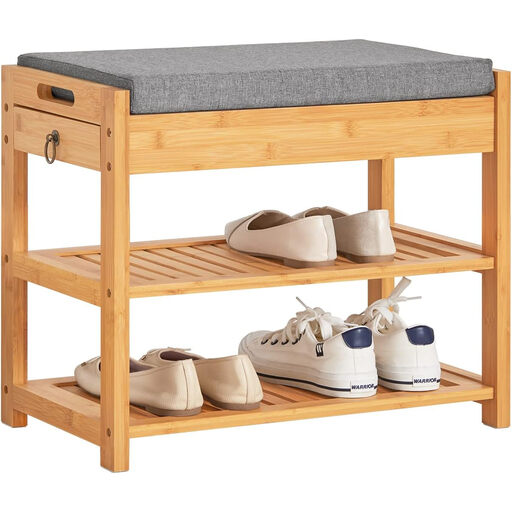
Why This Fits Their Persona: Anyone who values comfort while putting on shoes and a tidy appearance will find the right solution here. The seat cushion enhances comfort, while the side drawer offers discreet storage for small items.
The specified weight capacity of up to 150 kg (according to the manufacturer) and the robust bamboo construction provide reliable stability. The seat cushion is a functional extra, not just a design element to distract from flaws.
Combination of seating comfort and additional, closed storage; felt floor protectors are included.
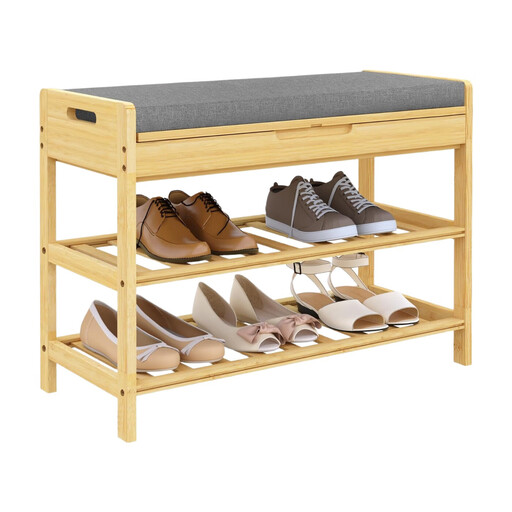
Why This Fits Their Persona: For multi-person households or users who need to store more than just shoes. With two open tiers and a large tip-out compartment under the seat, this model offers the most flexible storage.
The hidden compartment under the seat is a practical detail that maximizes storage without cluttering the look. It solves the problem of where to put a shoehorn or umbrella without looking messy.
High weight capacity (up to 150 kg according to the manufacturer); versatile storage with open and closed compartments; padded seat.
We have compiled a complete, up-to-date list of products that fully meet these strict selection criteria and German safety regulations.
The capacity varies depending on the model and material. It is essential to check the manufacturer's specified maximum weight capacity. Models made of solid wood or bamboo often support between 100 kg and 150 kg, while simpler designs may only be rated for up to 90 kg. Always check this value to ensure stability and safety.
Yes, bamboo is an excellent choice for this purpose. The material is naturally moisture-resistant and does not warp as easily as other types of wood. A lacquered finish, found on most bamboo shoe benches, provides additional protection and makes cleaning with a damp cloth easy.
First, accurately measure the available space in your hallway or entryway (width, depth, and height). Also, consider the swing radius of any doors. For a particularly narrow hallway, models with a depth of less than 30 cm are ideal as they won't obstruct the walkway. Then, compare these measurements with the product dimensions in the description.