
Lieferung heute & morgen

Qualitätsgarantie

Willkommens-Angebote freischalten: KOSTENLOSE Lieferung | Bis zu 80 % RABATT | Kostenlose 30-Tage-JoyPlus-Testphase
App herunterladen
A cluttered entryway with shoes blocking the path is a daily frustration. At the same time, there's often no comfortable place to sit while putting on or taking off your shoes. A shoe bench cleverly combines both functions: it creates order while providing a practical seating area.
This article serves as your guide. We'll outline the key criteria for selecting a hallway bench and showcase a variety of models with different features. Our goal is to provide you with an informed basis for organising your entryway shoe storage.
Before you decide on a model, there are a few practical considerations to keep in mind. The following points will help you narrow down the options to products that are a perfect fit for your home.
The first step is to measure the intended space. Note the maximum width, depth, and height the piece of furniture can have. Compact models are ideal for narrow hallways or small alcoves, while a wider wardrobe bench can fit well in a spacious entryway. Make sure there is still enough room to move around and that doors can open without obstruction. A typical depth of 30 to 35 cm is sufficient for most shoe sizes without protruding too far into the room.
The type of shoe bench with storage you choose affects both its appearance and functionality.
The materials determine the bench's longevity and style. Models made from engineered wood, such as MDF or particleboard, are common and available in many designs. Bamboo is a sustainable and moisture-resistant alternative.
A crucial factor is the specified maximum load capacity. This indicates how much weight the seat can safely support. The values vary depending on the construction and material. Always check this specification in the product details to ensure the bench can withstand the demands of daily use.
Here, we present three models that stand out for their unique concepts and features, catering to a range of needs.
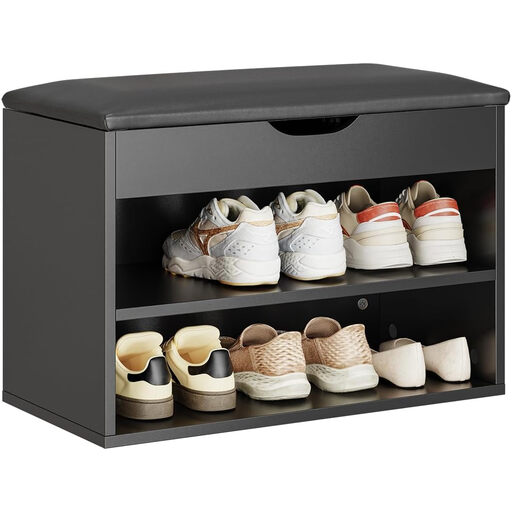
Why it stands out This model is a prime example of multifunctional furniture in a small footprint. It combines a seat, a concealed compartment, and an open shoe rack in a very compact design, making it a well-thought-out solution for tight spaces.
Advantages
Who it's for Ideal for individuals or couples in apartments with limited space who are looking for an all-in-one solution for their entryway.
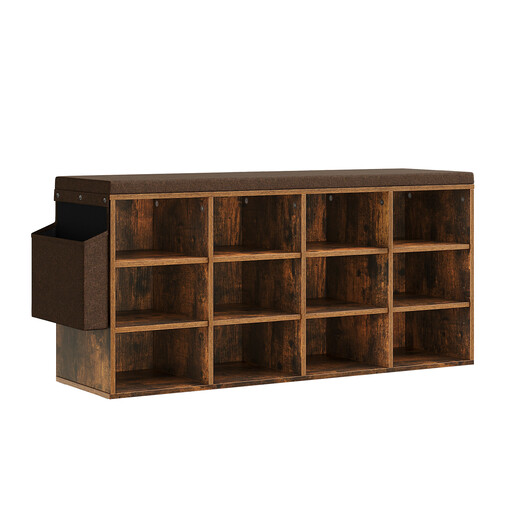
Why it stands out The WOLTU shoe bench is designed for maximum organisation and flexibility. With twelve compartments and adjustable shelves, it offers structured storage for a larger shoe collection, including taller footwear like boots.
Advantages
Who it's for Perfect for families or individuals with many shoes who need a highly organised and customisable shoe cabinet with seating for their hallway or dressing room.
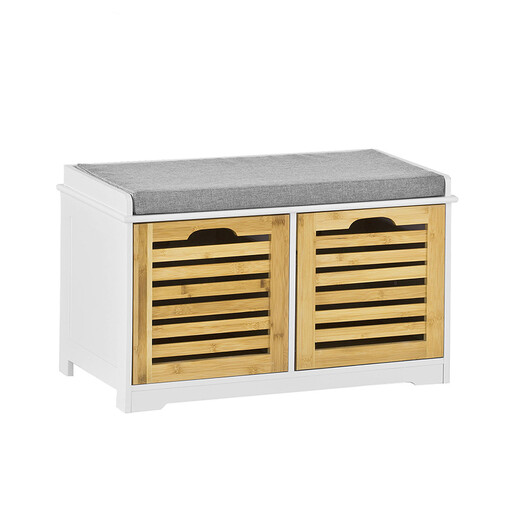
Why it stands out This hallway bench combines a classic design with the practical flexibility of removable baskets. The combination of white-painted MDF and natural bamboo gives it a bright, welcoming look that complements many interior styles.
Advantages
Who it's for For users who appreciate a timeless piece of furniture and prefer a flexible storage solution that goes beyond just holding shoes.
If you haven't found the right model for your needs here, it's worth exploring our wider selection. Discover more solutions in our Outdoor Chair Bench for Shoe Storage category to find additional designs, materials, and sizes.
The maximum load capacity varies greatly depending on the model, material, and construction. It typically ranges from 100 kg to 150 kg. This information, often referred to as 'static load capacity,' is an important safety feature and should always be checked in the manufacturer's product details.
A depth of 30 to 35 cm is sufficient for most common shoe sizes (up to around EU size 46) without the shoes hanging over the edge. For very large shoe sizes or if you plan to store hiking boots, it's a good idea to measure the length of your largest shoes and choose a deeper model accordingly.
When buying, look for models with removable and washable covers, like the featured WOLTU bench. This makes cleaning much easier. For fixed cushions, spot cleaning with a slightly damp cloth and, if necessary, a mild upholstery cleaner is recommended. Always test any cleaning agent on an inconspicuous area first.