
Lieferung heute & morgen

Qualitätsgarantie

Willkommens-Angebote freischalten: KOSTENLOSE Lieferung | Bis zu 80 % RABATT | Kostenlose 30-Tage-JoyPlus-Testphase
App herunterladen
A shoe bench for the hallway combines two useful functions: it gives you somewhere to sit while putting on your shoes and provides space for shoes, bags or smaller items. For it to work well in everyday life, though, you’ll need to look beyond colour and design. The key things to consider are dimensions, weight capacity, storage, materials and secure assembly.
In smaller homes, narrow entranceways and busy family hallways, choosing the wrong model can quickly turn into a costly mistake.
A shoe bench may look compact in product photos, but in practice it needs enough clearance for you to move around comfortably. Check the following:
In a narrow hallway, a shallow design may be more useful than an especially long seat. For example, a narrow shoe bench with vertical storage can work well in a tight corridor, while a longer bench can provide seating for more than one person.
The maximum weight capacity generally refers to a static load under specific conditions. It doesn’t automatically mean the bench can withstand a sustained load, sitting on the edge or standing on the seat.
Look out for:
Children shouldn’t climb or jump on a shoe bench. For tall furniture such as a shoe cabinet with a bench, use the supplied anti-tip device in accordance with the assembly instructions.
A large number of compartments doesn’t automatically mean good shoe storage in the hallway. Tall boots, trainers, slippers and shoe-care products all need different amounts of space. Adjustable shelves or a mix of open and closed storage are often more practical for everyday use.
Cleaning matters, too: open compartments are easy to access, but leave shoes and dust on show. Closed doors create a neater look, but need more room to open.
Measure the space where you plan to put the bench, including skirting boards and the door’s swing. A hallway bench with shoe storage around 30 cm deep may suit many entranceways, while wider models can offer more seating comfort or extra storage.
In bedrooms and living rooms, a bench can often be a little longer or more decorative. A bench at the foot of the bed, however, needs enough clearance to keep drawers and doors accessible.
The manufacturer’s stated weight capacity should suit how you plan to use the bench. A bench used every day for putting on shoes should sit firmly on the floor and mustn’t wobble. With furniture featuring a metal frame, wooden legs or chipboard elements, secure joints and correct assembly are particularly important.
For example, the JOYFURNOS model has a stated bench capacity of 136 kg. The WOLTU model is rated at 150 kg. These figures are product specifications from the respective manufacturers, not general guidance for other models.
Velvet, linen-look fabric, bamboo, metal and engineered wood all differ in terms of care and use:
A removable seat cushion can make cleaning easier. With a shoe rack with a seat and no upholstery, the focus is instead on keeping shoes easily accessible.
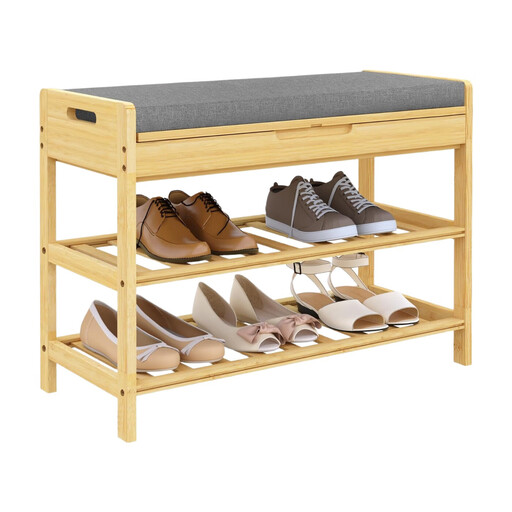
Why it suits this profile: Measuring 68 x 50 x 30 cm, it’s a good fit for smaller entranceways. Two open shelves and a closed compartment combine seating with basic shoe storage.
The stated weight capacity of 150 kg and exact dimensions make it easier to check whether it’s right for your space before buying. The seat is upholstered, and smaller items can be stored in the closed compartment.
Bamboo construction, two open shoe shelves, one closed compartment and an upholstered seat.
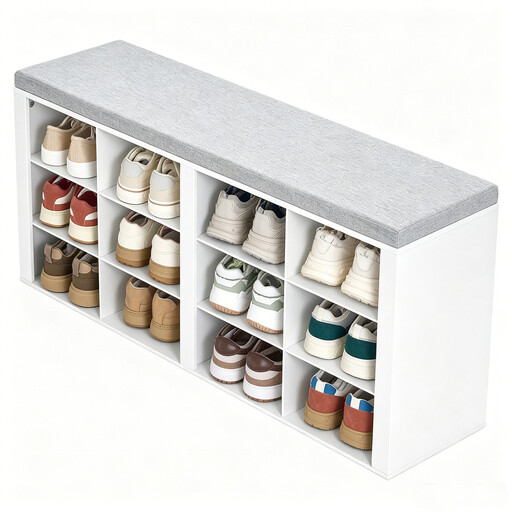
Why it suits this profile: Measuring 104.5 x 30.5 x 49.5 cm, it offers a longer seat and twelve compartments. Adjustable shelves can be set to accommodate shoes of different heights.
Adjustable shelves reduce the chance of boots or taller shoes not fitting in the compartments. The removable seat covers make cleaning easier.
Twelve compartments, height-adjustable shelves, removable seat covers and a stated weight capacity of 150 kg.
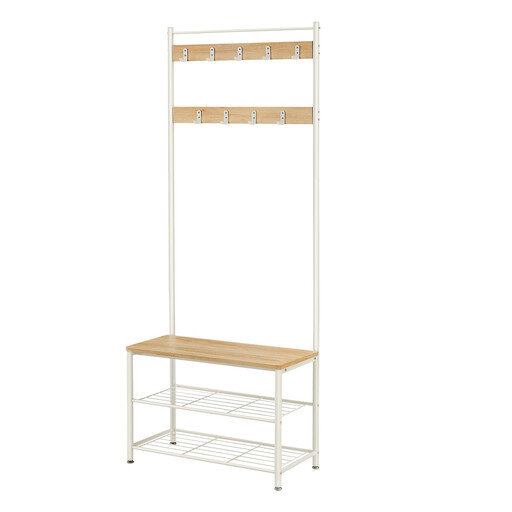
Why it suits this profile: This 3-in-1 hallway unit combines nine hooks, a bench and shoe storage. Measuring 32 x 70 x 177 cm, it makes use of vertical space and is designed for households with several coats, bags and shoes.
Each feature has a clear purpose: hooks for coats, a seat for putting on shoes and wire shelves for footwear. The supplied anti-tip device should be fixed to the wall.
Nine hooks, a bench with a stated weight capacity of 136 kg, steel frame, adjustable feet and an anti-tip device.
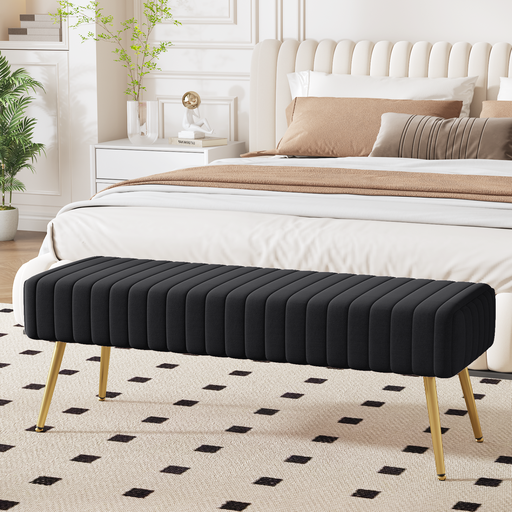
Why it suits this profile: This upholstered bench works well in a hallway, bedroom or living room. It has a 113.5 cm-long seat, but focuses more on seating than on integrated storage.
The product description clearly specifies the seat length, upholstery and wooden legs. If you already have a separate shoe rack, this gives you a dedicated seat for putting on your shoes.
113.5 cm-long upholstered seat, velvet cover and wooden legs; suitable for several areas of the home.
We’ve put together a complete, regularly updated list of products that meet these strict selection criteria and fully comply with the safety regulations in force in the EU.
It depends on how much room you have to pass through. A depth of around 30 cm can work well in narrow hallways. Before buying, factor in the door’s swing, skirting boards and the space you need to sit comfortably. The dimensions of the specific product matter more than a general recommendation.
Its lifespan depends on the materials, how often it’s used, how it’s assembled and how well it’s cared for. If you use it regularly, check the screw joints from time to time and place the furniture on a level surface. Clean upholstered surfaces in line with the care instructions and protect them from prolonged exposure to moisture.
A shoe bench with storage often saves floor space by combining a seat and storage. A separate shoe rack, on the other hand, can be easier to expand or move around. The right choice depends on the size of your household, how many shoes you need to store, the width of your hallway and how important seating comfort is.