
Lieferung heute & morgen

Qualitätsgarantie

Willkommens-Angebote freischalten: KOSTENLOSE Lieferung | Bis zu 80 % RABATT | Kostenlose 30-Tage-JoyPlus-Testphase
App herunterladen
A cluttered entryway can spoil the first impression of your home. Shoes piling up in the hallway are not only an eyesore but also a tripping hazard. A shoe bench is a functional solution to this problem. It combines comfortable seating for putting on and taking off shoes with practical shoe storage for your entryway.
This article serves as a guide. It introduces various models and explains the key criteria to consider when choosing a hallway bench, helping you make an informed decision for your living space.
The selection of hallway furniture is vast. To find the right wardrobe bench, you should consider three key aspects: material, size, and functionality.
The material determines not only the look but also the durability and maintenance of your shoe bench.
Measure the available space in your hallway carefully before making a decision. Consider not only the width and depth but also whether doors or drawers can open freely. A shoe cabinet with a seat can offer various storage concepts:
A shoe rack with a bench should be more than just a storage unit. The seat is a central element. Look for a padded cushion, ideally with a removable and washable cover. The specified maximum load capacity of the seat is also an important indicator of the furniture's stability and safety.
Here is a selection of models that stand out for their different features and are suitable for various needs.
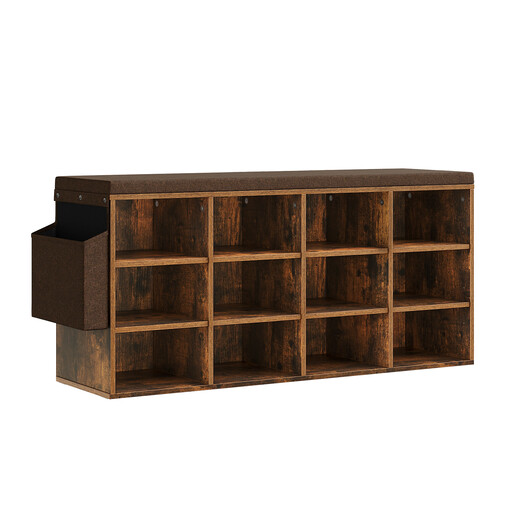
Why it stands out: With 12 compartments, this model offers an exceptional amount of space. Its flexibility, thanks to adjustable shelves and a removable storage box, makes it particularly adaptable.
Advantages:
Who it's for: For households with a large shoe collection or families looking for a flexible and spacious storage solution for their entryway.
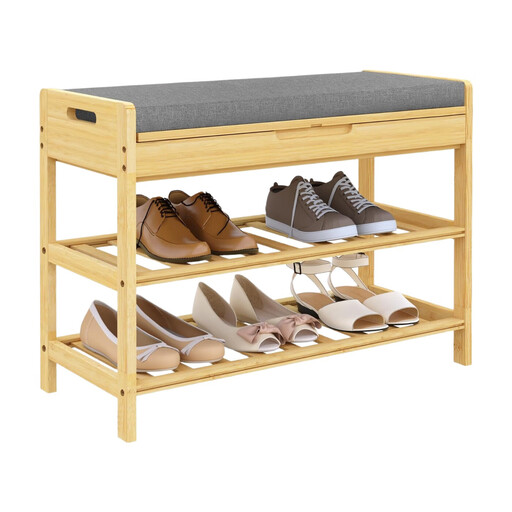
Why it stands out: This shoe bench combines the natural aesthetic of bamboo with a clever storage concept. The hidden compartment under the seat is a practical detail.
Advantages:
Who it's for: For those who value natural materials and prefer a compact solution with additional hidden storage.
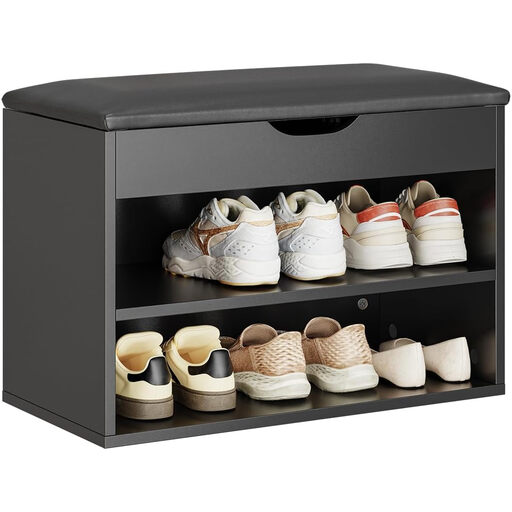
Why it stands out: With a width of just 60 cm, this model is specifically designed for very tight spaces. It combines seating, open storage, and a flip-top compartment in a minimal footprint.
Advantages:
Who it's for: For residents of small apartments or individuals needing a multifunctional solution for a very limited entryway.
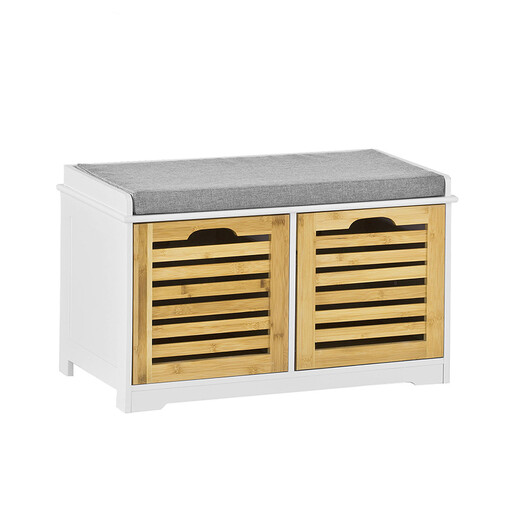
Why it stands out: This model focuses on flexible storage with two removable baskets. The design in white and natural tones blends well with bright and classic interior styles.
Advantages:
Who it's for: For anyone who prefers a tidy look with closed yet flexible storage and whose decor suits a bright, homely style.
The models presented here already cover a wide spectrum. However, if you are looking for other sizes, materials, or designs that better suit your individual style, it's worth taking a look at our entire range.
️ Explore our complete collection of shoe storage benches
1. What is the difference between a shoe bench and a shoe rack? A shoe rack is used exclusively for storing shoes. A shoe bench is a multifunctional piece of furniture that combines this function with a sturdy seat. This makes it particularly practical for the entryway, as it makes putting on and taking off shoes easier.
2. How much weight can a shoe bench support? The load capacity varies depending on the model and construction. Compact models often support around 100–120 kg, while more robust versions made of solid wood or bamboo, like the featured Woltu bamboo model, can hold up to 150 kg according to the manufacturer. It is important to check the manufacturer's specific details and not to overload the bench.
3. Which material is best for a shoe bench in the hallway? The choice of material depends on your priorities. Engineered wood with a melamine coating is easy to care for and budget-friendly. Bamboo is an eco-friendly and moisture-resistant option with a warm appeal. Metal frames offer high stability and a modern look. All three are well-suited for use in the hallway.