
Lieferung heute & morgen

Qualitätsgarantie

Willkommens-Angebote freischalten: KOSTENLOSE Lieferung | Bis zu 80 % RABATT | Kostenlose 30-Tage-JoyPlus-Testphase
App herunterladen
A cluttered entryway with shoes blocking the path is a common frustration. A shoe bench with a seat cushion promises an elegant solution, offering both storage space and a comfortable place to sit while putting on or taking off your shoes. However, not every model lives up to its promise. Many buyers only realise after their purchase that their new bench is wobbly, the compartments are too small, or the material wears out quickly.
This guide will show you what to look for to avoid a bad purchase. We'll focus on the crucial features that define a functional and durable hall bench, helping you make an informed decision.
Before you decide on a model, you should be aware of the typical weaknesses that often only become apparent with daily use.
To find a shoe bench that meets your needs, you should check three core parameters.
The material is a key determinant of your shoe bench's stability and longevity. Models made from MDF (Medium-Density Fibreboard) offer a smooth, easy-to-clean surface and are often available in various colours, like the popular white shoe cabinet. Solid wood benches are typically more robust and durable, but also require more maintenance.
Regardless of the material, the specified maximum load capacity is a crucial factor. A solid bench should be able to support at least 100–120 kg to ensure safe use by an adult. Also, check the load capacity of the individual compartments or baskets if you plan to store heavier items in them.
Measure the available space in your hallway precisely before making a decision. Consider not only the width and depth of the bench but also the clearance needed for doors or drawers to open fully. A small shoe bench is excellent for narrow corridors, while larger models offer more space.
The storage concept is just as important. A shoe rack with a seat can have open compartments, closed flaps, or removable baskets.
The seat cushion should be not only visually appealing but also functional. A removable and washable cover is a significant advantage for hygiene and maintenance. The thickness and density of the foam determine the seating comfort. A high-quality cushion will retain its shape even with regular use and provide pleasant padding.
Here are some product suggestions tailored to different needs and living situations.
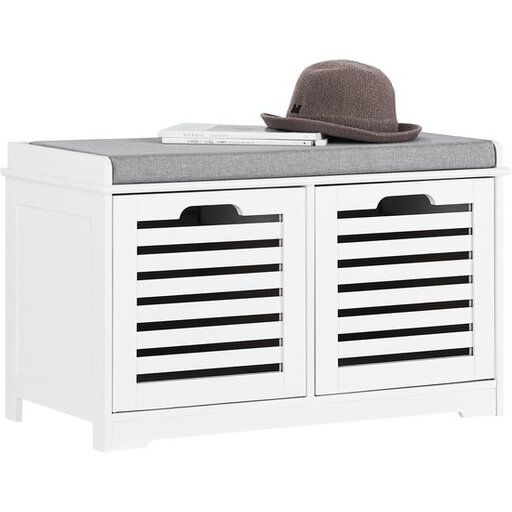
Why it's a great fit: Ideal for anyone looking to create maximum order in a compact hallway. Its narrow width of 71 cm and practical baskets offer a well-thought-out solution for typical apartment hallways without looking cluttered.
The MDF construction is designed for a load capacity of up to 120 kg, addressing the problem of instability. The removable baskets provide flexible storage space, bypassing the pitfall of impractically sized compartments.
Combines a comfortable seat with a wardrobe bench with storage in a very compact design.
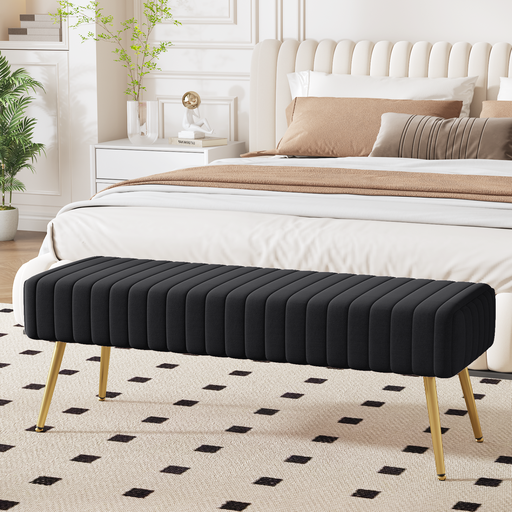
Why it's a great fit: Perfect for more spacious entryways where the bench also serves as a stylish decorative element. The velvet cover and length of over one metre create an elegant and inviting accent.
The solid wood legs ensure high stability and prevent wobbling. Although it lacks closed compartments, the open area under the seat offers flexible space for shoes, thus avoiding the problem of small, fixed compartments.
The combination of velvet upholstery and generous length provides an exceptionally comfortable and distinguished seating option.
We have compiled a complete, up-to-date list of products that fully meet these strict selection criteria and safety standards.
1. How much weight can a shoe bench with a seat cushion support? The load capacity varies greatly depending on the model and construction. A good benchmark is a maximum load capacity of at least 100 kg for the seat. This information is usually found in the manufacturer's product details. For families or for frequent use by multiple people at once, models with a capacity of 120 kg or more are recommended.
2. What material should a good hall bench be made of? Both MDF and solid wood have their advantages. MDF boards are easy to clean, dimensionally stable, and often more affordable. They are a good choice for modern interiors and are available in many colours, such as white. Solid wood is more robust, durable, and develops its own patina over time, but it requires more maintenance. The choice depends on your budget, desired style, and willingness to perform upkeep.