
Lieferung heute & morgen

Qualitätsgarantie

Willkommens-Angebote freischalten: KOSTENLOSE Lieferung | Bis zu 80 % RABATT | Kostenlose 30-Tage-JoyPlus-Testphase
App herunterladen
A shoe bench with shoe storage combines two useful functions: it gives you somewhere to sit while putting on or taking off your shoes, and keeps footwear off the floor. This combination can be especially space-saving in narrow hallways, rented homes and households with several people. However, not every model will suit every entrance.
If you focus only on the design or a low price, it’s easy to overlook important details. The following points will help you choose a shoe bench with a seat to suit your space, shoe collection and everyday needs.
A bench may look compact in product photos but take up a surprising amount of space in your hallway. As well as the overall width, pay particular attention to its depth. Before buying, check:
Models around 30 cm deep are often easier to fit into small hallways. A bench for your entrance should also stay clear of the main walkway.
Trainers, slippers, ankle boots and taller shoes all need different amounts of space. A shoe rack with a seat and fixed, low compartments can quickly become impractical. Adjustable shelves offer greater flexibility, while open compartments help with ventilation.
Also check whether the stated capacity will genuinely suit your shoe collection. The number of compartments alone doesn’t tell you how many larger shoes will fit side by side.
The stated load capacity doesn’t automatically apply to every type of use. Static loads, normal sitting and dynamic forces, such as jumping or standing up suddenly, are different. A shoe bench isn’t designed to be used as a step or ladder.
Check the manufacturer’s information on the maximum load capacity, and place the furniture on a flat, stable surface. Removable covers or easy-care surfaces are practical for upholstered seats, as hallways and footwear tend to bring in dust and dirt.
Measure the available floor space, including skirting boards and any wall projections. These measurements are particularly important when choosing a hallway shoe bench:
A bench 55 to 68 cm wide may be enough for one person or a couple. Households with several people often need more storage or a model with multiple compartments.
A bamboo shoe bench can give your hallway a light, airy look. Painted surfaces can usually be cleaned with a damp cloth. Engineered wood, such as coated chipboard, can also be practical for everyday use, but should be protected from prolonged exposure to moisture.
For a shoe bench with a seat cushion, consider the cover, padding and cleaning requirements. Removable covers can be cleaned separately. Velvet or fabric surfaces generally need regular vacuuming and careful stain treatment. Faux leather is often easier to wipe clean, but can change more quickly when exposed to direct heat or strong sunlight.
A shoe bench with storage may have open compartments, closed doors, drawers or a combination of these. Open shelves are handy for shoes you wear every day. Closed storage keeps small items, shoe-care products and accessories out of sight.
A shoe bench with a drawer is useful if you want keys, brushes or gloves close to hand but out of view. For families, a model with twelve compartments and adjustable shelves may offer more flexibility than a compact bench with two fixed shelves.
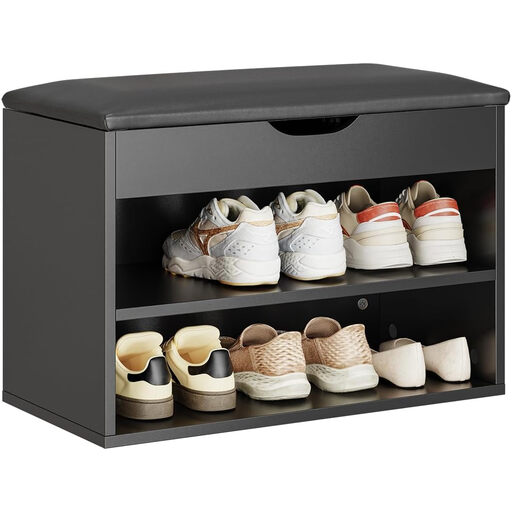
Why this product suits this profile: Measuring 60 × 30 × 43 cm, it’s well suited to narrow hallways, small homes and unused corners. Open shelves and a hidden compartment combine easy access with extra storage.
Its compact depth helps reduce the risk of unnecessarily narrowing the passage. Before buying, check that the stated maximum load capacity of 113 kg and the space it occupies are suitable for your room.
Compact dimensions, a padded PU leather seat, an open shoe rack and a hidden compartment beneath the hinged lid.
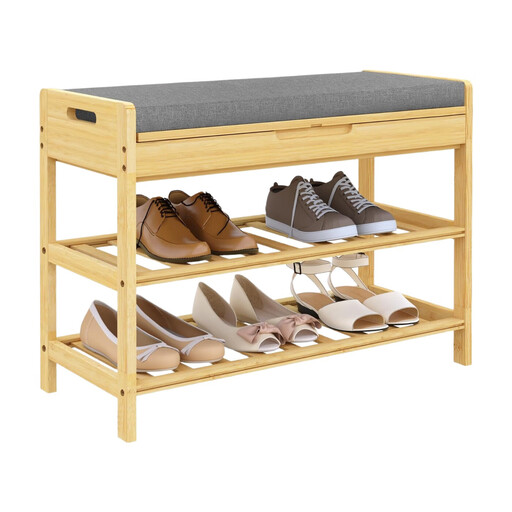
Why this product suits this profile: The combination of bamboo, two open shelves and a closed compartment is ideal for households looking to bring together attractive materials, a place to sit and easy access to neatly stored belongings.
Check that its 30 cm depth will fit your hallway before ordering. Open storage helps with ventilation, while the closed compartment provides space for smaller items.
Bamboo construction, a foam-padded seat cushion, a stated load capacity of 150 kg, two open shelves and one closed compartment.
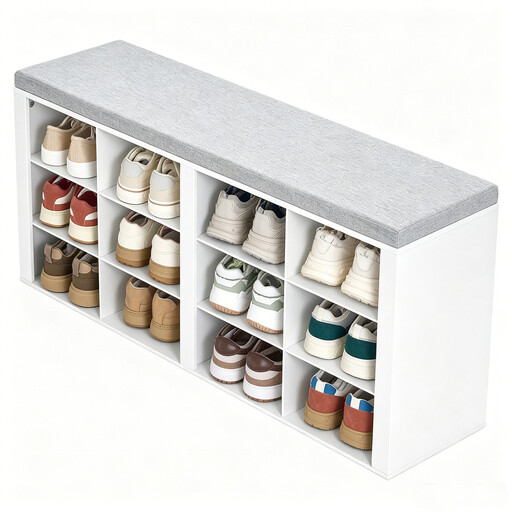
Why this product suits this profile: Twelve compartments and adjustable shelves make this a good choice for households with different types of footwear and regular changes of shoes. It can be used in the hallway or bedroom, or as an extra seat.
Adjustable compartments make it easier to store shoes of different heights. Plan carefully for its larger width: the dimensions are 104.5 × 30.5 × 49.5 cm.
Twelve compartments, height-adjustable shelves, removable seat covers and a stated load capacity of 150 kg.
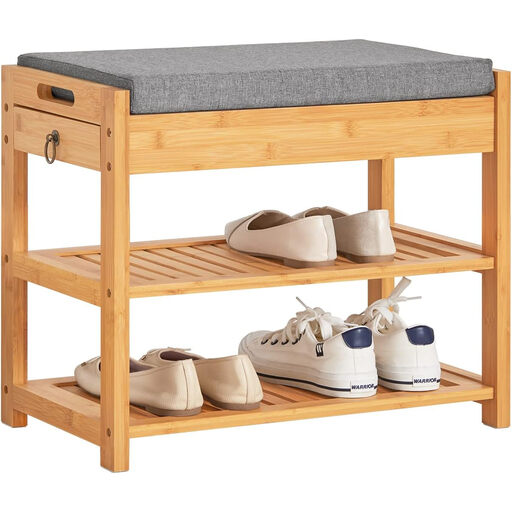
Why this product suits this profile: At 55 cm wide and 30 cm deep, it’s a good fit for compact entrances. Two internal shelves and a drawer keep shoes separate from shoe-care products and small items.
The enclosed shelf and drawer help prevent small items being left loose in the hallway. Note that it’s intended for indoor use, and that the stated load capacity of 150 kg differs from the recommended load of 90 kg.
Bamboo with a clear lacquer finish, a 4 cm-thick seat cushion, two internal shelves, a side drawer and felt pads to protect the floor.
We’ve put together a complete, regularly updated list of products that meet these strict selection criteria and fully comply with the safety regulations in force in the EU.
Allow enough room to move around as well as space for the bench itself. The width you need will depend on your hallway and the position of your doors. In tighter spaces, pay particular attention to a depth of around 30 cm and the location of doors. The bench shouldn’t block the walkway or access to cupboards.
Its lifespan depends on the materials, assembly, room conditions and how much it’s used. Tighten all the fixings after assembly, following the instructions, and check them from time to time. Moisture, direct heat and using the bench as a step can put extra strain on the materials and construction.
Open compartments make shoes easy to reach and encourage air circulation. Closed compartments help keep your entrance looking tidy and are suitable for shoes you wear less often or accessories. A combination of both works well if you want everyday shoes close to hand while keeping smaller items out of sight.