
Lieferung heute & morgen

Qualitätsgarantie

Willkommens-Angebote freischalten: KOSTENLOSE Lieferung | Bis zu 80 % RABATT | Kostenlose 30-Tage-JoyPlus-Testphase
App herunterladen
An uncluttered entryway immediately creates a sense of order and welcome. But reality often looks different: shoes pile up, there's no comfortable place to sit while putting them on, and the hallway feels chaotic. A shoe bench with storage promises to solve these exact problems, combining a seating area with practical space for shoes and accessories.
However, not all models are created equal. Many buyers only realise after a few months that their new hallway bench wobbles, the storage is impractical, or the cushion is already worn out. To prevent this from happening to you, we'll show you the three most common weaknesses to watch out for and how to find the right model for your needs.
Before you make a decision, you should be aware of the typical flaws that often only become apparent with everyday use.
To avoid buyer's remorse, focus on the following three core parameters. These determine the longevity and practical utility of your new hallway bench.
The material is the foundation of stability. While simple particleboard is often budget-friendly, MDF (Medium-Density Fibreboard) or solid wood like bamboo offer significantly higher density and robustness. Bamboo is also naturally resistant to moisture.
Pay attention to the maximum static load capacity specified by the manufacturer. A value between 120 kg and 150 kg is a good indicator of a solid construction that can withstand daily use by an adult.
Consider which types of shoes you want to store.
A good shoe cabinet with seating often combines several of these elements.
Measure the available space in your hallway carefully. Consider not only the width and depth but also the height, so the bench fits harmoniously into the overall look. A seat height of around 45-50 cm is considered comfortable by most adults.
For a padded bench, removable and washable covers are a significant advantage for hygiene. Alternatively, covers made of PU leather are a low-maintenance option, as they can be simply wiped clean.
Based on the criteria mentioned, we have identified a few models that offer a well-thought-out solution for different living situations and needs.
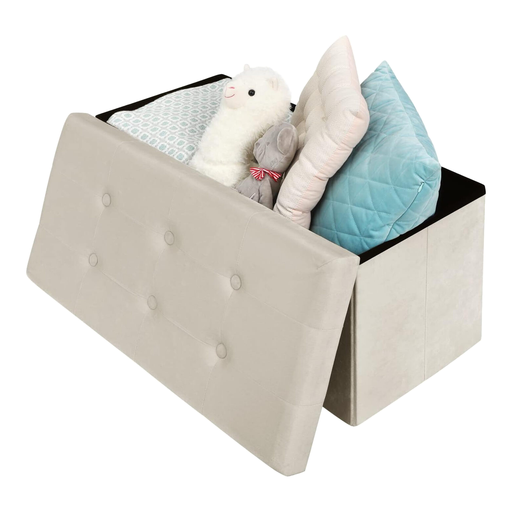
Why This Fits Their Persona: Ideal for small apartments or multi-purpose rooms. The foldable design allows the bench to be stored compactly when not in use, while the large interior provides flexible storage for blankets, shoes, or toys.
The construction with E1-grade MDF boards and a stated static load capacity of 300 kg (according to manufacturer Woltu) addresses the stability issue. The large, undivided storage space avoids the pitfall of compartments that are too small.
Foldable design for compact storage; very high load capacity; 80-litre storage volume.
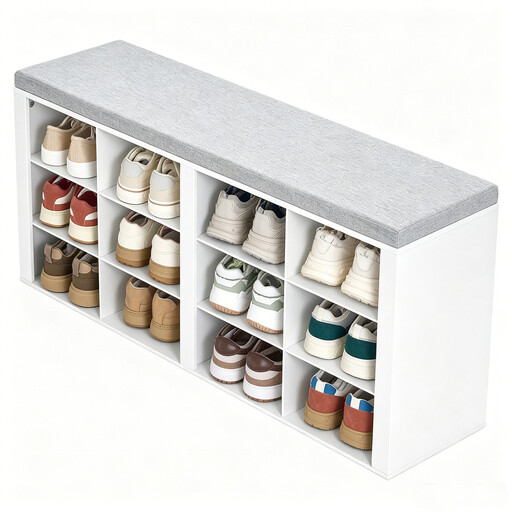
Why This Fits Their Persona: Perfect for families or households with many shoes. The large number of compartments allows each family member or shoe type to have a designated spot, which significantly improves organisation in the hallway.
This model solves the problem of impractical storage with its height-adjustable shelves. This allows both flat shoes and boots to be stored efficiently. The removable cushion cover simplifies cleaning.
12 compartments for maximum organisation; height-adjustable shelves; removable cushion cover.
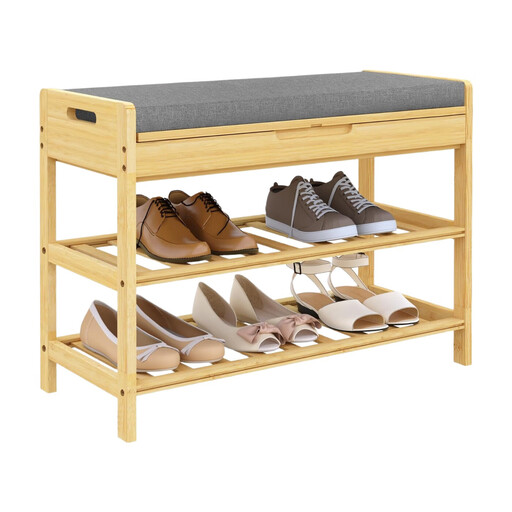
Why This Fits Their Persona: For users who value sustainable materials and a natural design. The combination of open shelves for quick access and a closed compartment under the seat is ideal for creating an organised yet homely atmosphere.
The robust bamboo material is more stable and moisture-resistant than cheap particleboard. The stated load capacity of 150 kg ensures safety in daily use. The closed compartment offers discreet storage, while the open shelves provide ventilation.
Made from durable bamboo; combination of open and closed compartments; low-maintenance, lacquered surface.
We have compiled a complete, up-to-date list of products that fully meet these strict selection criteria and local safety regulations.
The load capacity varies greatly depending on the model and material. Most manufacturers specify a maximum static load, which is typically between 100 kg and 150 kg. Some particularly robust models, often made of solid wood or with a reinforced frame, can support up to 300 kg. Always check the product description for exact specifications to ensure safe use.
To prevent odours, you should let wet or heavily soiled shoes dry and air out before storing them. Some hallway furniture features integrated ventilation slits or slatted doors. Alternatively, cedar blocks or special shoe fresheners can be placed inside to absorb moisture and provide a pleasant scent.
This is an important convenience feature that is not standard on all models. On many fabric-cushioned shoe benches, the covers have a zipper and can be removed and cleaned according to the washing instructions. For models with a fixed cover, especially those made of PU leather, cleaning is limited to wiping with a damp cloth. A look at the product details will provide clarity on this.