
Lieferung heute & morgen

Qualitätsgarantie

Willkommens-Angebote freischalten: KOSTENLOSE Lieferung | Bis zu 80 % RABATT | Kostenlose 30-Tage-JoyPlus-Testphase
App herunterladen
A cluttered entryway is a common problem in many homes. Shoes pile up, there's nowhere to sit while putting them on, and the first impression of your home suffers. A shoe bench with storage promises to solve these issues, but not every model delivers. Before you make a decision, it's crucial to understand the common weaknesses that can quickly turn a practical piece of furniture into a regrettable purchase.
Many buyers focus on design and overlook critical functional flaws. The most common frustrations include:
To avoid a bad buy, you should check three core parameters. These determine whether a wardrobe bench will serve its purpose long-term and fit into your daily life.
The material directly impacts durability and maintenance.
Measure the available space in your hallway or bedroom carefully before deciding on a size. A bench that is too large can feel overwhelming, while one that is too small won't solve your space problem.
A hallway bench with storage also serves as a place to sit. The specified maximum load capacity should be sufficient for its intended use. A value of 120 kg to 150 kg is a good benchmark for safe use by an adult. The thickness and material of the seat cushion determine the comfort level. Removable and washable covers are a practical detail for easy cleaning.
Instead of an overwhelming list, we present models tailored to specific needs and living situations.
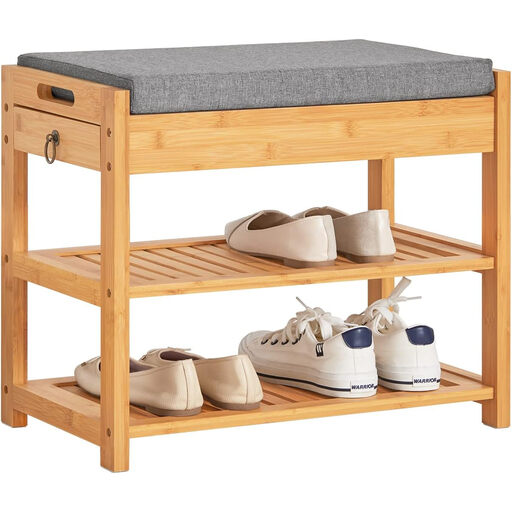
Why it's a great fit: With a width of just 55 cm, this small shoe bench is ideal for narrow hallways or nooks in city apartments. It maximises utility in a minimal footprint.
Made from bamboo and finished with a clear lacquer, the material is naturally moisture-resistant, bypassing the problem of swelling particle board. The construction is designed for a load capacity of up to 150 kg, making it very stable.
Combines a shoe rack with a side drawer for small items. Felt pads protect the floor from scratches.
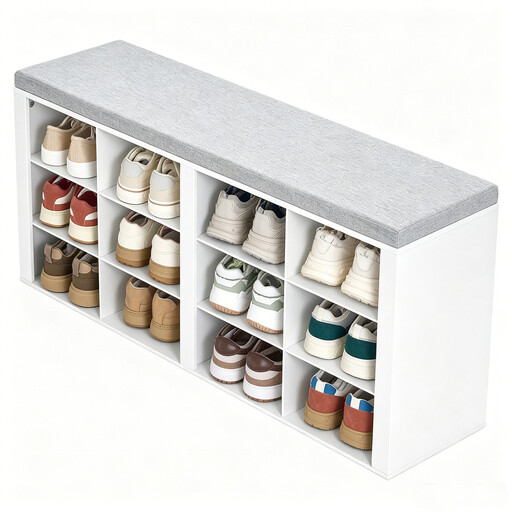
Why it's a great fit: Ideal for families who need to neatly store many different types of shoes—from kids' shoes to boots. It offers plenty of space and flexibility.
The height-adjustable shelves solve the problem of impractical compartment layouts. This allows both flat sneakers and taller shoes to be stored perfectly. The sturdy construction supports up to 150 kg.
The cushion cover is removable and washable, which significantly simplifies cleaning, especially with frequent use by the whole family.
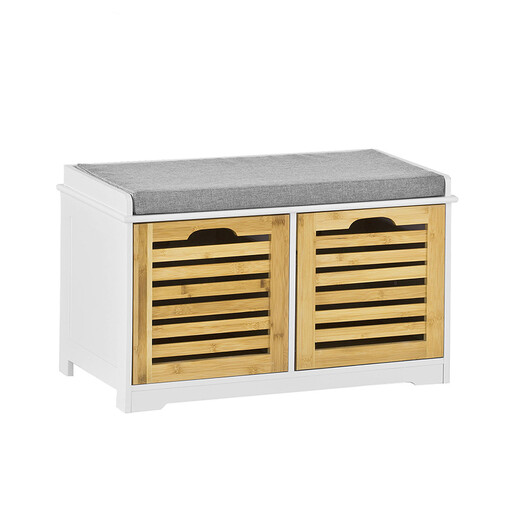
Why it's a great fit: Perfect for anyone who prefers a tidy and serene look in their entryway. The shoes disappear out of sight into the baskets.
This shoe rack with a seat solves the problem of messy-looking open shelves by using two removable baskets. The sturdy construction of MDF and bamboo provides the necessary stability.
The simple, elegant design in white and natural tones blends seamlessly into modern and classic interior styles.
We have compiled a complete, up-to-date list of products that fully meet these strict selection criteria and German safety standards.
The load capacity varies depending on the model and construction. Pay attention to the manufacturer's specification for the maximum static load capacity. Models for daily use should be able to support at least 120 kg. Higher-quality benches often offer a capacity of 150 kg or more, which provides extra security.
Not by default. This is one of the most common pitfalls. If you want to store boots or high-top shoes, specifically choose a model with sufficiently tall compartments or with height-adjustable shelves. Alternatively, benches with one large, open section next to smaller compartments are a good option.
Maintenance is straightforward. Wipe the surfaces regularly with a dry or slightly damp cloth. Avoid aggressive cleaning agents. To protect the material from moisture from wet shoes, it's a good idea to briefly dry the shoes before storing them or to place a water-repellent mat inside the compartments.