
Lieferung heute & morgen

Qualitätsgarantie

Willkommens-Angebote freischalten: KOSTENLOSE Lieferung | Bis zu 80 % RABATT | Kostenlose 30-Tage-JoyPlus-Testphase
App herunterladen
A cluttered entryway is a common nuisance. Shoes, bags, and scarves pile up, creating a chaotic first impression. A shoe bench with storage promises an elegant and functional solution: it provides a place to sit while putting on shoes and, at the same time, offers space to keep everything neatly organised.
However, pitfalls await during the selection process. Many models look practical at first glance but prove to be useless in daily life. Before you make a decision, you should be aware of the three most common design flaws that can lead to a bad buy.
A well-thought-out choice that focuses on material, construction, and functionality is therefore crucial.
To find a durable and useful hallway bench with seating, you should check three decisive criteria. These will help you distinguish marketing promises from actual quality.
The specified load capacity is one of the most important indicators of the quality of an entryway bench. Pay attention to the maximum static load capacity stated by the manufacturer.
Stability also depends on the material and construction. Frames made of solid wood, bamboo, or high-quality, thicker MDF boards generally offer greater stability than simple particle board constructions. Check that the bench stands firmly on a level surface without wobbling.
The entryway is a high-traffic area. The material of your hallway bench with storage must therefore be robust and easy to clean.
The storage space should fit your needs. Consider what you primarily want to store—just shoes, or other accessories as well?
Here are three models tailored to different needs and living situations that avoid the aforementioned pitfalls.
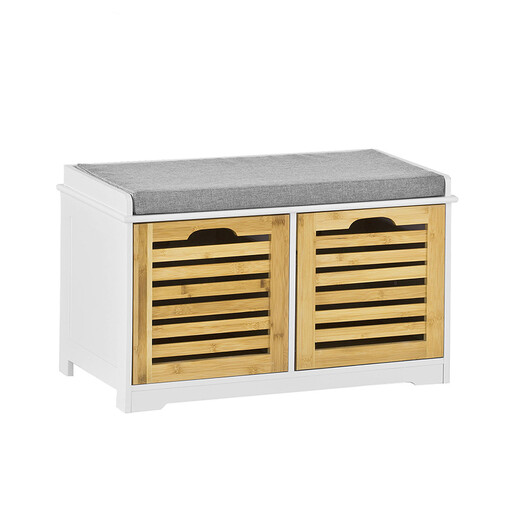
Why This Fits Their Persona: Ideal for hallways where both shoes and various small items like children's hats and gloves need to be stowed away quickly. Its compact size fits well in niches, while the baskets keep things tidy.
The removable baskets provide a flexible storage solution (avoids Pitfall 3), and the combination of MDF and bamboo is more robust than simple particle board (avoids Pitfall 2).
Flexible storage thanks to two removable baskets. The manufacturer states the bench's load capacity is up to 150 kg.
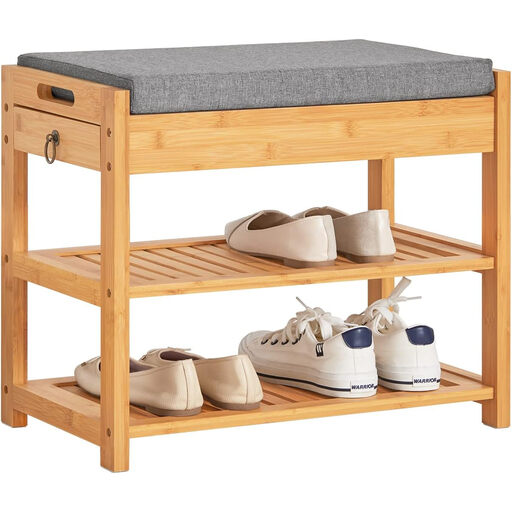
Why This Fits Their Persona: Perfect for anyone who prefers sustainable and aesthetically pleasing furniture. The natural bamboo material blends harmoniously into various interior styles and is inherently durable.
Bamboo is naturally moisture-resistant and robust, which bypasses the pitfall of low-quality materials (Pitfall 2). According to the manufacturer, the sturdy construction is designed for up to 150 kg (avoids Pitfall 1).
Made from durable and moisture-resistant bamboo. A side drawer provides additional, discreet storage for small items.
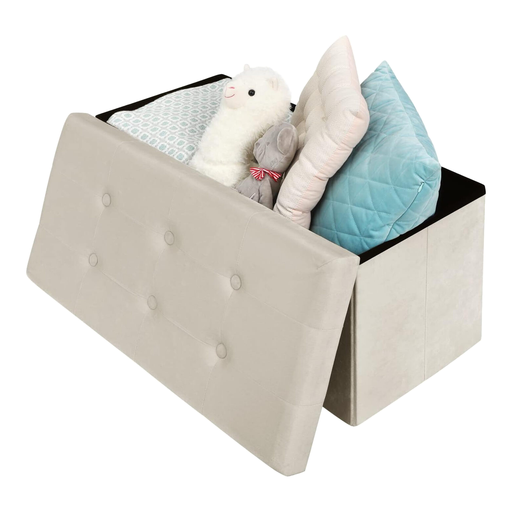
Why This Fits Their Persona: For users seeking a multifunctional solution that blends seamlessly into a living room or bedroom. It serves as a seat, footstool, and hidden storage, all while prioritising a high-end look.
With a manufacturer-stated static load capacity of 300 kg, its stability is beyond question (avoids Pitfall 1). The large, enclosed storage space is maximally flexible, bypassing the problem of impractical compartments (Pitfall 3).
Extremely high load capacity (300 kg static). Offers a very generous 80 litres of concealed storage and can be folded to save space when not in use.
We've compiled a complete, up-to-date list of products that meet these strict selection criteria and safety requirements.
For safe use by an average adult, a static load capacity of at least 120 kg is recommended. If the bench will be regularly used by two people at the same time, models with a capacity of 200 kg or more are a safer choice. Always refer to the specific details provided by the manufacturer.
Yes, you can. However, choose a model with a durable and easy-to-clean cover fabric. If you often come home with wet shoes, a bench with separate, open compartments for shoes and a seat cushion above them is more practical. This prevents moisture from seeping directly into the upholstery and causing damage.
There is no single "best" material, as the choice depends on your priorities. Bamboo is an excellent choice for entryways due to its natural moisture resistance and stability. Solid wood is very durable but often heavier and more expensive. Well-made MDF boards with a high-quality lacquer or coating offer a stable and cost-effective alternative. Avoid uncoated particle boards, as they swell easily when exposed to moisture.