
Lieferung heute & morgen

Qualitätsgarantie

Willkommens-Angebote freischalten: KOSTENLOSE Lieferung | Bis zu 80 % RABATT | Kostenlose 30-Tage-JoyPlus-Testphase
App herunterladen
A cluttered entryway, strewn with shoes, is a common frustration in many homes. The right shoe cabinet promises to bring order, but the selection is vast, and not every model lives up to its promises. As your Joybuy Product Recommendation Officer, I'll help you avoid common purchasing pitfalls and find a functional, durable solution for your hallway shoe storage.
Many buyers focus on design or price, overlooking critical functional flaws. Here are three common pitfalls that can lead to a bad purchase:
To ensure your new shoe cabinet is a long-term, practical investment, you should check three key parameters before making a decision.
A shoe cabinet's durability is directly linked to its material. Models made from MDF (E1 standard) or solid wood generally offer greater stability than simple plastic plug-in systems. Look for a solid back panel and a sturdy construction. For tall, narrow models, an included anti-tip device for wall mounting is an essential safety feature, especially in households with children.
The type of shoe storage determines its everyday functionality.
For hallway shoe storage, depth is the most critical measurement. Measure your available space precisely. A slim shoe cabinet with a depth of less than 25 cm is often the only viable solution to avoid obstructing the walkway. Tilt-out cabinets are often a great choice here, as they can hold a considerable number of shoes despite their shallow depth.
Instead of making a one-size-fits-all recommendation, we have selected models that address specific needs and living situations.
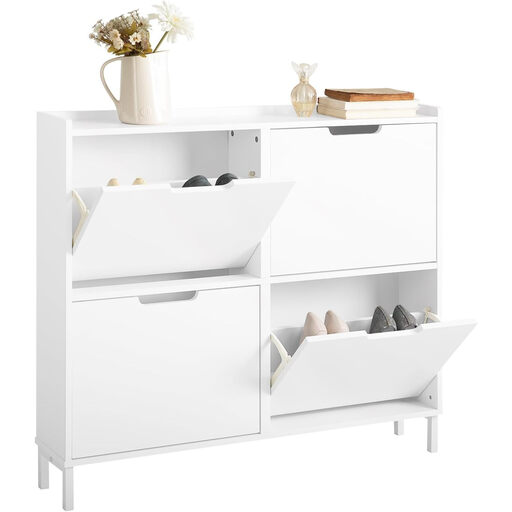
Why It's a Great Fit: With an extremely slim depth of just 19 cm, this tilt-out cabinet is specifically designed for tight German hallways where every centimetre counts. It makes optimal use of wall space without blocking the walkway.
This model directly solves the "impractical depth" problem. Its design as a slim, tilt-out cabinet is the answer to a lack of space in the entryway.
Maximises vertical storage, keeps shoes dust-free, and offers a practical top surface for keys or mail.
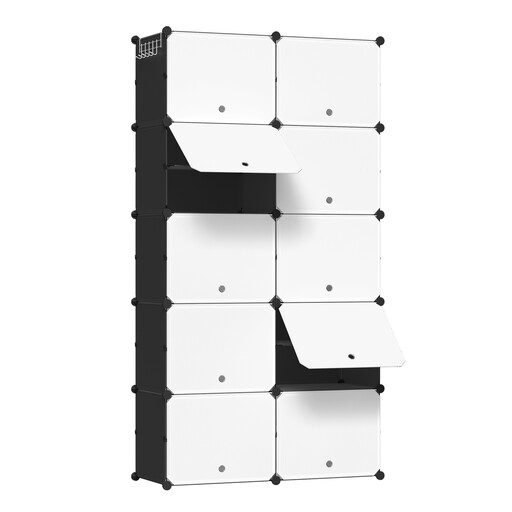
Why It's a Great Fit: Its high capacity and modular design are ideal for families or shoe enthusiasts. The system can be adapted to the available space and different types of shoes.
This system solves the "misleading capacity" problem. Thanks to removable partitions, even boots or larger shoes can be accommodated with ease.
Flexible DIY assembly allows for individual customisation. The construction of PP panels and a metal frame ensures a stable structure suitable for holding many pairs of shoes.
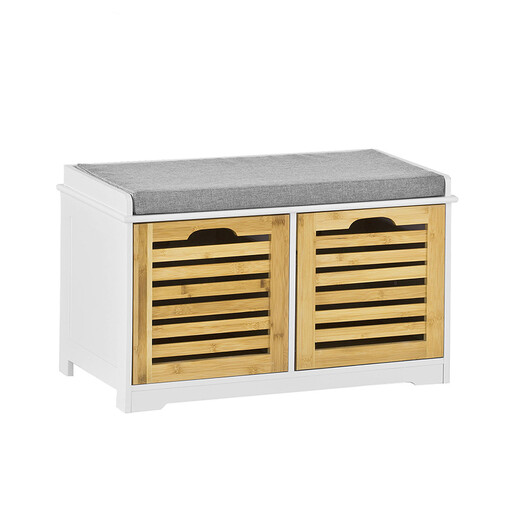
Why It's a Great Fit: This shoe bench combines comfortable seating with practical storage. It's ideal for anyone who wants to sit down while putting on shoes and also keep accessories like scarves or gloves within easy reach.
This piece is more than just a shoe organiser. It's a functional piece of hallway furniture that comprehensively meets the needs of an entryway, rather than just solving a simple storage problem.
It offers a stable seating surface and hidden storage in two removable baskets, creating an especially tidy and welcoming atmosphere.
We have compiled a complete, up-to-date list of products that fully meet these strict selection criteria and German safety standards.
A tilt-out shoe cabinet has hinged compartments where shoes are stored at an angle. This makes it very space-saving in depth and ideal for narrow hallways. It's best suited for flat shoes. A classic shoe cabinet with doors and shelves is deeper but offers more flexibility for different shoe types, including boots and hiking shoes, as the shelves are often height-adjustable.
Measure the maximum depth the furniture can have without obstructing the walkway. In narrow hallways, models with a depth of less than 25 cm are recommended. Also, consider that doors or flaps must be able to open fully without hitting the opposite wall. Plan for a few centimetres of clearance all around.
Always place the cabinet on a level, solid surface. To increase stability, heavier shoes should be placed in the lower compartments. However, the most important thing is to use the included anti-tip device to anchor the cabinet securely to the wall. This is an essential safety measure to prevent it from tipping over.