
Lieferung heute & morgen

Qualitätsgarantie

Willkommens-Angebote freischalten: KOSTENLOSE Lieferung | Bis zu 80 % RABATT | Kostenlose 30-Tage-JoyPlus-Testphase
App herunterladen
A cluttered entryway overflowing with shoes is a common frustration. The right shoe cabinet promises a quick fix, but the selection is vast, and not every model delivers on its promise. Incorrect dimensions, unstable construction, or impractical designs often lead to the new piece of furniture creating more frustration than order. This guide will help you navigate common purchasing pitfalls and find a functional shoe storage solution for your home.
Before you make a decision, you should be aware of the most common flaws that often only become apparent after the purchase.
To avoid these problems, you should consider three key aspects in your decision-making process. These parameters will determine whether a shoe rack or a shoe chest is a long-term fit for your needs.
The longevity of a shoe cabinet depends largely on its material and craftsmanship.
The stated shoe capacity is often just a guideline. The actual internal dimensions are what count.
The choice between an open shoe rack and a closed white shoe cabinet or one in another colour depends on your priorities.
Instead of presenting an overwhelming list, we have matched a few models to typical user profiles.
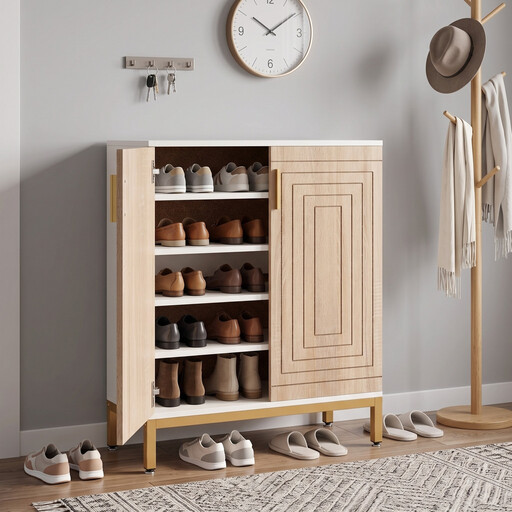
Why this model is a great fit: Families need a robust and straightforward solution to tame the shoe chaos in the hallway. This model offers plenty of space behind closed doors and protects shoes from dust, ensuring a consistently tidy look.
The classic cabinet construction is more stable than simple modular systems. The 38 cm depth is sufficient for most common shoe sizes, avoiding the problem of doors not closing.
It offers a combination of closed storage and an open shelf at the bottom for daily-use shoes, plus a top surface for keys or decor.
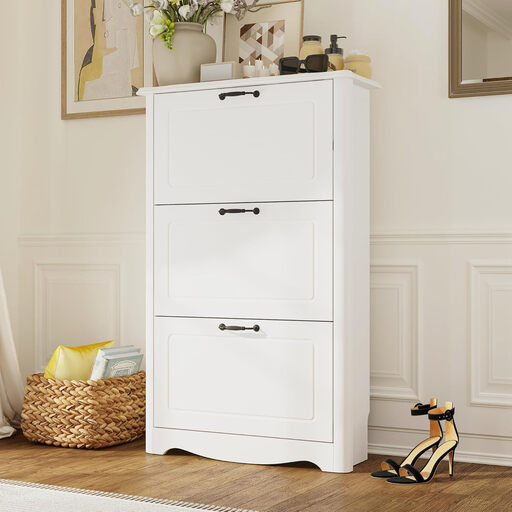
Why this model is a great fit: A tip-out cabinet is ideal for narrow hallways and a modern, uncluttered aesthetic. This model utilises height instead of depth, concealing shoes behind a sleek, white front.
The shallow depth of 26.5 cm is explicitly designed for tight spaces. The adjustable compartments inside help solve the space issue for various shoe types (except for very tall boots).
The tip-out mechanism is a highly space-saving design. Additionally, the smooth, coated MDF surface is moisture-resistant and easy to clean.
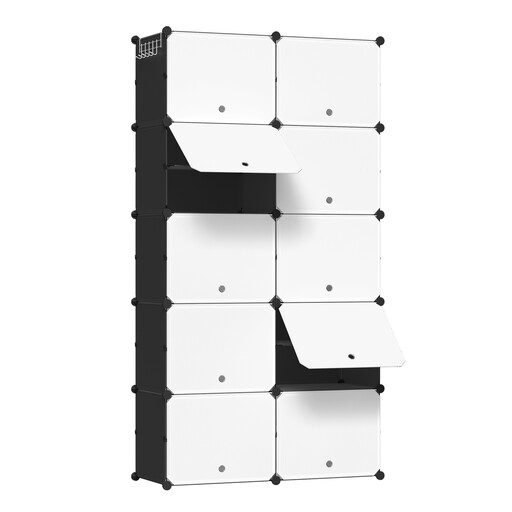
Why this model is a great fit: Anyone looking for an adaptable solution for sloped ceilings, alcoves, or a growing shoe collection will benefit from a modular system. It can be reconfigured or expanded as needed.
The instability pitfall is mitigated by the construction featuring metal frames and ABS connectors. Its modularity allows you to create compartments for boots by removing dividers, thus solving the problem of ill-fitting dimensions.
High capacity (up to 40 pairs) and maximum flexibility in arrangement (vertical, horizontal, or split). The waterproof PP panels are also very easy to maintain.
We have compiled a complete, up-to-date list of products that fully meet these strict selection criteria and German safety regulations.
A men's size 45 shoe is approximately 30 cm long. To ensure the shoe fits comfortably and the door or flap can close, the internal depth of a cabinet with shelves should be at least 32 cm. For tip-out cabinets, it's crucial to check the manufacturer's specifications for the maximum shoe size, as the diagonal storage method changes the space requirement.
When purchasing, look for models with ventilation holes in the back panel. Always let worn shoes dry and air out completely before placing them in the cabinet. Regularly cleaning the interior and using cedar wood blocks or special shoe deodorisers can also help neutralise odours.
The stability of modular racks heavily depends on the quality of the components and correct assembly. Models with a metal frame inside the plastic panels and sturdy ABS connectors are significantly more stable than basic all-plastic versions. It is important to connect all parts firmly and flush. For added safety, some manufacturers provide an anti-tip kit for wall mounting.