
Lieferung heute & morgen

Qualitätsgarantie

Willkommens-Angebote freischalten: KOSTENLOSE Lieferung | Bis zu 80 % RABATT | Kostenlose 30-Tage-JoyPlus-Testphase
App herunterladen
A cluttered entryway, strewn with shoes, is a common frustration in many homes. The right shoe cabinet promises a quick remedy, but the selection is vast, and not every model delivers on its promise. As your Joybuy Product Recommendation Officer, I'll help you avoid common purchasing pitfalls and find a functional and durable solution for your shoe storage.
Many buyers focus solely on looks or a low price, only to find that their new cabinet is impractical or already unstable after just a few months. Pay attention to these three critical points to avoid a bad buy:
To make the right choice, don't be swayed by marketing promises; focus on objective criteria instead. These three parameters are crucial for the functionality and durability of your new shoe chest or shoe rack.
The material determines not only the look but also the stability and durability.
The available space is the most important factor when choosing a type.
Realistically consider how many pairs of shoes you need to store. Plan for a buffer for future purchases. The most important feature for flexibility is adjustable or removable shelves. This is the only way to customise the interior for different shoe types—from flat sneakers and high heels to winter boots.
Based on the quality criteria mentioned, we have compiled a few models for different needs and living situations.
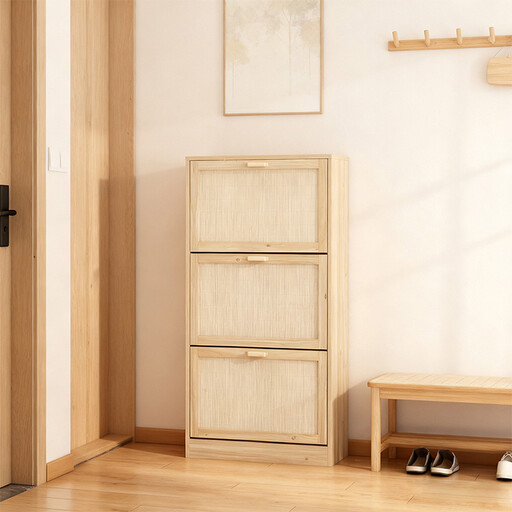
Why This Fits Their Persona: Ideal for those living in urban spaces with limited entryway room. This tilt-out cabinet utilises vertical space instead of width, keeping the walkway clear.
With a depth of just 24 cm, it's explicitly designed for tight spaces, bypassing the 'wrong dimensions' trap. The woven bamboo doors can promote air circulation and prevent odours.
Space-saving design; adjustable shelves for flexibility; includes anti-tip hardware for stability.
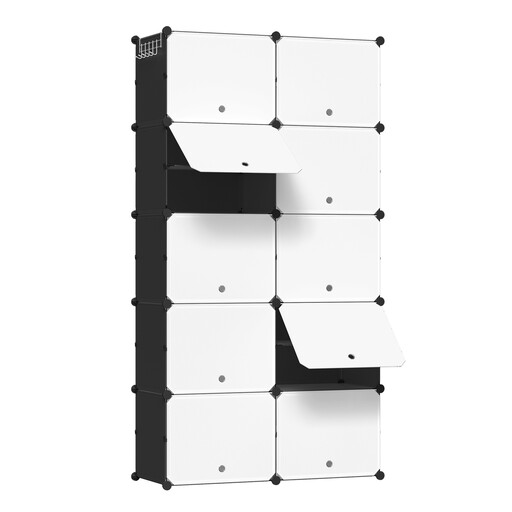
Why This Fits Their Persona: Perfect for families or shoe enthusiasts with a large collection. The modular system adapts flexibly to various spaces, whether in the hallway, under the stairs, or in a dressing room.
This system solves the problem of an inflexible interior. By removing divider panels, you can create compartments for boots or other bulky items. The doors with handle holes provide basic ventilation.
High capacity (up to 40 pairs); DIY assembly for custom configurations; sturdy construction with PP panels, metal frames, and ABS connectors.
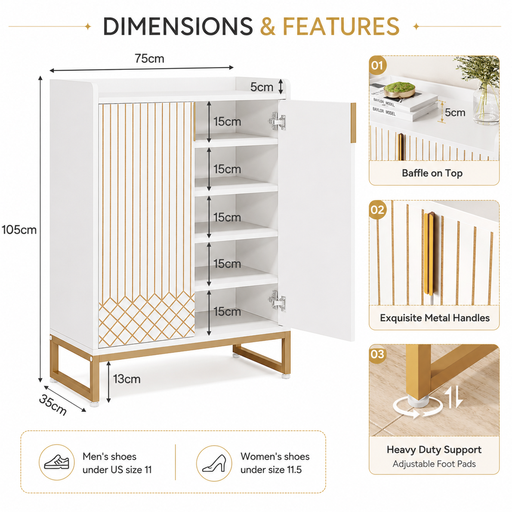
Why This Fits Their Persona: For anyone seeking an elegant and discreet storage solution that blends seamlessly into a modern living environment. Shoes disappear behind stylish doors.
The sturdy wood structure with metal legs counteracts the 'unstable construction' trap. The closed doors effectively protect shoes from dust and ensure a tidy appearance in the hallway or living room.
Elegant, minimalist design; closed compartments for a neat look; additional shelf space on top and at the bottom.
The combination of seating and storage is particularly popular. We've compiled a list of products that meet these criteria.
For most shoes up to size 11 (US) / 10.5 (UK), an internal depth of at least 30-35 cm is recommended so they fit comfortably. For a tilt-out shoe cabinet in a narrow hallway, the external depth can be 17-25 cm. However, you should check if the tilt mechanism is suitable for your specific shoe size and type (e.g., high-top sneakers).
The most important measure is good ventilation. Look for models with ventilation slits, slatted doors, or breathable materials like woven bamboo. Always let worn shoes air out before placing them in the cabinet. Additionally, cedar blocks or small bags of activated charcoal can help absorb moisture and odours.
The E1 standard is a European norm for wood-based materials like MDF or particleboard. It certifies that the boards emit only a very low amount of formaldehyde. Furniture that meets this standard contributes to better and healthier indoor air quality and is therefore a good choice for living areas.