
Lieferung heute & morgen

Qualitätsgarantie

Willkommens-Angebote freischalten: KOSTENLOSE Lieferung | Bis zu 80 % RABATT | Kostenlose 30-Tage-JoyPlus-Testphase
App herunterladen
A shoe cabinet should keep things tidy, take up little space and work reliably day to day. But in many homes, it’s only after buying one that you find out whether its dimensions, compartments and materials really suit your needs. In a hallway, just a few centimetres can make the difference between a practical solution and a blocked walkway.
Capacity figures often refer to flat shoes such as trainers or ballet pumps. Boots, high-top trainers and heeled shoes need more height and depth. That means a shoe cabinet with lots of compartments may hold fewer pairs in practice than you expect.
Check the following:
A slim shoe cabinet can free up space in your hallway, but it often needs more height. Before buying, measure the available wall space, door openings, skirting boards and walkways. A tall model must also be placed securely and, if required, fixed to the wall.
Metal frames, PP plastic, chipboard and non-woven fabric all have different properties. The material isn’t the only thing that matters: check the construction too, including the weight capacity of each compartment, connectors, back panel, ventilation and cleaning requirements. An open shoe rack gives you quick access to your shoes, but offers less protection from dust than a shoe cabinet with doors.
First, measure the space where you plan to put the cabinet, allowing a little clearance from walls or furniture. For a hallway shoe cabinet, three measurements are particularly important:
Then compare the usable compartment size with your shoe collection. Vertical shoe storage can work well when floor space is limited. For many families, a wider model with several tiers or a modular shoe rack may be a better choice.
The construction of a tall shoe rack or cabinet should be suitable for the load it will carry. Check the stated weight capacity per compartment, the frame design and whether wall fixings are provided. Store heavier shoes on the lower shelves where possible. Never use a piece of furniture as a climbing aid.
Open shoe racks make it easy to reach your shoes and allow air to circulate between pairs. Doors, on the other hand, keep things looking tidy and can help keep dust out. Plastic and non-woven fabric surfaces can often be cleaned with a damp cloth. If you choose a shoe bench, make sure its seat cushion can be removed and cleaned separately.
The models below vary in design, dimensions, storage capacity and features. This selection is based on the product details provided.
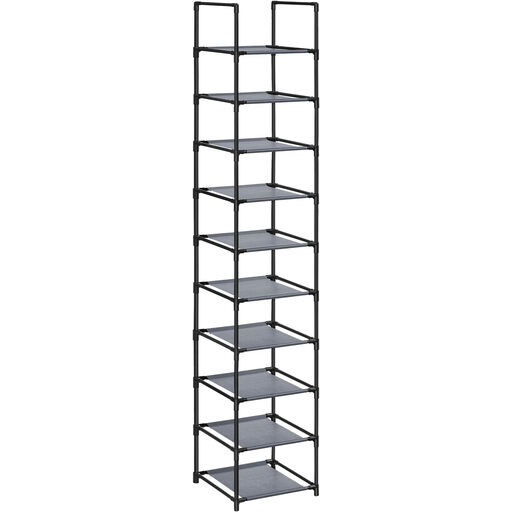
Why this product suits this need: This vertical shoe rack measures 33 × 33 × 173 cm, making good use of a small footprint. According to the product details, it has ten tiers and holds up to 30 pairs of shoes.
The dimensions and number of tiers are clearly stated, so you can check before buying whether it will fit in your hallway or wardrobe.
A metal frame, non-woven fabric shelves and a compact footprint. The shelves can be cleaned with a damp cloth.
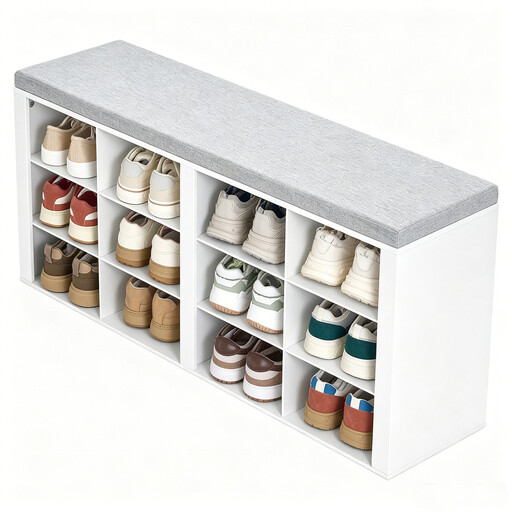
Why this product suits this need: Combining shoe storage with a bench, this model is ideal for households where you want to put on and take off your shoes in the entrance hall. Adjustable shelves accommodate different types of footwear.
The compartment heights are adjustable, so you won’t have to squeeze taller shoes into spaces that are too low.
Measures 30,5 × 104,5 × 49,5 cm, with removable seat covers and a stated weight capacity of 150 kg.
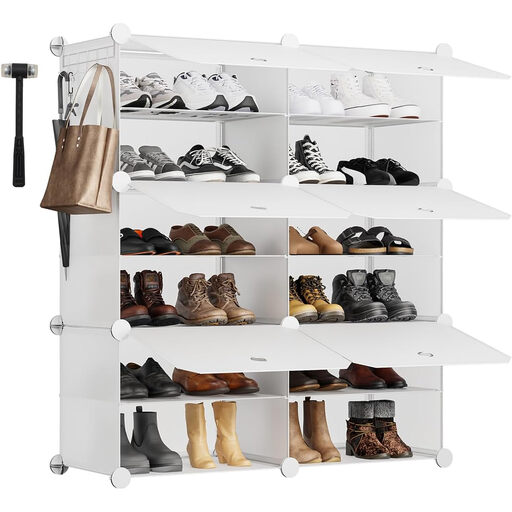
Why this product suits this need: This model is designed for larger shoe collections in a hallway, dressing room or utility room. The product details state that it has six compartments and holds up to 24 pairs of shoes.
The stated weight capacity of 5 kg per compartment and the guidance on wall fixings help you plan realistically how much to store.
PP panels, metal connectors, ventilation and a wipe-clean surface, according to the product description.
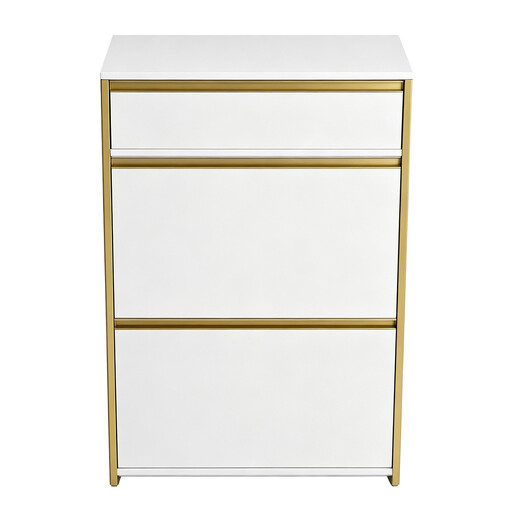
Why this product suits this need: Measuring 60 × 24 × 104,5 cm, this model is a good fit for narrow spaces. Adjustable compartments, a drawer and a top surface also provide storage for smaller items.
The shallow depth is listed alongside the overall dimensions, so you can check before buying whether you can allow for doors and skirting boards.
Holds up to 12 pairs of shoes, with height-adjustable shelves and a wall stabilisation fitting.
We’ve put together a complete, regularly updated list of products that meet these strict selection criteria and fully comply with the safety regulations in force in the EU.
It depends on your shoe size and the cabinet design. For a narrow hallway, a model around 24 to 30 cm deep may be a good choice, provided the compartments are large enough for your shoes. Also measure the length of your longest shoes and check that the doors can open fully.
The actual capacity depends on the shape and size of your shoes and the height of the compartments. Flat shoes take up less room than boots or heeled shoes. Treat the stated capacity as a guide and compare it with the internal dimensions.
Let worn shoes dry before putting them away. Wipe plastic and non-woven fabric surfaces with a slightly damp cloth. Even if you choose a shoe rack with doors, its design should still allow some air to circulate. Secure heavier models and tall shoe cabinets according to the assembly instructions.