
Lieferung heute & morgen

Qualitätsgarantie

Willkommens-Angebote freischalten: KOSTENLOSE Lieferung | Bis zu 80 % RABATT | Kostenlose 30-Tage-JoyPlus-Testphase
App herunterladen
By Joybuy Product Recommendation Officer, August 30, 2026
A cluttered entryway overflowing with shoes is a common frustration in many homes. The right shoe cabinet promises an immediate fix, but the market is vast, and not every model lives up to its promise. Many buyers only discover months later that their new furniture wobbles, their shoes don't fit, or unpleasant odours are developing.
This guide will help you navigate the common pitfalls. We focus on the objective criteria that truly matter, so you can find a durable and functional solution for your home, whether it's a slim shoe cabinet for the hallway or modern shoe storage with extra features.
Before we turn to the solutions, it's important to understand the problems that often lead to disappointment. Watch out for these three weaknesses:
To avoid a bad purchase, you should base your selection on a few fundamental characteristics. These determine whether a shoe cabinet is truly practical in everyday life.
The shape of the furniture should suit your space and your habits. The most common types are:
Measure the available space precisely—not just the width and height, but especially the depth. Also, consider the space needed to open doors or flaps.
The material affects not only the look but also the stability and lifespan.
Regardless of the material, an anti-tip kit to secure the furniture to the wall is an important safety feature, especially in households with children.
The specified number of shoe pairs is often a guideline based on small shoe sizes. Plan realistically: For shoe sizes over 43 (US 10) or for wider shoes, you will need more space.
The key to optimal use is flexibility. Adjustable or removable shelves are a game-changer. They allow you to adapt the storage space to different types of shoes, like ankle boots or high-top sneakers, making the most efficient use of the space.
Instead of making a one-size-fits-all recommendation, we have selected models that address specific needs and living situations.
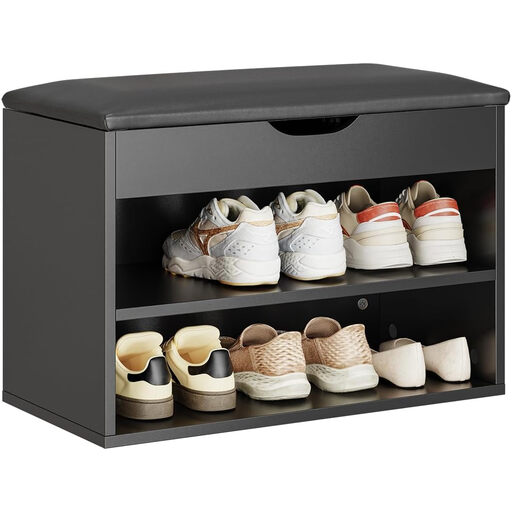
Why This Fits Their Persona: Ideal for residents of smaller apartments looking for a compact solution that combines seating, open shoe storage, and a hidden compartment for accessories like keys or shoe care products in one piece of furniture.
Bypasses the inflexibility trap. The combination of open, ventilated shelves for everyday shoes and a closed compartment under the seat offers flexible storage options.
3-in-1 Functionality: Serves as a bench, shoe rack, and storage chest. Its compact 60 cm width makes it perfect for nooks or small hallways.
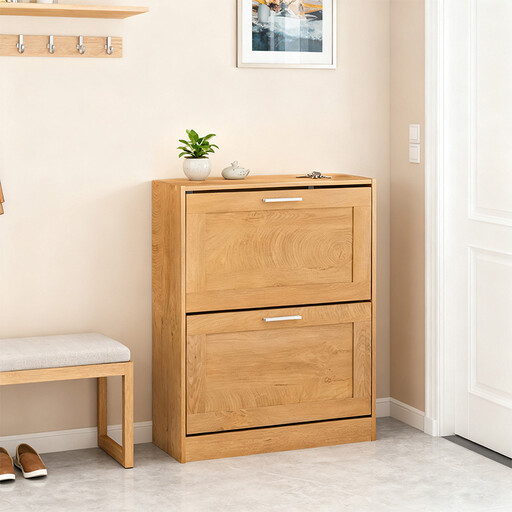
Why This Fits Their Persona: Perfect for people with a very narrow hallway who need a discreet, space-saving solution to store shoes neatly and out of sight without blocking the walkway.
Solves the problem of inflexible compartments with removable dividers inside the flaps. This allows taller shoes like ankle boots to be accommodated.
Extremely Shallow Depth: At just 23 cm deep, this tip-out cabinet fits even in the tightest corridors. The closed front ensures a calm, uncluttered look.
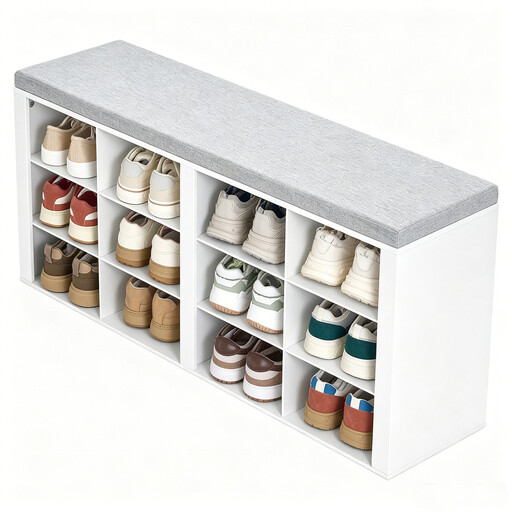
Why This Fits Their Persona: An excellent choice for families or individuals with many shoes. The combination of high capacity, a sturdy seat, and customisable storage meets the diverse needs of a busy household.
Directly addresses the trap of rigid compartments. The shelves are height-adjustable, so children's shoes, boots, or high heels can all fit without a problem.
High Capacity and Load-Bearing: Offers space in 12 compartments, and the seat can support up to 150 kg according to the manufacturer. The removable cushion cover simplifies cleaning.
If you prefer a multi-functional solution with seating, we've compiled a complete, up-to-date list of products that meet these strict selection criteria.
When buying, look for models with integrated ventilation slots or a perforated back panel. Alternatively, an open shoe rack is the best solution for maximum air circulation. Also, make sure shoes are completely dry before placing them in the cabinet.
A tip-out shoe cabinet is extremely slim due to its tilting compartments, making it ideal for tight spaces. A shoe chest for the hallway is typically deeper, often offers more storage space per compartment, and may feature doors or drawers in addition to flaps, making it more versatile but also more space-consuming.
Manufacturer specifications are usually based on small women's shoe sizes (approx. US 7-8). For larger shoe sizes (e.g., US 10 and up), wide sneakers, or boots, you should expect 20-30% fewer pairs to fit than stated. Models with adjustable shelves offer the greatest flexibility to make optimal use of the space.