
Lieferung heute & morgen

Qualitätsgarantie

Willkommens-Angebote freischalten: KOSTENLOSE Lieferung | Bis zu 80 % RABATT | Kostenlose 30-Tage-JoyPlus-Testphase
App herunterladen
A cluttered hallway full of shoes is a common problem in many homes. The right shoe cabinet promises a quick fix, but the selection is vast, and not every model delivers on its promise. As your Joybuy Product Recommendation Officer, I'll help you identify common purchasing pitfalls and find a functional, durable solution for your shoe storage.
Many buyers only realise after assembly that their new cabinet is impractical or of poor quality. Watch out for these three common flaws to avoid disappointment:
To make the right choice, you should focus on a few key parameters that go beyond mere aesthetics.
A cabinet's stability depends directly on its material and construction.
Don't just rely on the stated number of shoe pairs. Instead, measure for yourself:
The choice between an open shoe rack and a closed cabinet depends on your priorities.
Here are some models tailored to specific needs and living situations.
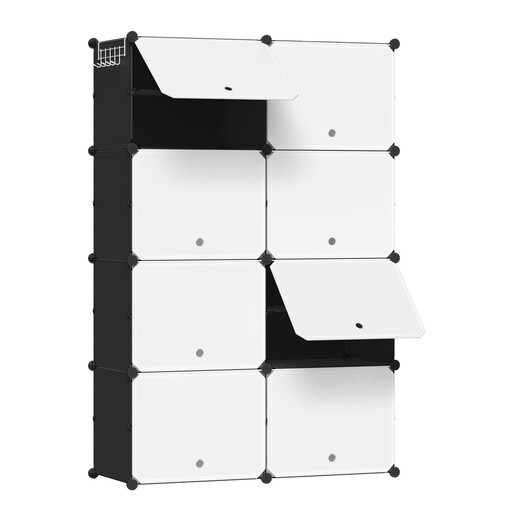
Why this model is a great fit: Perfect for those with growing shoe collections or for use in alcoves, under stairs, or in dressing rooms. The system adapts to your available storage space for shoes, not the other way around.
The construction of a metal frame and ABS connectors provides solid stability. By removing dividers, compartments can be enlarged for boots, solving the problem of ill-fitting compartment sizes.
Highly adaptable due to its modular design; the doors protect from dust, and the eyelets in the doors provide basic ventilation.
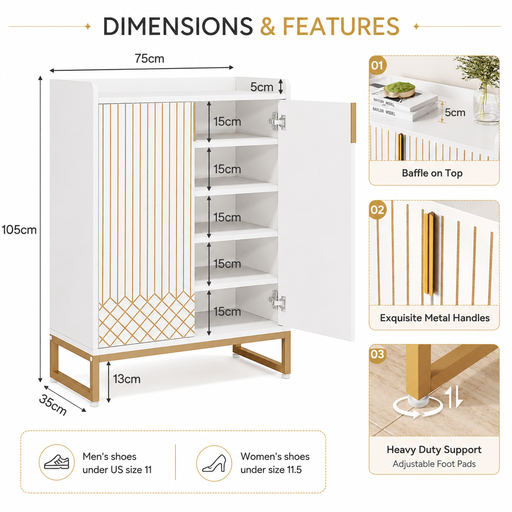
Why this model is a great fit: For anyone who values a tidy and modern living environment. The closed front and elegant design blend seamlessly into the entryway, hiding any shoe clutter.
The sturdy wooden structure with metal legs ensures a secure footing. Its closed design protects from dust, though regular airing is recommended for good air circulation.
Clean, minimalist design with subtle gold accents. The closed doors create a calm and orderly atmosphere in the hallway.
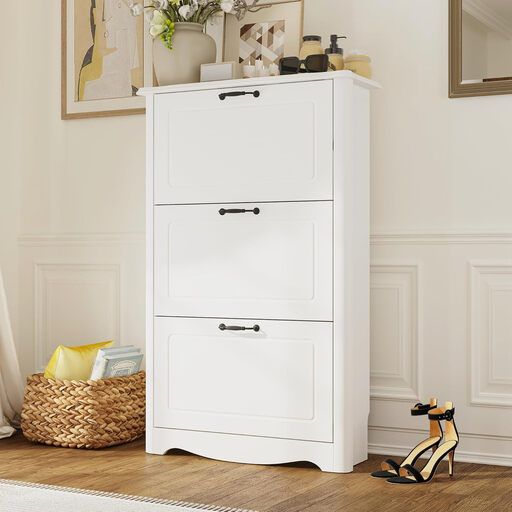
Why this model is a great fit: The perfect solution for small apartments and narrow hallways where conventional cabinets would take up too much space. The tip-out mechanism is a proven space-saver.
The design is inherently space-saving. According to the manufacturer, the shelves are adjustable or removable, which facilitates storing different types of shoes and mitigates the problem of compartments being too small.
A very shallow depth of just 26.5 cm, making it an optimal choice for narrow entryways without obstructing the walkway.
We have compiled a complete, up-to-date list of products that fully meet these strict selection criteria and rigorous safety regulations.
When buying, look for models with integrated ventilation openings, usually on the back panel. If these are missing, air out the cabinet regularly by leaving the doors open for a few hours. Also, make sure only dry shoes are stored inside. Cedar blocks or small bags of activated charcoal can also help absorb moisture and odours.
The stated capacity is a guideline. To determine the real capacity for your shoe collection, check the internal dimensions of the compartments. As a rule of thumb, for shoe sizes over 11 US / 45 EU or if you have many bulky shoes like hiking boots or wide trainers, the actual capacity can be 30% to 50% lower than the manufacturer's claim.
This heavily depends on the specific model. Many standard tip-out cabinets are designed for shoe sizes up to a maximum of 10.5 US / 44 EU. With larger or wider shoes, the flap may not close properly. Before buying, be sure to check the manufacturer's specified maximum shoe size or the internal depth of the tilting compartment.