
Lieferung heute & morgen

Qualitätsgarantie

Willkommens-Angebote freischalten: KOSTENLOSE Lieferung | Bis zu 80 % RABATT | Kostenlose 30-Tage-JoyPlus-Testphase
App herunterladen
A cluttered entryway with shoes blocking the path is a common problem in many homes. The right shoe cabinet not only creates order but can also visually enhance your hallway. However, the selection is vast, ranging from classic shoe racks to space-saving tip-out cabinets.
This guide provides a structured overview of various models for hallway shoe storage. It explains the most important criteria to consider when making your choice and presents specific product recommendations for different needs. The goal is to give you a solid foundation for making an informed purchasing decision.
Before you decide on a model, three factors are crucial: the available space, the type of storage, and the required capacity.
The most important step is to accurately measure the intended location. Note the maximum width, height, and depth. Depth is especially critical in narrow hallways. A slim shoe cabinet with a depth of less than 25 cm can be the ideal solution here. So-called tip-out shoe cabinets are specifically designed for such conditions, as the shoes are stored vertically in tilting compartments, allowing the furniture to sit very flat against the wall.
Consider whether you prefer an open or closed system.
A shoe storage bench combines two functions and is particularly practical for comfortably putting on and taking off shoes while seated.
Count the number of shoe pairs that need to be stored regularly. Plan for some extra space for future purchases or guest shoes. The materials affect not only the look but also the durability and maintenance. MDF (Medium-Density Fibreboard) with a melamine or lacquer finish is low-maintenance and robust. Modular systems made of plastic and metal offer flexibility and are often water-resistant.
Based on the criteria mentioned, we have selected three different models for various needs and living situations.
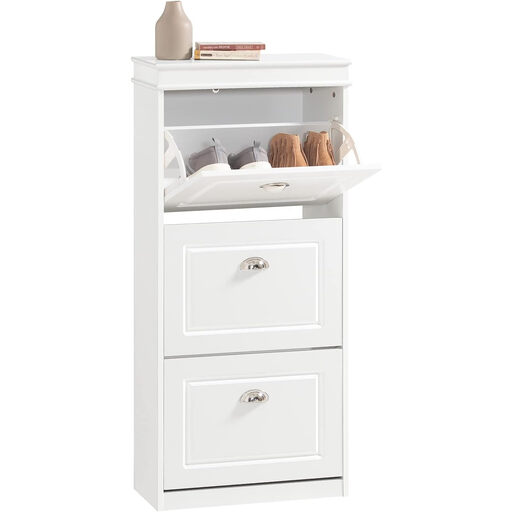
What makes this model stand out: With a depth of just 24 cm, this tip-out cabinet is an extremely space-saving solution, specially designed for narrow hallways or niches. The closed design ensures a tidy look.
Advantages:
Who is this model for? Ideal for individuals, couples, or small families living in homes with narrow entryways who are looking for discreet yet efficient hallway shoe storage.
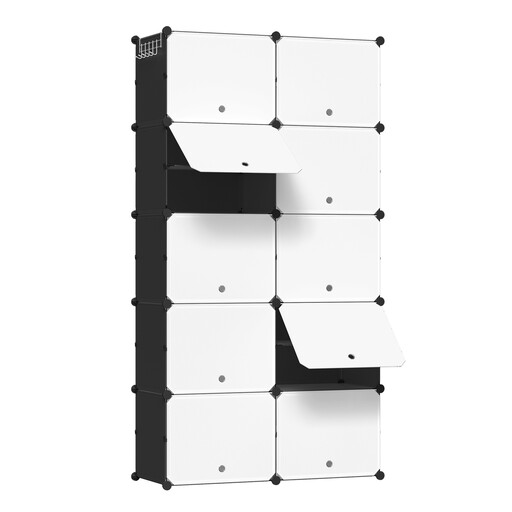
What makes this model stand out: This interlocking shelving system offers maximum flexibility and a very high capacity. It can be configured individually according to your needs and available space.
Advantages:
Who is this model for? Perfect for shoe collectors, large families, or shared living spaces. It is also suitable for those looking for a flexible solution that can adapt to changing room layouts or needs.
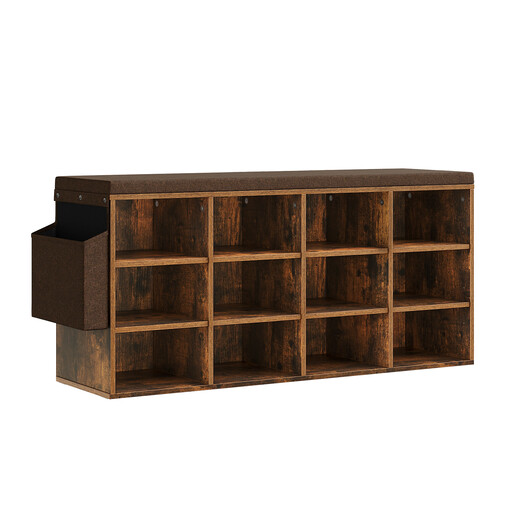
What makes this model stand out: This shoe bench is a multifunctional piece of furniture that combines shoe storage with a comfortable place to sit.
Advantages:
Who is this model for? Suitable for anyone who wants to not only create order in their entryway but also appreciates the comfort of a seating area. Especially practical for families with children or older individuals.
Haven't found the right model for your needs yet, or are you looking for specific designs? A well-organised hallway starts with the right storage solution.
Explore a wider selection of models and find the perfect solution for your home in our Shoe Racks with Compartments category.
A tip-out shoe cabinet is a specific type of shoe cabinet. Its main feature is the pivoting, tilting compartments where shoes are stored vertically or at an angle. This makes it exceptionally slim and ideal as a narrow shoe cabinet for tight spaces. A general shoe cabinet or shoe cupboard, on the other hand, may have classic doors, drawers, or open shelves and typically has a greater depth.
A shoe cabinet is considered slim when its depth is significantly less than the standard of about 35 cm. Models for narrow hallways typically have a depth between 17 cm and 25 cm. This is sufficient to accommodate most shoe sizes in a tip-out cabinet without blocking valuable walkway space.
To extend the life of your shoes and prevent odours, you should follow a few basic rules. Always store shoes only when they are clean and completely dry. For closed cabinets, occasional airing is advisable. For high-quality leather shoes, using shoe trees is recommended to maintain their shape. An open shoe rack naturally provides the best ventilation.