
Lieferung heute & morgen

Qualitätsgarantie

Willkommens-Angebote freischalten: KOSTENLOSE Lieferung | Bis zu 80 % RABATT | Kostenlose 30-Tage-JoyPlus-Testphase
App herunterladen
A shoe cabinet should keep your shoes neatly stored, take up as little space as possible and work reliably day to day. However, some buying decisions can quickly lead to unnecessary expense. Storage capacity, stability and the space a cabinet actually needs are among the things most often misjudged.
“Space for 20 to 30 pairs of shoes” sounds generous at first. In practice, though, high-top trainers, ankle boots and shoes with heels need more room than flat shoes. With enclosed compartments, the usable capacity may therefore be lower.
Before you buy, check:
In a narrow hallway, it’s not just the width that matters: depth and height are important too. A shallow model can tip over if it’s overloaded and isn’t fixed to the wall. Tall shoe racks make use of vertical space, but they still need to stand securely.
Check the full external dimensions and also measure:
A shoe stand or open shoe rack in the hallway makes it easy to grab your shoes, but offers less protection from dust. This can be useful for everyday shoes you wear often. If you want to keep shoes as protected and discreet as possible, a shoe cabinet with doors or individual shoe storage boxes may be a better choice.
Clearly organised compartments are useful for households with a large shoe collection. For example, a shoe cabinet for 20 to 30 pairs can suit families or households where several people regularly rotate their footwear. A low shoe rack with space for six to 12 pairs may be enough for smaller households.
With modular systems, also check whether individual units can be stacked and whether the structure remains stable when fully loaded.
PP plastic is moisture-resistant and can usually be wiped clean with a damp cloth. This is useful if you leave wet shoes in the entranceway. Metal frames provide a sturdy structure, while non-woven fabric shelves are lightweight and flexible, but shouldn’t be overloaded.
Wood-based materials such as chipboard work well with other furniture. It’s important to protect the surface from prolonged exposure to moisture. With the right care, bamboo can be a natural alternative.
A shoe cabinet with doors keeps shoes out of sight and reduces dust on the shelves. Ventilated doors or compartments are useful if your shoes aren’t completely dry when you put them away. Even so, avoid placing closed furniture directly against damp walls.
Height-adjustable shelves make it easier to accommodate trainers, sandals, boots or shoes with heels. With fixed compartments, compare the internal dimensions with the largest pair in your collection.
A shoe bench with a seat can make your entranceway more functional. Check the stated maximum load, the footprint and how to care for the upholstery. However, a bench won’t necessarily replace a large shoe cabinet: storage is often limited to just a few compartments.
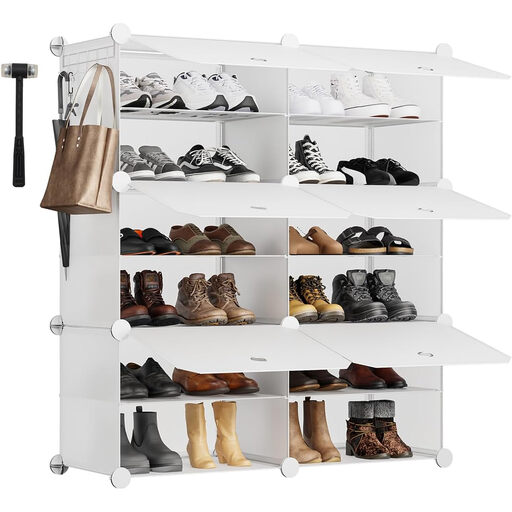
Why this product suits this profile: Measuring 84 x 31 x 92 cm, with stated storage for 24 pairs of shoes, it’s a good choice for families looking for ample capacity in a straightforward storage solution.
The product details specify the compartment capacity, dimensions and a load capacity of 5 kg per shelf. Several anti-tip devices are included, but given its height, you should still make sure to fix it to the wall.
According to the product details, the PP panels are moisture-resistant and can be wiped clean with a damp cloth. The system comes with an assembly mallet and illustrated instructions.
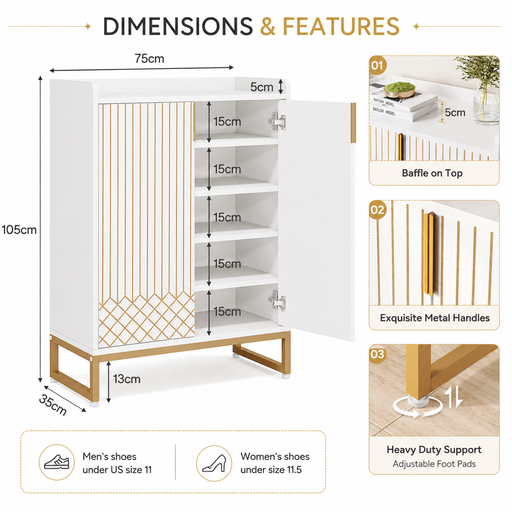
Why this product suits this profile: With a closed front, five tiers and stated capacity for 22 to 25 pairs, it’s a good fit for households that want a discreet look in the hallway or living area.
The doors help to keep dust off the shelves. The product description lists a wood-effect structure, metal legs and metal fittings. Before buying, compare the internal dimensions with your taller shoes.
A white finish with decorative accents and enclosed compartments. According to the supplier, assembly is made easier with numbered parts and illustrated instructions.
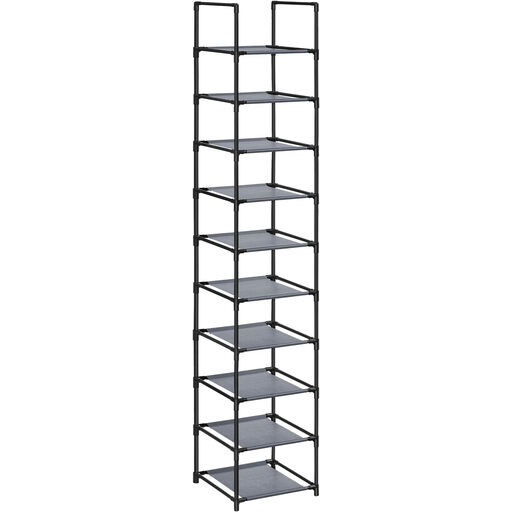
Why this product suits this profile: Its vertical design measures 33 x 33 x 173 cm, making good use of a small footprint. According to the product details, it holds up to 30 pairs of shoes.
The capacity and external dimensions are clearly stated. Because it’s tall and has lightweight non-woven fabric shelves, don’t overload the rack and make sure it’s set up securely according to the instructions.
A metal frame with ten tiers and a compact footprint. According to the description, the shelves can be wiped clean with a damp cloth.
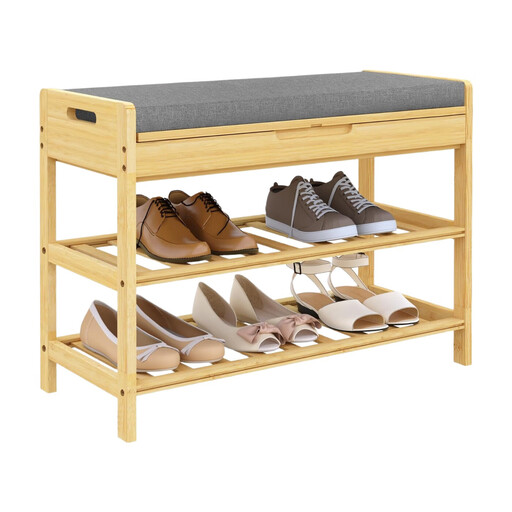
Why this product suits this profile: Measuring 68 x 50 x 30 cm, it combines shoe storage with a seat, making it suitable for compact entranceways.
The product details specify two open shelves and one enclosed compartment. This makes the actual layout clearer than a general capacity figure would.
A bamboo frame, padded seat and stated maximum load of 150 kg. According to the description, the seat cushion can be removed.
We’ve put together a complete, regularly updated list of products that meet these strict selection criteria and fully comply with the safety regulations in force in the EU.
An anti-tip device is especially important for tall shoe cabinets and shoe racks. Secure the furniture to a suitable wall according to the manufacturer’s instructions, and check that the fixings provided are suitable for your wall type. Children shouldn’t climb on shoe racks or shoe cabinets.
Before assembly, check that all the parts are included. A level surface helps prevent strain on the frame. For fabric shelves, stick to the stated weight limit and avoid storing wet shoes on them for long periods.
It depends on the design. A model measuring 84 x 31 x 92 cm has a relatively compact footprint. A vertical shoe rack measuring 33 x 33 cm needs even less floor space, but is much taller at 173 cm. Before you buy, measure not only the floor space but also the available height.
A shoe cabinet with doors keeps shoes out of sight and reduces dust on the shelves. An open shoe rack, on the other hand, gives you quicker access and can be more practical for shoes you wear often. The right choice depends on your space, how you’ll use it and the look you want.
Its lifespan depends on the material, assembly, load and moisture levels. Stick to the stated weight limits, avoid leaving wet shoes in it for long periods and clean the surfaces according to the material. On tall models, a correctly fitted anti-tip device helps keep the cabinet safe to use.