
Lieferung heute & morgen

Qualitätsgarantie

Willkommens-Angebote freischalten: KOSTENLOSE Lieferung | Bis zu 80 % RABATT | Kostenlose 30-Tage-JoyPlus-Testphase
App herunterladen
A cluttered entryway, overflowing shoe racks, and the daily search for the right pair—a good shoe cabinet promises to end this chaos. But the market is flooded with models that seem practical at first glance, only to quickly reveal themselves as a bad buy. Many customers invest in furniture that starts to wobble after a few months, has doors that jam, or can't even fit larger shoes.
As your Joybuy Product Recommendation Officer, I'm here to help you navigate the common pitfalls. This guide focuses on the crucial features that define a durable and functional shoe cabinet, so you can make an informed decision.
Before you choose a model, you should be aware of the three most common flaws that often only become apparent after the purchase:
To avoid a purchase you'll regret, you should examine three key aspects. These determine the longevity and functionality of your new shoe storage solution.
The choice of material is critical for stability and durability. A shoe cabinet should stand firm and withstand daily use.
Regardless of the material, sturdy legs (preferably made of metal or solid wood) and an anti-tip kit for wall mounting are essential, especially in households with children.
Precisely measure the available space in your hallway or entryway. A slim shoe cabinet is often the only solution for narrow corridors.
A modern shoe cabinet should not only be practical but also an aesthetic addition to your decor.
Here are some recommendations tailored to specific needs and living situations.
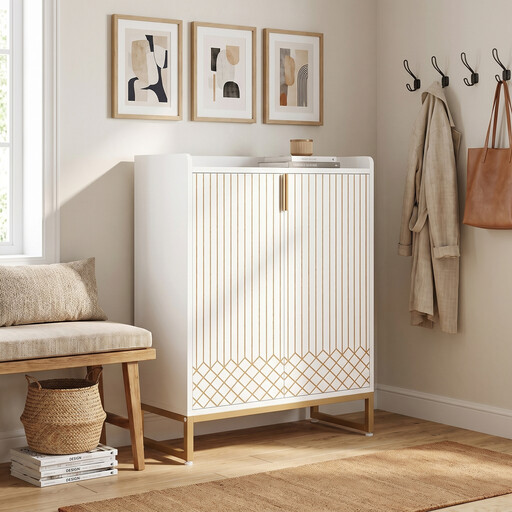
Why This Fits Their Persona: Ideal for anyone looking for functional shoe storage that doubles as a modern design element. The interplay of white and gold creates an elegant atmosphere in the entryway.
The construction, featuring a solid wood structure and square metal legs, counteracts the problem of instability. The closed doors ensure dust-free and tidy storage.
With five tiers, it offers space for 22–25 pairs of shoes. The top surface and open bottom shelf create additional space for decor or everyday shoes.
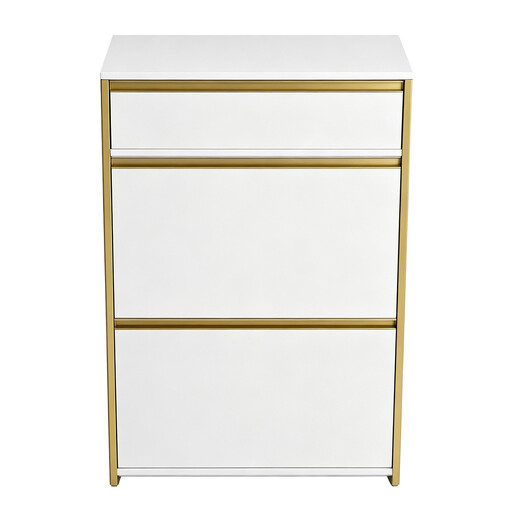
Why This Fits Their Persona: Perfect for apartment dwellers with narrow corridors who need to make the most of every inch without obstructing the walkway.
With a depth of just 24 cm, this model solves the problem of bulky furniture in tight spaces. The internal shelves are height-adjustable and removable, which counteracts the issue of impractical interior dimensions.
Multifunctional thanks to the combination of shoe compartments, a drawer, and a top shelf. The anti-tip kit ensures stable and secure wall mounting.
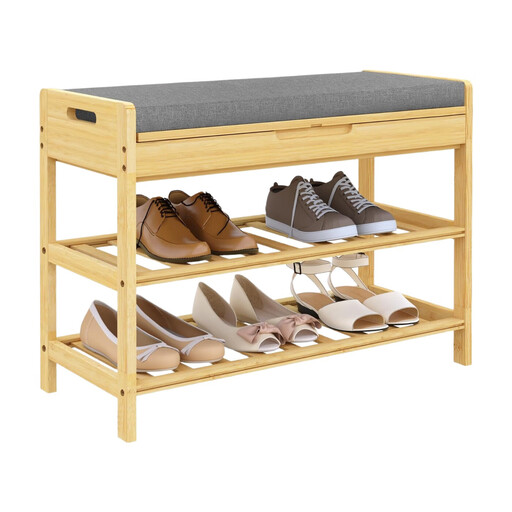
Why This Fits Their Persona: For pragmatists who want a solution that combines seating and storage. Ideal for anyone who likes to sit down while putting on and taking off their shoes.
The sturdy bamboo material is naturally stable and moisture-resistant, which increases its longevity compared to simple particleboard. The open shelves ensure good ventilation for the shoes.
Combines a shoe bench with a load capacity of up to 150 kg, two open shoe shelves, and a hidden storage compartment under the seat for accessories like shoe polish or umbrellas.
We've curated a complete, up-to-date list of products that fully meet these strict selection criteria and UK safety regulations.
1. How deep should a shoe cabinet be in a hallway? For a narrow hallway, tip-out shoe cabinets with a depth of 17 to 25 cm are a great choice as they barely protrude into the walkway. If you have more space and want to store larger shoes or boots, models with a depth of 30 to 40 cm, like a classic shoe chest, are more suitable. Carefully measure your available space before buying.
2. How do you prevent odours in a closed shoe cabinet? When buying, look for models with integrated ventilation slots or a perforated back panel. Also, let your shoes dry and air out completely before placing them in the cabinet. Additionally, cedar wood blocks or small bags filled with baking soda can help absorb moisture and neutralise odours.
3. How many shoes fit in an average shoe cabinet? The capacity heavily depends on the cabinet's design and the size of your shoes. Manufacturers often provide an estimate, such as "for 12 pairs" or "for 20 pairs." This figure usually refers to average-sized dress shoes. Tip-out cabinets often have more limited space than cabinets with shelves. Adjustable shelves are a major advantage for flexibly adapting the space to your shoe collection.