
Lieferung heute & morgen

Qualitätsgarantie

Willkommens-Angebote freischalten: KOSTENLOSE Lieferung | Bis zu 80 % RABATT | Kostenlose 30-Tage-JoyPlus-Testphase
App herunterladen
A shoe cupboard for the hallway should hold several pairs of shoes, keep the walkway clear and complement your existing décor. In practice, though, price and appearance alone don’t guarantee a good buying decision. Internal dimensions, anti-tip fittings and the actual load capacity are often overlooked until after delivery.
This buying guide explains what to look for in a slim shoe cupboard, an open shoe rack or a combined shoe storage unit. You’ll then find a selection to suit different homes.
A cupboard may look slim, but its usable depth might not be enough for larger trainers or boots. With a tilt-out shoe cupboard, it’s also important to check how far the compartments open. So, measure more than just the available wall width. Check:
A space-saving shoe cupboard with a depth of 24 cm may suit everyday shoes, while taller shoes or walking boots may need a different compartment layout.
Manufacturer claims such as ‘holds 20 or 30 pairs’ are a guide only. Capacity depends on shoe size, shaft height and sole shape, as well as whether shoes are placed side by side or staggered. For a tall shoe cupboard with multiple tiers, the actual compartment size matters more than a general capacity claim.
Tall pieces of furniture have a higher centre of gravity. A multi-tier shoe organiser should therefore stand on a level surface and be secured to the wall as instructed. In homes with children, a cupboard must never be used for climbing. Also check whether the delivery will arrive in several parcels and whether you’ll need a second person to assemble it.
Shallow models are practical for a narrow hallway. A 10-tier metal rack measuring 33 × 33 × 173 cm makes use of vertical space while taking up little floor space. A closed shoe cupboard keeps shoes out of sight and protects them from dust, but you’ll need enough room for its doors or flaps to open.
For families, it’s worth organising shoes by how often they’re used:
Coated MDF or chipboard can usually be cleaned with a slightly damp cloth. PP components are resistant to moisture, making them suitable for households where wet shoes are common. Metal frames have an open design and can usually be arranged or stacked in different ways.
Look beyond the material description and check:
A shoe cupboard with doors often makes a hallway look tidier, while an open shoe rack makes it easy to grab your shoes. An integrated mirror saves you from needing a separate piece of furniture. A shoe storage bench makes it easier to put shoes on and take them off, but it takes up more depth and you should check its stated seat load capacity.
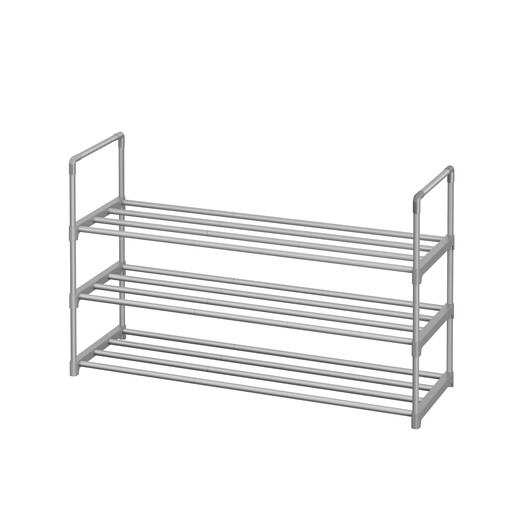
Why this product suits this profile: This open grey metal rack is ideal for households that want frequently worn shoes on display and within easy reach. It can be used upright, upside down or stacked.
Its dimensions of 30 × 92 × 55 cm and stated total load capacity of 30 kg make it easier to plan your space. No tools are needed for assembly.
Metal tubes, plastic connectors and flexible setup options; rated to hold up to 10 kg per tier according to the product information.
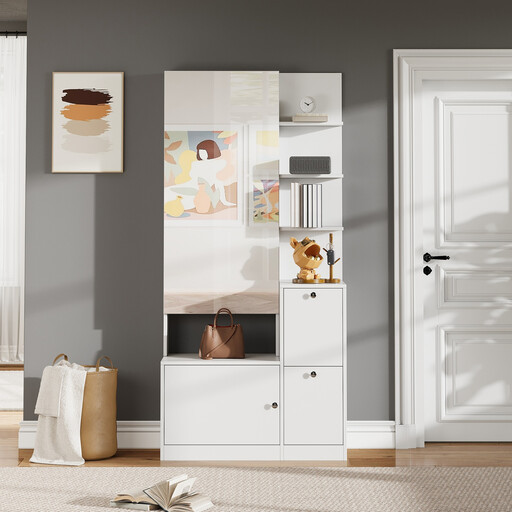
Why this product suits this profile: This combination unit brings together concealed storage, two pull-out shoe compartments, five open shelves and an integrated mirror. It’s a practical way to keep your entrance tidy while making use of vertical space.
The precise external dimensions of 85 × 40 × 180 cm show how it makes use of height rather than taking up more floor space. Remember to allow for assembly and wall fixing.
White chipboard construction, two doors, two shoe flaps with two tiers each, and a stated top load capacity of 50 kg.
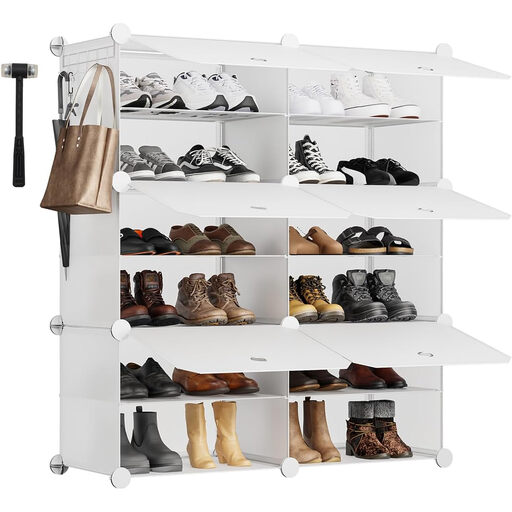
Why this product suits this profile: Measuring 84 × 31 × 92 cm and with a stated capacity of up to 24 pairs, this modular unit is designed for families or households with a larger shoe collection.
Ventilation, wipe-clean PP components and a stated load capacity of 5 kg per compartment give you a clear idea of how to use it. Several anti-tip fittings are included.
Moisture-resistant PP, reinforced metal connectors, six compartments and assembly accessories, including a mallet.
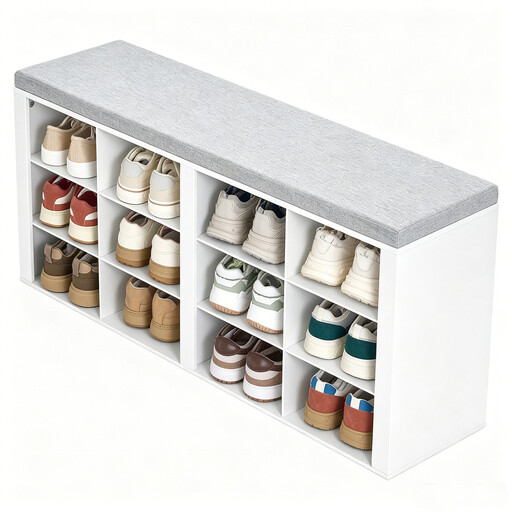
Why this product suits this profile: Combining a bench with shoe storage, this unit is well suited to hallways, bedrooms or other rooms where you’d like to sit down to change your shoes.
The adjustable shelves can be adapted to suit shoes of different heights. Before buying, check the dimensions of 104.5 × 49.5 × 30.5 cm and make sure you have enough floor space.
12 compartments, removable shelves, a removable seat cover and a stated seat load capacity of 150 kg.
We’ve put together a complete, regularly updated list of products that meet these strict selection criteria and the safety regulations in force in the EU.
Before assembly, check that all parcels and components have arrived. Tall furniture should always be secured to the wall for safety. MDF, MFC, chipboard and PP surfaces can usually be cleaned with a soft, slightly damp cloth. Don’t allow water to sit in joints or on edges for long periods.
If you have an open rack, let wet shoes dry first. This helps prevent moisture from affecting the floor or furniture for an extended period. Do not exceed the maximum load for each compartment or the top surface.
It depends on your shoes and the space available to walk through. A depth of around 24 to 31 cm may be enough for flat everyday shoes. For larger trainers, boots or wider shoes, check the internal dimensions and how far the flaps open. The usable compartment size matters more than the external dimensions alone.
A tilt-out shoe cupboard usually makes more compact use of wall space and keeps shoes hidden behind flaps. An open shoe rack, on the other hand, gives you easier access and doesn’t need extra clearance for doors to open. A tall, slim shoe cupboard with flaps may work well in a very narrow hallway, as long as the compartment dimensions suit your shoes.
Place the unit on a level surface and use the anti-tip fittings provided. Choose fixings that are suitable for your wall type. Don’t overload doors, drawers or open shelves. Children should not climb on the cupboard or pull themselves up using its doors or compartments.