
Lieferung heute & morgen

Qualitätsgarantie

Willkommens-Angebote freischalten: KOSTENLOSE Lieferung | Bis zu 80 % RABATT | Kostenlose 30-Tage-JoyPlus-Testphase
App herunterladen
A cluttered hallway full of shoes is a daily frustration in many homes. The right shoe rack promises an easy solution, but the selection is vast, and not every model delivers on its promise. Before you make a decision, it's helpful to know the common pitfalls that often only become apparent after the purchase.
Many buyers focus on price or design, overlooking crucial functional flaws. These include three main problems:
A thoughtful selection based on solid criteria will help you avoid these issues and find a durable solution for your entryway.
To make an informed decision, you should focus on a few key parameters that determine the functionality and longevity of a shoe rack.
The material is crucial for both stability and appearance. Each option has specific characteristics:
Before choosing a model, precisely measure the intended space in your hallway or entryway.
The type of shoe storage depends on your priorities:
Here are some recommendations tailored to different needs and living situations.
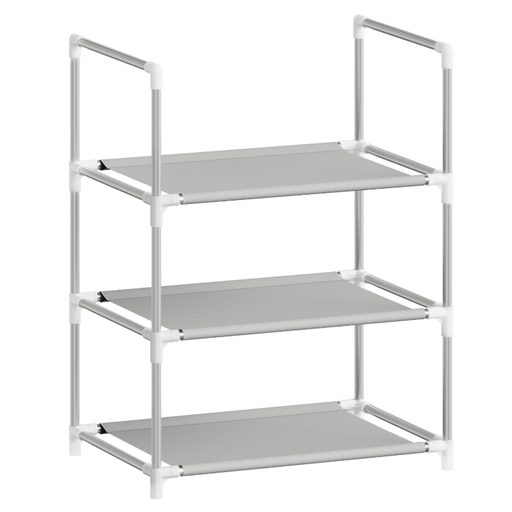
Why it's a great fit: Ideal for students, first apartments, or small hallways. It's a straightforward and cost-effective solution to quickly create order without a large investment. Its compact dimensions of 41 x 28 x 55 cm make it very space-saving.
Despite its low price, the manufacturer states that it uses thickened metal tubes, which offer greater stability than the most basic models. The simple plug-in system minimises assembly errors that could lead to instability.
Assembly is tool-free and can be completed in minutes. One shelf can be removed to make room for boots.
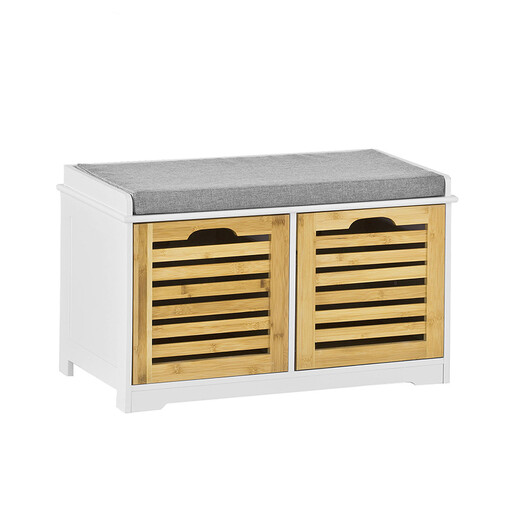
Why it's a great fit: For anyone looking for more than just a rack. This shoe bench is a piece of furniture that enhances the entryway. The seat is practical, and the baskets provide extra storage for scarves, hats, or care products.
The construction of MDF and bamboo is more stable than simple particleboard and less susceptible to moisture. The bench provides a solid seat with a stated load capacity of up to 120 kg.
Combines three functions in one: shoe storage, seating, and additional storage space. The design blends well with both classic and modern interiors.
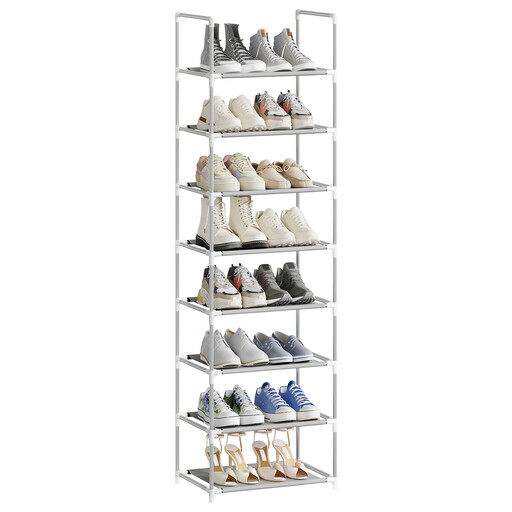
Why it's a great fit: This tall, narrow rack is specifically designed for use in tight niches or corridors. With a height of 140 cm and a width of just 41 cm, it offers space for up to 16 pairs of shoes on a small footprint.
It solves the problem of mismatched dimensions with its intentionally vertical design. An included anti-tip device provides extra safety and stability, which is a crucial factor for tall, narrow racks.
Maximum storage utilisation on a minimal footprint. The rack can also be split into two separate, smaller racks, allowing for high flexibility in furnishing.
We have compiled a complete, up-to-date list of products that fully meet these strict selection criteria and applicable regulations.
1. How much weight can a typical metal shoe rack hold? The load capacity varies depending on the model and construction. For many racks made of metal tubes and fabric shelves, the capacity per tier is around 5 kg. More robust models made of solid metal or engineered wood can support significantly more weight. Always check the manufacturer's specifications for the maximum load capacity to avoid overloading.
2. How do you prevent a tall, narrow shoe cabinet from tipping over? Stability is a key safety concern for tall and narrow furniture. Many manufacturers include an anti-tip device that allows you to secure the rack or cabinet to the wall. This is the most effective method to prevent tipping, especially in households with children or pets. Additionally, always place the furniture on a level surface.
3. Are open shoe racks or closed shoe cabinets better for small hallways? Both have their pros and cons. An open shoe rack feels more airy and can make the room appear larger. It also provides better ventilation. A closed shoe cabinet creates a calmer, tidier look since the shoes are not visible. For very small hallways, a tall, narrow, open rack might be the better choice as it seems less bulky. If aesthetics are the priority, a small, closed cabinet is often the preferred solution.