
Lieferung heute & morgen

Qualitätsgarantie

Willkommens-Angebote freischalten: KOSTENLOSE Lieferung | Bis zu 80 % RABATT | Kostenlose 30-Tage-JoyPlus-Testphase
App herunterladen
A cluttered entryway with shoes blocking the path is a common problem in many homes. Especially in apartments with limited space, finding the right hallway shoe storage can be a challenge. A well-chosen shoe rack not only creates order but can also elevate the look of your entrance area.
This guide provides an overview of different types of shoe storage solutions. We'll introduce various models and explain their unique features to help you make an informed decision that suits your space and needs.
Before you decide on a model, a few key considerations will help. The following points can serve as a guide to finding the perfect solution for your home.
The choice between an open and a closed system depends on your priorities.
Measure the intended space precisely before making a purchase. Consider not only the width and depth but also the height.
The choice of material affects both the look and the durability of the furniture. Metal racks are often robust and easy to clean, while wood or engineered wood creates a warmer atmosphere. Plastic systems are valued for their lightweight design and flexibility. Also, pay attention to the assembly effort. Many modern racks are designed for simple, tool-free assembly.
Here, we present a selection of different models, each suited for various needs due to their specific features.
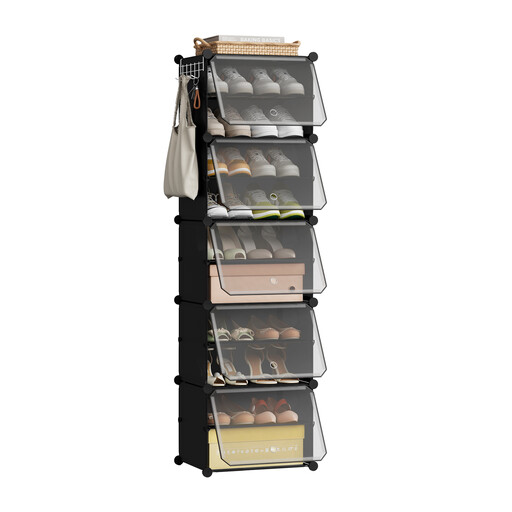
Why It Stands Out: The eSituro cube storage system is distinguished by its highly modular design. You can arrange the individual cubes to your liking—vertically, horizontally, or as separate units. This flexibility makes it an adaptable solution for various rooms and needs.
Advantages:
Who It's For: For those looking for an adaptable and expandable storage solution. Ideal for rental apartments, rooms with sloped ceilings, or when furnishing needs change frequently.
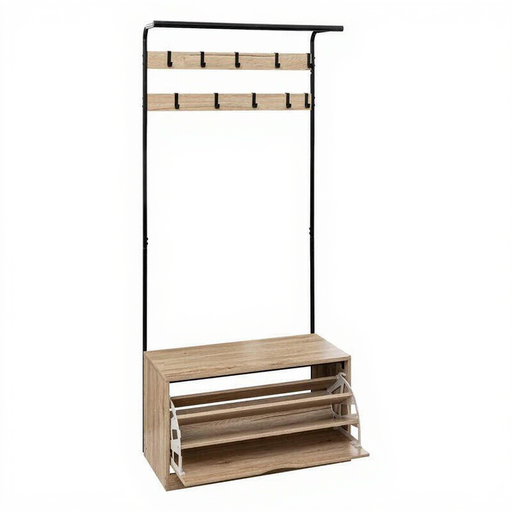
Why It Stands Out: This piece of furniture is more than just a shoe rack. It combines a coat rack, a bench, and shoe storage into a single, compact design, making it an all-in-one solution for the entryway.
Advantages:
Who It's For: For families or individuals seeking an all-in-one solution for their hallway who value a combination of functionality and design.
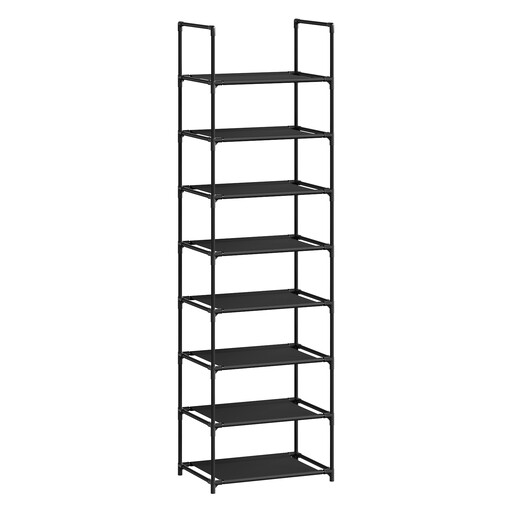
Why It Stands Out: With its tall and narrow build (41 x 28 x 140 cm), this rack makes excellent use of vertical space. It's a discreet solution for storing a large number of shoes on a minimal footprint.
Advantages:
Who It's For: For anyone who needs to store as many shoes as possible in a small apartment or narrow hallway and prefers a simple, functional solution.
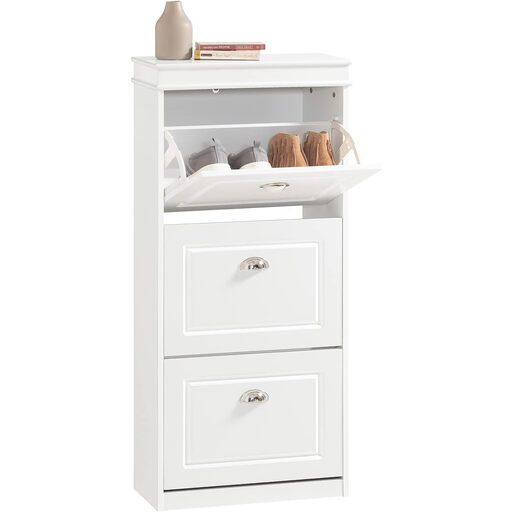
Why It Stands Out: The SoBuy tip-out cabinet conceals shoes behind three elegant flaps, ensuring a flawless look. With a depth of just 24 cm, it is exceptionally slim and integrates seamlessly into tight spaces.
Advantages:
Who It's For: For those who prefer a minimalist and tidy interior style and want to keep their shoes completely out of sight.
If you haven't found the right solution among our recommendations or are interested in other organisational systems, you can find a wider selection of products to help you create order in your home in our Closet & Shelf Organizers category.
The space required varies greatly depending on the model. A very slim tip-out shoe cabinet can manage with a depth of about 24 cm. Open racks typically need a depth of 30 to 35 cm to provide stable support for larger shoes. Carefully measure your available space before buying.
Both systems have their merits. An open rack ensures good ventilation for shoes and quick access. A closed shoe cabinet protects from dust and provides a tidier look. The choice depends on your personal preferences and the specific conditions of your space.
The capacity varies widely. Compact models often hold 6 to 8 pairs of shoes, while larger racks, like the featured WOLTU model, can accommodate 16 pairs or more. The actual number also depends on the type and size of your shoes (e.g., boots require more space than sandals).