
Lieferung heute & morgen

Qualitätsgarantie

Willkommens-Angebote freischalten: KOSTENLOSE Lieferung | Bis zu 80 % RABATT | Kostenlose 30-Tage-JoyPlus-Testphase
App herunterladen
By the Joybuy Product Recommendation Officer, 28 July 2026
A cluttered hallway with shoes strewn about is a daily frustration in many homes. The right shoe rack promises a quick fix, but the selection is vast, and not every product lives up to its promise. A hasty decision often leads to wobbly structures, a lack of space after a short time, or unsightly material damage.
This guide will help you spot common purchasing pitfalls and make an informed decision. We'll focus on the key features that define durable and functional shoe storage, so you can find a solution that truly fits your home and your needs.
Many products look appealing online but reveal their weaknesses only through daily use. Pay close attention to these three points to avoid disappointment:
To make the right choice, you should focus on objective criteria rather than marketing promises. The following three aspects are crucial for durability and functionality.
The material determines not only the look but also the sturdiness and lifespan of your shoe storage.
The shape and size must suit the available space and the intended function.
Consider how many and what types of shoes you need to store.
Instead of an overwhelming list, we present a few models tailored to specific living situations and needs.
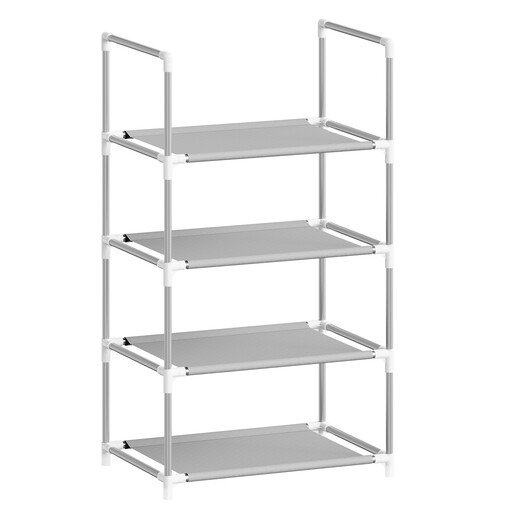
Why it's a good fit: Ideal for a first apartment or small hallways where a simple, functional, and space-saving solution is needed without breaking the bank.
The metal frame provides greater baseline stability than all-plastic models. The laminated non-woven fabric is more resistant to moisture than uncoated materials.
Its very compact dimensions (41x28x72 cm) make optimal use of vertical space in narrow niches or hallways.
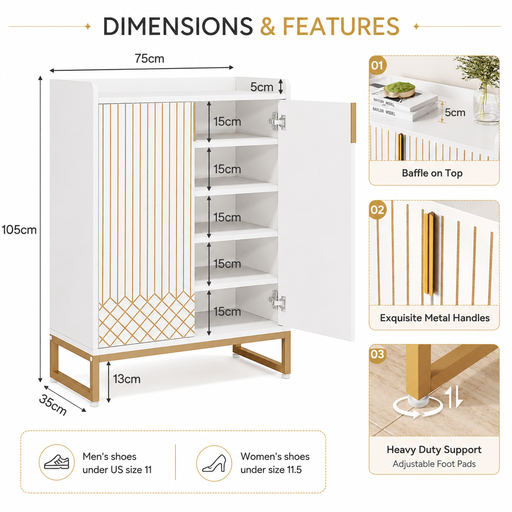
Why it's a good fit: For households that need high capacity and value a tidy, modern aesthetic. The shoes disappear behind doors, and the cabinet integrates into the living space like a piece of furniture.
The closed design protects shoes from dust and ensures a permanently tidy look. The construction of engineered wood and metal legs offers solid stability for a large number of shoes.
Combines high capacity (up to 25 pairs) with an elegant design that integrates seamlessly into a hallway or living room.
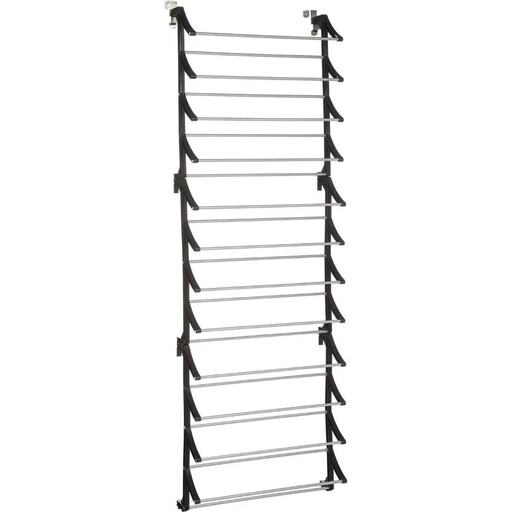
Why it's a good fit: For anyone with a very large shoe collection but no free floor space. This rack utilises the often-unused space on a door in a bedroom, storage room, or dressing room.
It radically solves the problem of insufficient capacity and lack of floor space by shifting storage vertically. The design is specifically engineered for this hanging load.
Extremely high capacity for up to 36 pairs of shoes without taking up any floor space. The hooks are adjustable for different door thicknesses.
We've compiled a complete, up-to-date list of products that meet these strict selection criteria.
1. How much space should be between the shelves of a shoe rack? A gap of 15 to 20 cm is sufficient for most flat shoes and sneakers. However, if you want to store ankle boots or hiking boots, you'll need more space. Look for models with adjustable or removable shelves to flexibly accommodate different shoe heights.
2. How do you securely fasten a tall, narrow shoe rack? A tall and slim shoe rack should always be secured to the wall to prevent it from tipping over. This is especially important in households with children or pets. Many manufacturers include an appropriate anti-tip kit with the product. Installation is usually straightforward and significantly increases safety.
3. Open shoe rack or closed shoe cabinet – which is better for the hallway? The choice depends on your priorities. An open shoe rack allows for good air circulation, so worn shoes can dry and air out quickly. A closed shoe cabinet protects shoes from dust and creates a calm, tidy atmosphere in the entryway. If you prefer a flawless look, a cabinet is the better choice. If functionality and ventilation are the priority, an open rack is more practical.