
Lieferung heute & morgen

Qualitätsgarantie

Willkommens-Angebote freischalten: KOSTENLOSE Lieferung | Bis zu 80 % RABATT | Kostenlose 30-Tage-JoyPlus-Testphase
App herunterladen
A cluttered entryway, overflowing piles of shoes in the hallway, or a disorganised wardrobe—these are problems many households are familiar with. The right shoe rack promises a quick fix, but the selection is vast, and not every solution delivers on its promise. As your Joybuy Product Recommendation Officer, I'll help you navigate the common pitfalls and find a shoe storage solution that truly fits your needs and your home.
A hasty purchase decision often leads to frustration. Watch out for these three common problems to avoid a bad investment.
To make the right decision, you should focus on a few fundamental technical parameters rather than being swayed by marketing promises.
The material significantly determines the durability and load-bearing capacity of your shoe rack.
Regardless of the material, the specified maximum load capacity per tier is a crucial value. A good benchmark is at least 5 kg per shelf to safely store even heavier shoes.
The available space and the nature of your shoe collection determine which system is most sensible for you.
Before buying, be sure to accurately measure the intended space (width, height, depth). Also, consider the space needed to open doors or flaps.
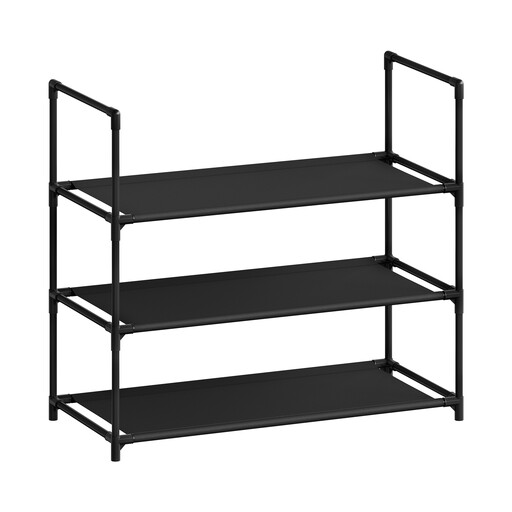
Why this model is a great fit: Ideal for a first apartment, a shared flat, or as a simple solution for the basement. It offers space for the most essential shoes in a small footprint and is budget-friendly.
The metal tube construction provides greater baseline stability than all-plastic models. The open design prevents odour build-up and is adequately sized for flat shoes and trainers.
Tool-free assembly via a push-fit system. Very lightweight with compact dimensions (61x28x55cm). According to the manufacturer, each tier supports up to 5 kg.
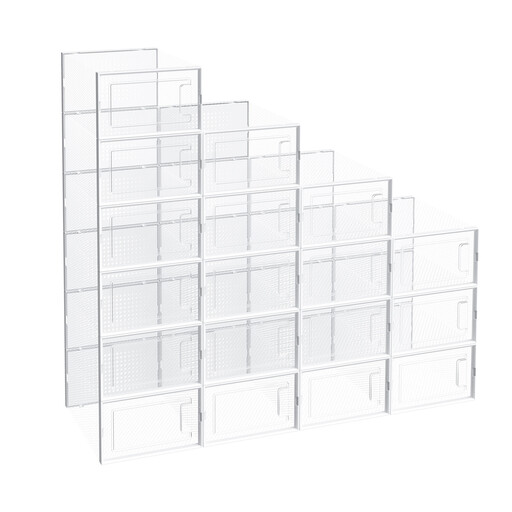
Why this model is a great fit: Perfect for trainer enthusiasts or families who want to organise a large number of shoes in a dust-free, visible, and systematic way. The system grows with your collection.
The modular design allows for flexible adaptation to your space and shoe sizes. Each box is a stable unit. Integrated ventilation holes ensure air circulation, and the transparent door protects from dust.
Stackable and expandable system. Transparent front flap for a quick overview. Protects shoes individually from dust and pressure marks.
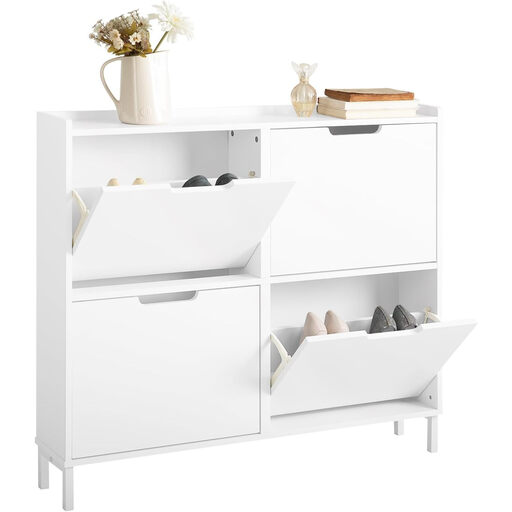
Why this model is a great fit: For anyone who values a tidy, minimalist look and has very little space in their entryway. The shoes disappear out of sight, making the hallway feel larger.
With a depth of just 19 cm, this model is specifically designed for narrow hallways, solving the problem of bulky racks. The closed MDF construction is stable and is secured to the wall for added safety.
Extremely space-saving design. Conceals shoes for a clean look. The top shelf provides additional space for keys or decoration.
We have compiled a complete, up-to-date list of products that fully meet these strict selection criteria and German safety regulations.
The load capacity varies greatly depending on the material and construction. Simple push-fit racks made of plastic or thin metal often have a maximum load capacity of 2-5 kg per tier. More robust models made of screwed metal or solid wood can support 10 kg or more per shelf. Always check the manufacturer's specifications, especially if you plan to store heavy boots or multiple pairs of shoes per compartment.
A standard distance of 15-20 cm is sufficient for most flat shoes like trainers, sandals, or ballet flats. However, for ankle boots or high-top trainers, you will need at least 25-30 cm of height. If you also want to accommodate tall boots, racks with removable shelves or modular systems where you can determine the compartment height yourself are a practical choice.
Shoe tippers are an excellent, space-saving solution, but they have limitations. They are primarily designed for flat shoes up to a certain size (often up to UK size 10/11 or EU size 44/45). Very tall or wide shoes like hiking boots, chunky trainers, or boots with high shafts often do not fit into the tilting compartments. Check the maximum internal dimensions of the compartments before purchasing.