
Lieferung heute & morgen

Qualitätsgarantie

Willkommens-Angebote freischalten: KOSTENLOSE Lieferung | Bis zu 80 % RABATT | Kostenlose 30-Tage-JoyPlus-Testphase
App herunterladen
A cluttered entryway, overflowing piles of shoes in the hallway, or a disorganised wardrobe—many of us know these situations all too well. The right shoe rack promises a solution, but the selection is vast, and not every model delivers on its promise. Incorrect dimensions, unstable construction, or unsuitable materials often lead to a purchase you'll regret.
As a Joybuy Product Recommendation Officer, I analyse product information daily to provide you with practical and objective guidance. In this guide, I'll show you which critical features to look for and how to avoid the three most common pitfalls when buying a shoe rack.
Before you make a decision, it's important to understand the typical problems that often only become apparent after the purchase.
To avoid a bad purchase, focus on three objective criteria tailored to your living situation and needs.
The material determines not only the look but also the stability and lifespan of your shoe organiser.
The right design depends on the available space and your personal preference for tidiness.
Measure the intended space precisely: width, height, and depth. Also, consider the space needed to open doors or to comfortably place your shoes. Plan realistically: a rack for 12 pairs of shoes might only hold 8 pairs of your winter boots. Check the height of the individual compartments to ensure that taller shoes like ankle boots will fit.
Here are some recommendations tailored to specific living situations and needs, which take the aforementioned pitfalls into account.
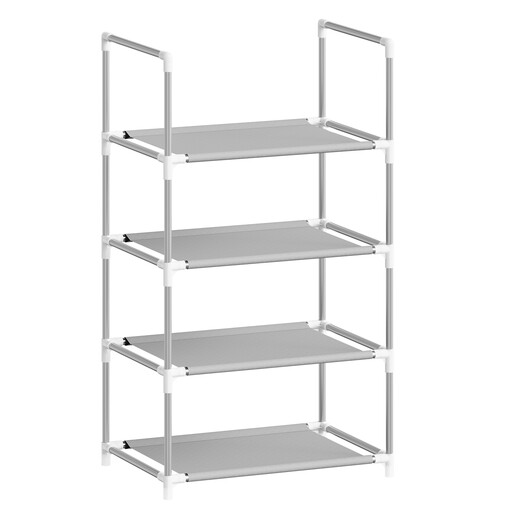
Why This Fits Their Persona: This model is designed for the narrow hallways common in many urban apartments. It utilises vertical space instead of width, offering room for daily-use shoes on a minimal footprint.
It bypasses the pitfall of unsuitable dimensions. With a depth of just 28 cm and a width of 41 cm, it won't block the walkway, making it a targeted solution for tight spaces.
The combination of a metal frame and non-woven fabric shelves is lightweight yet sturdy enough for everyday shoes. Assembly is straightforward.
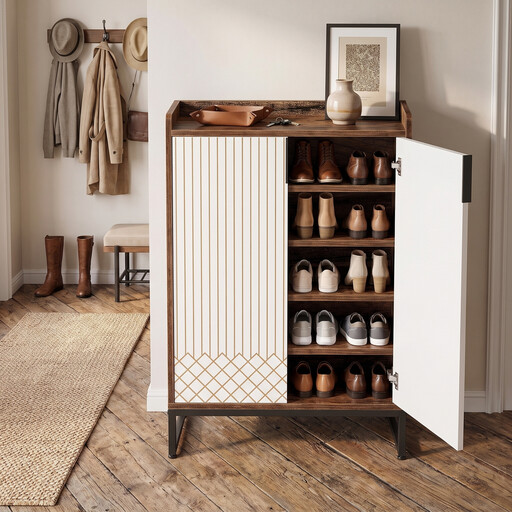
Why This Fits Their Persona: For those who value a tidy and stylish home. This modern shoe cabinet conceals shoe chaos behind elegant doors and, with its gold accents, integrates into the living space as a piece of furniture.
It solves the problem of visual clutter caused by open racks. The closed front creates a calm atmosphere and protects shoes from dust.
Offers a high capacity for up to 25 pairs of shoes and includes an anti-tip kit for secure wall mounting. The top surface serves as an additional shelf.
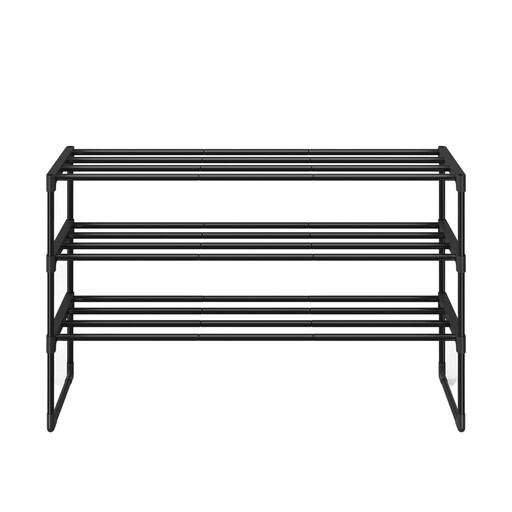
Why This Fits Their Persona: Perfect for individuals whose shoe collection is growing or who need a flexible solution for different rooms. The system can be expanded as needed by stacking multiple units on top of each other.
It escapes the rigidity of a fixed piece of furniture. Instead of having to buy a completely new, larger rack when space runs out, this system can be easily and cost-effectively expanded.
The robust metal construction offers a high load capacity of 10 kg per tier. Assembly is tool-free and can be completed quickly.
We have compiled a complete, real-time list of products that fully satisfy these strict selection criteria and UK safety regulations.
1. How much space should I plan for a shoe rack? Measure the available width, depth, and height of the location. For depth, plan for at least 30 cm for most shoe sizes. For a shoe cabinet with doors, you'll need to account for additional space to open them. It's advisable to leave a few centimetres of buffer in width and height to make assembly easier.
2. How stable is a shoe rack made of metal and fabric? Stability depends on the quality of the components. A frame made of thicker metal tubes combined with high-quality plastic connectors can be very stable. The shelves, made of laminated non-woven fabric, are designed for the weight of normal shoes but should not be overloaded or exposed to constant moisture. Models like the WOLTU shoe rack are sufficiently stable for their intended purpose.
3. Can you safely set up a tall shoe rack without securing it to the wall? Any tall and narrow piece of furniture poses a tipping hazard. For safety reasons, many manufacturers, especially for models like the LANTINE shoe cabinet, include an anti-tip kit. It is strongly recommended to use it and anchor the rack to the wall, especially in households with children or pets.