
Lieferung heute & morgen

Qualitätsgarantie

Willkommens-Angebote freischalten: KOSTENLOSE Lieferung | Bis zu 80 % RABATT | Kostenlose 30-Tage-JoyPlus-Testphase
App herunterladen
A shoe rack should keep things tidy, take up little space and stand up to everyday use. However, in many homes it soon becomes clear that the number of shelves isn’t the only thing that matters. A model that’s too narrow may not suit larger shoes, lightweight materials can give way under a heavy load, and a tall shoe cabinet may need to be secured to the wall.
Before you buy, it’s worth checking the actual dimensions, construction and intended location. The following tips will help you look beyond the marketing claims and choose suitable shoe storage for your hallway, bedroom, dressing room or living room.
A high capacity may sound practical at first. But it doesn’t necessarily mean that trainers, walking boots or larger men’s shoes will fit comfortably. If you’re choosing a shoe rack with several shelves, consider the width and depth of each shelf. Boots and shoes with high uppers also need more clearance.
A narrow shoe rack can make sense in a small hallway. However, the taller it is, the greater the risk of it tipping over, particularly if heavy shoes are stored on the upper shelves. An anti-tip device and the option to secure the rack to the wall are important considerations for tall furniture. Don’t use the rack as a seat or climbing frame.
Descriptions such as ‘sturdy’ or ‘durable’ tell you little without technical details. Check the material, the connectors and the maximum load per shelf. For fabric shelves, also check how they can be cleaned and whether moisture could damage the material.
First, measure the available floor space. A vertical shoe rack may work well in a narrow entrance, while a wider shoe cabinet can make it easier to organise footwear in a family home. As well as the overall dimensions, consider the following:
PP plastic panels are moisture-resistant and can often be wiped clean with a damp cloth. Metal frames offer a simple, sturdy design and can provide sufficient stability without being too heavy. Coated wood-based materials, such as high-density particleboard, have more of the look of a traditional shoe cabinet and suit hallways or living rooms, but should be protected from prolonged exposure to water.
Fabric or non-woven shelves can generally be cleaned with a dry or slightly damp cloth. Abrasive cleaners and too much water can damage the coating. Whatever the material, don’t exceed the maximum load.
Check whether you’ll need tools, whether clear assembly instructions are included and whether the furniture can be dismantled later. For tall shoe cabinets and narrow shoe racks, wall fixing in line with the manufacturer’s instructions is particularly important. Secure the furniture to a suitable wall using fixings that are appropriate for the surface.
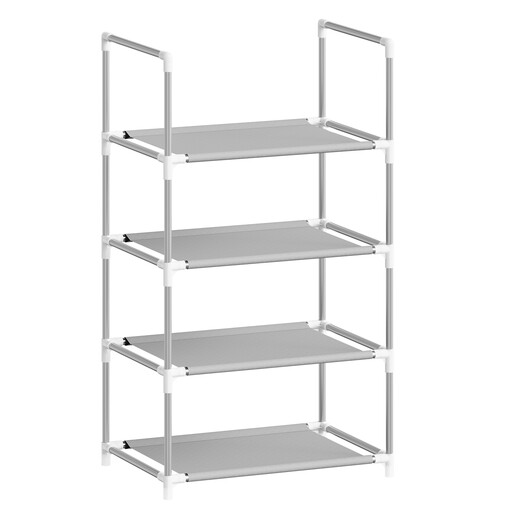
Why this product suits this profile: Measuring 41 × 28 × 72 cm, this model is suited to small hallways, entrance areas or rooms where floor space is limited. Four shelves help keep footwear neatly organised.
The overall dimensions and metal frame are clearly specified, so you can check before buying whether the shoe rack will fit in the space you have in mind.
Compact dimensions, four shelves and wipe-clean non-woven fabric. Assembly is carried out using the instructions provided.
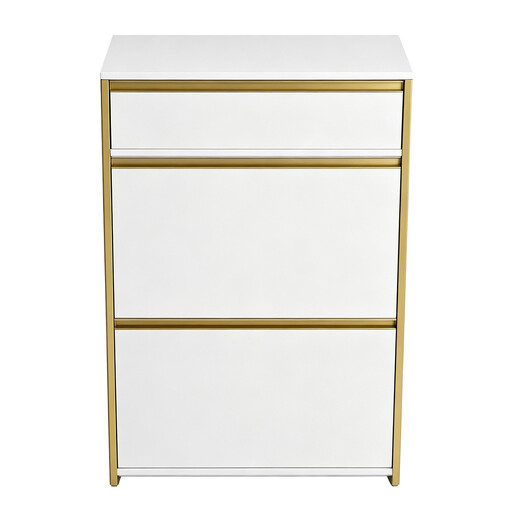
Why this product suits this profile: Measuring 60 × 24 × 104.5 cm, this shoe cabinet combines enclosed compartments, a drawer and a surface for extra storage. The adjustable shelves can be arranged to accommodate different shoes and other items.
The adjustable, removable shelves mean you’re not restricted to a fixed layout. The integrated anti-tip device is designed for wall mounting.
Enclosed storage for up to 12 pairs of shoes, plus extra shelf and drawer space for smaller items.
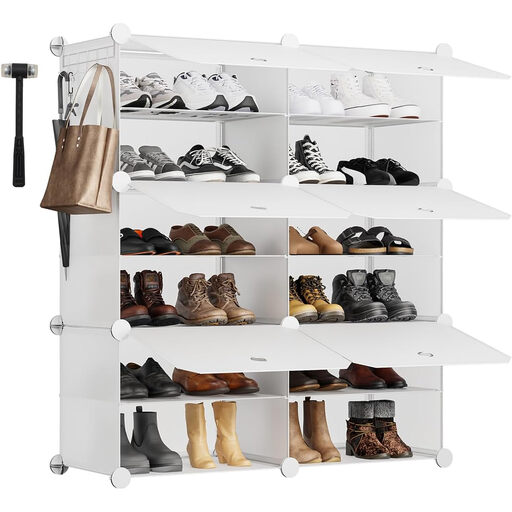
Why this product suits this profile: Measuring 84 × 31 × 92 cm, with six compartments and a stated capacity of up to 24 pairs, this model is designed for families and households with lots of shoes to store.
The product details specify a maximum load of 5 kg per shelf and several anti-tip devices. The tall cabinet must be secured to the wall in accordance with the instructions.
Moisture-resistant PP panels, ventilated compartments, wipe-clean surfaces and components sorted for easy assembly, with an assembly hammer included.
We’ve put together a comprehensive, regularly updated list of products that meet these strict selection criteria and fully comply with the safety regulations in force in the EU.
It depends on the space available and the size of your shoes. A narrow model with a depth of around 24 to 28 cm may suit many hallways, but check that it won’t obstruct doors or skirting boards and that the compartments are wide enough. Larger shoes and boots need extra room.
Follow the assembly instructions and use wall plugs and screws that are suitable for the wall material. Attach the anti-tip device to a solid part of the wall. Don’t climb on a tall shoe cabinet or use it as a seat.
Its lifespan depends on the material, assembly, moisture and load. Staying within the stated weight limit, keeping the rack in a dry place and cleaning it appropriately can help it last longer. Check and tighten any visibly loose connections promptly.