
Lieferung heute & morgen

Qualitätsgarantie

Willkommens-Angebote freischalten: KOSTENLOSE Lieferung | Bis zu 80 % RABATT | Kostenlose 30-Tage-JoyPlus-Testphase
App herunterladen
A cluttered hallway overflowing with shoes is a daily frustration. The right shoe rack promises an easy fix, but the market is vast, and not every solution delivers on its promise. Many buyers only discover months later that their new furniture is wobbly, too small, or made from materials that can't withstand daily use.
Before you make a decision, it helps to know the common pitfalls. This way, you can invest in a solution that genuinely creates order instead of becoming another problem down the line.
The 3 Most Common Mistakes When Buying Shoe Storage:
To avoid these issues, you should check three key aspects before buying: material and stability, true dimensions, and the furniture's functionality.
The material is the primary factor determining the stability and lifespan of your shoe storage.
Measure your available space carefully before choosing a model.
Some pieces of furniture offer additional features that make daily life easier. A hall tree with a shoe rack, for example, combines coat hooks, a bench, and shoe storage in one unit. This is especially practical for families or when there's limited space in the hallway for multiple separate pieces.
Here are some recommendations tailored to different needs and living situations.
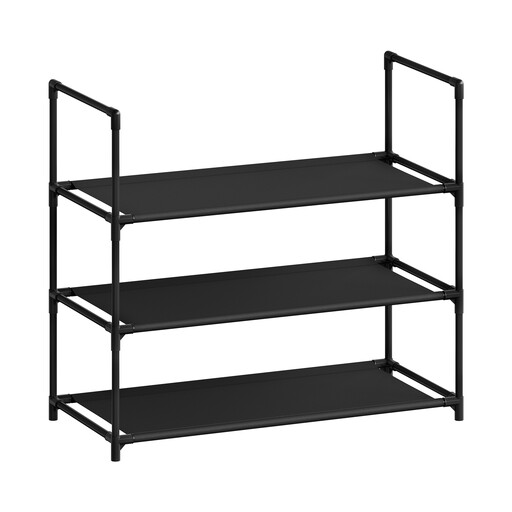
Why This Fits Their Persona: Ideal for students, first apartments, or as a secondary rack in the basement. It offers a simple, functional, and cost-effective solution to quickly create order without a large investment.
The construction with metal tubes offers more stability than all-plastic models in this price range. The laminated non-woven fabric shelves are also more resistant to residual moisture than plain fabric.
Tool-free assembly thanks to its plug-in system. The shelves can be removed if needed to make room for boots.
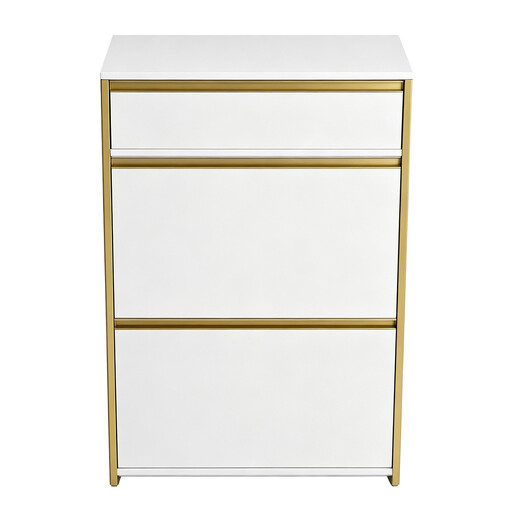
Why This Fits Their Persona: Perfect for anyone who prefers a tidy and stylish look in their entryway. This closed shoe cabinet conceals shoe clutter and blends seamlessly into the decor with its modern design.
As a closed shoe chest, it solves the problem of a cluttered appearance. The adjustable shelves address the issue of misleading capacity, as the interior can be adapted to different shoe sizes.
Combines closed shoe storage with an additional drawer and top shelf space. An included anti-tip kit ensures stability.
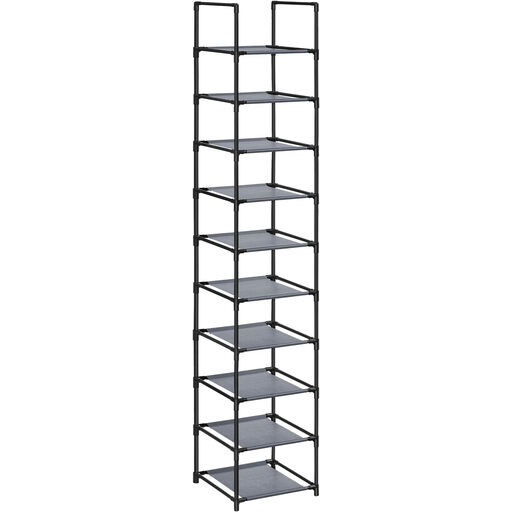
Why This Fits Their Persona: For families or shoe enthusiasts who need to store many pairs in a minimal amount of space. This tall rack makes perfect use of vertical space and is a pragmatic solution for maximum storage capacity.
This tall shoe rack directly addresses the capacity problem by storing up to 30 pairs of shoes on a footprint of just 33x33 cm. The metal frame provides the necessary stability for its height.
Maximum shoe capacity on a minimal footprint. The non-woven fabric shelves protect shoes from dust and are easy to clean.
We have compiled a complete, up-to-date list of products that fully meet these strict selection criteria and safety standards.
A clearance of 15 to 20 cm (6-8 inches) is sufficient for most flat shoes, trainers, and loafers. If you plan to store mainly ankle boots or high heels, you should look for greater clearance. Models with adjustable or removable shelves are particularly practical here, as you can flexibly adapt the space to your shoe collection.
Many tall and narrow racks come with an anti-tip kit. This typically consists of a small bracket or a strap that is screwed to the top of the rack and to the wall. This simple measure prevents the rack from tipping forward and is an important safety precaution, especially in households with children or pets.
Both options have their merits. An open shoe rack provides good air circulation for shoes, which can prevent odours, and allows for quick access. In contrast, a closed shoe cabinet or a tilt-out cabinet makes the hallway look much tidier and more serene, while also protecting shoes from dust. The decision ultimately depends on your personal priorities—aesthetics and order versus ventilation and quick access—as well as the space you have available.