
Lieferung heute & morgen

Qualitätsgarantie

Willkommens-Angebote freischalten: KOSTENLOSE Lieferung | Bis zu 80 % RABATT | Kostenlose 30-Tage-JoyPlus-Testphase
App herunterladen
A cluttered entryway, strewn with shoes, is a common problem in many homes. The right shoe rack promises a swift solution, but the selection is vast, and not every option delivers on its promise. As your Joybuy Product Recommendation Officer, I'll help you navigate the typical pitfalls of purchasing and find a functional shoe storage solution that truly fits your needs and your living space.
Before you make a decision, you should be aware of the three most common flaws that can quickly turn a seemingly good deal into a bad buy:
To avoid these problems, focus on three core parameters that determine the longevity and functionality of your new shoe rack.
The material is crucial for stability and durability.
For any tall and narrow rack, especially a shoe rack for the hallway, a wall anchor (anti-tip kit) is an indispensable safety feature. Check if a corresponding kit is included in the delivery.
Measure your available space precisely: width, height, and depth.
Consider the primary function the piece of furniture should fulfil.
Here are some recommendations tailored to different needs and living situations.
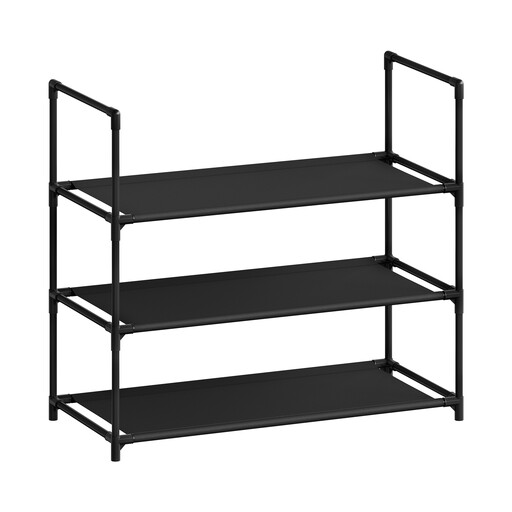
Why This Fits Their Persona: Ideal for students, first-time renters, or small hallways. This rack offers simple, tool-free assembly and a functional solution for basic shoe organisation without breaking the bank.
The construction of coated metal tubes and non-woven fabric is stable enough for everyday use at this price point. With a depth of 28 cm, it provides enough space for common shoe sizes and avoids the problem of shoes hanging over the edge.
Tool-free push-fit system for quick assembly; removable shelves for flexible storage of boots.
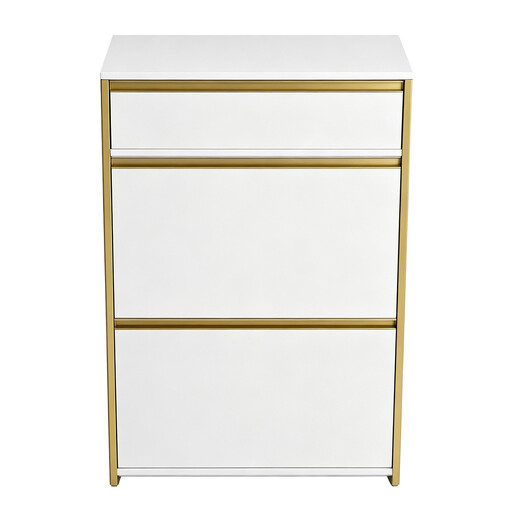
Why This Fits Their Persona: Perfect for families looking for a tidy and aesthetically pleasing solution. The closed cabinet hides shoe clutter and its modern white-and-gold design blends seamlessly into their home decor.
The construction from high-quality particleboard is robust and durable. The internal shelves are height-adjustable and removable, providing maximum flexibility for different shoe types like boots and sidestepping the trap of rigid compartments.
Closed design for a tidy appearance; includes an anti-tip kit for added safety.
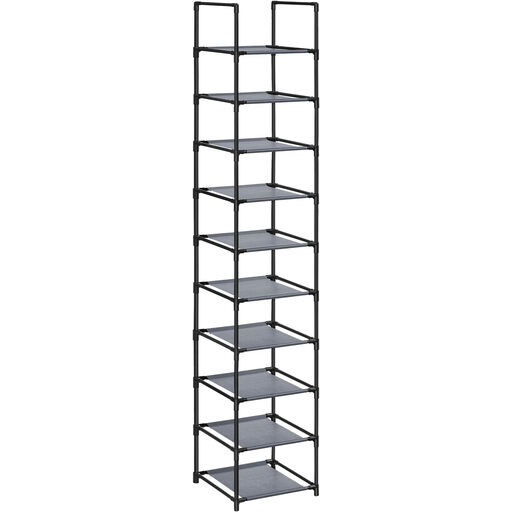
Why This Fits Their Persona: For residents of city apartments or shared flats with limited floor space. This tall, narrow rack makes optimal use of vertical space, offering room for a large number of shoes with a minimal footprint.
The vertical design is inherently space-saving. The metal frame construction provides the necessary stability, which is crucial for such tall, narrow racks, avoiding the instability trap. A depth of 33 cm is also suitable for larger shoes.
Extremely high capacity on a small footprint; non-woven fabric shelves protect shoes from dust.
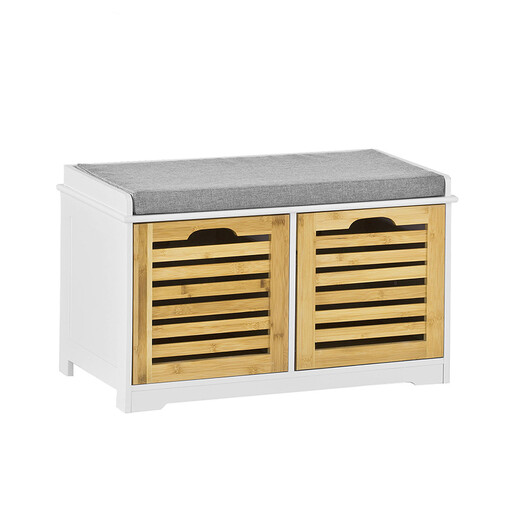
Why This Fits Their Persona: For anyone who wants not only to store shoes in the hallway but also to have a practical place to sit. This shoe bench is a piece of furniture and an organiser in one, functionally enhancing the entryway.
Designed as a piece of seating furniture, the base construction of MDF and bamboo is inherently designed for stability, bypassing the wobbly rack pitfall. The removable baskets offer flexible, concealed storage for shoes or accessories.
Combines seating and storage; high load capacity for the bench (up to 150 kg according to the manufacturer); includes a comfortable seat cushion.
We've curated a full, up-to-date list of products that fully meet these strict selection criteria and relevant safety regulations.
The load capacity varies depending on the model and construction. Many manufacturers, such as WOLTU, specify a maximum static load capacity of approx. 5 kg per tier for their push-fit racks. For more robust metal racks, like those from JOYFURNOS, the capacity can be up to 10 kg per tier. It is advisable to check the manufacturer's specifications and distribute the weight evenly.
This is a critical point. Be sure to pay attention to the shelf depth. A depth of 24 cm or 28 cm can be too tight for shoes from size 45 upwards, causing the heels or toes to hang over. For a secure fit, a depth of at least 30 cm is recommended. Some models, like the HaluPeit shoe cabinet, are specifically designed as narrow solutions but still offer space for larger shoes thanks to their flip-down mechanism.
For safety reasons, tall and narrow racks should always be fixed to the wall to prevent them from tipping over. Most manufacturers include an anti-tip kit for this purpose. This usually consists of a bracket or strap that attaches to the rack and a screw with a wall plug. Make sure you use the correct wall plug for your wall type and follow the manufacturer's instructions carefully.