
Lieferung heute & morgen

Qualitätsgarantie

Willkommens-Angebote freischalten: KOSTENLOSE Lieferung | Bis zu 80 % RABATT | Kostenlose 30-Tage-JoyPlus-Testphase
App herunterladen
A shoe rack should keep shoes neatly stored, take up little space and remain easy to access every day. However, unclear dimensions, overestimated load capacity or an unsuitable design often lead to disappointing purchases. In hallways, wardrobes or small bedrooms in particular, it is not just the stated number of pairs that matters, but also the actual floor space required and the height of each shelf.
Manufacturers often specify a maximum number of pairs. This usually refers to flat shoes or trainers. Boots, high-top sports shoes and shoes with large soles need more height and depth. With a multi-tier shoe rack, you should therefore check whether the shelves can be removed or adjusted in height.
Although a slim shoe rack makes use of the room’s height, it can tip over more easily if the load is unevenly distributed. Look for information on the maximum load per shelf, a wide base and, where appropriate, an anti-tip device for securing it to the wall. A lightweight model made from metal tubes and plastic connectors may be sufficient for a hallway, but it should stand on a level surface.
An open shoe stand offers quick access and allows shoes to air more easily. A shoe cabinet with doors, on the other hand, provides greater protection from dust and creates a more streamlined look in the entrance area. For delicate materials or shoes that are rarely worn, a closed compartment may be more practical. Also check whether the doors open wide enough and whether the internal compartments accommodate the height of your shoes.
Measure the intended area before buying. In addition to width, depth and height, you should also allow space for doors, drawers and everyday access. Vertical models with a small footprint, for example, are suitable for narrow hallways. A slim shoe rack with a 33 × 33 cm footprint and a height of 173 cm makes use of the room’s height, while a low model can fit beneath a coat rack.
Metal frames provide a firm basic structure, while plastic connectors or fabric shelves can help reduce the weight. Coated metal tubes are suitable for indoor use and can usually be cleaned with a damp cloth. With wood-based materials, you should look for a level, protected surface and check the specified load capacity. For regular shoe storage, it is important that dust and dirt can be removed without much effort.
Check whether tools are required and whether wall fixings are included. For tall racks or cabinets, the assembly instructions should include information about securing the unit against tipping. Load capacity should not be confused with the maximum number of shoes: heavy boots put considerably more strain on a shelf than lightweight ballet pumps. Distribute shoes evenly and do not exceed the stated limits.
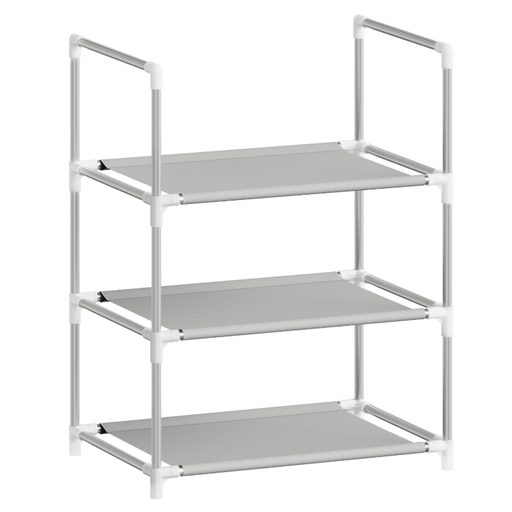
Why this product suits this profile: Measuring 41 × 28 × 55 cm, this compact model is suitable for small hallways, wardrobes or the space beneath a coat rack. It holds up to 6 pairs of shoes.
The clearly stated shelf load of 5 kg makes it easier to assess. A removable shelf can create space for taller shoes or boxes.
Tool-free slot-together design, metal tubes and wipe-clean shelves.
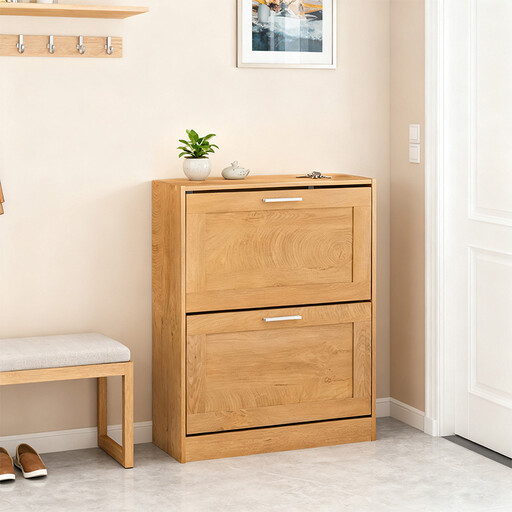
Why this product suits this profile: Measuring approximately 60 × 79 × 23 cm, this piece combines enclosed shoe storage with a practical top surface and adjustable compartments.
The removable shelves can be adjusted to accommodate different shoe heights. The stated total load capacity is up to 20 kg.
Closed flap doors, adjustable internal layout and foot pads to protect the floor.
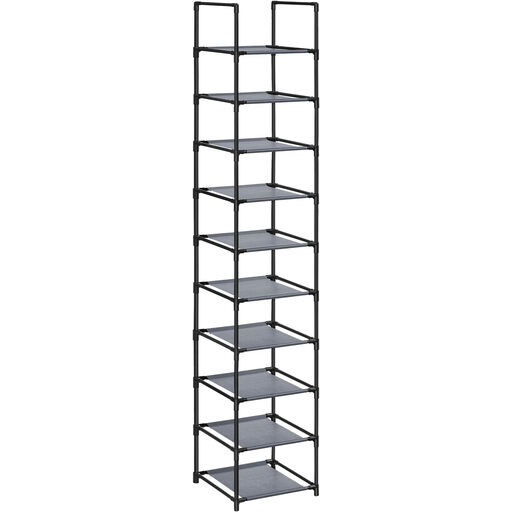
Why this product suits this profile: Its vertical design, measuring 33 × 33 × 173 cm, is aimed at households with lots of shoes and limited floor space.
The small footprint means the capacity is not achieved simply by making the rack wider. The stated capacity of up to 30 pairs should be used with the shoe size in mind.
10 tiers, a metal frame and easy-care non-woven fabric shelves.
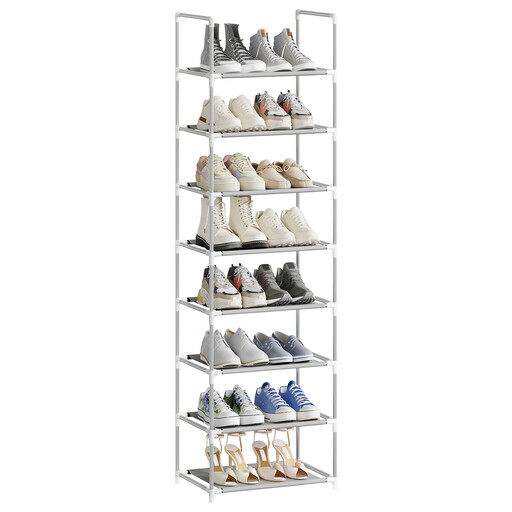
Why this product suits this profile: Measuring 41 × 28 × 140 cm, with removable tiers and the option to split it into two units, it adapts to changing living arrangements.
The design accommodates different shoe heights. The included anti-tip device and stated load capacity of 5 kg per tier support safe use.
Eight tiers, tool-free assembly and a divisible design.
We have put together a complete, regularly updated list of products that fully meet these strict selection criteria and the safety regulations applicable in the EU.
This depends on the available wall space and the size of your shoes. For narrow entrance areas, models with a depth of around 28 to 33 cm are a space-saving solution. Before buying, you should also check whether doors, walkways and skirting boards have been taken into account.
Capacity varies depending on shelf width, shoe shape and arrangement. Flat shoes need less space than boots or wide sports shoes. The manufacturer’s stated number of pairs should therefore be treated as a guide. The internal dimensions of each tier and the permitted load are what really matter.
An open rack provides quick access and better air circulation. A shoe cabinet with doors offers greater protection from dust and keeps the storage neatly concealed. An open model is usually easier to access for everyday shoes that are worn frequently, while a closed cabinet may be more suitable for shoes that are used less often.